
Apr . 01, 2024 17:55 Back to list
industrial hose factory Performance Analysis

Introduction
Industrial hose, in its broad definition, represents a flexible conduit designed to convey fluids, gases, or particulate solids in various industrial applications. Positioned as a critical component within fluid transfer systems, industrial hose bridges the gap between stationary piping and mobile equipment or intermittently connected systems. Its technical importance lies in its ability to accommodate pressure, temperature fluctuations, chemical exposure, and physical abrasion – factors rigid piping systems struggle to address economically. Core performance characteristics include burst pressure, working pressure, temperature range, chemical compatibility, and flexibility. The industry faces key challenges including demand for increased durability, specialized material requirements for aggressive media, adherence to stringent safety regulations, and the need for cost-effective solutions without compromising performance. This guide provides a comprehensive overview of industrial hose technology, covering material science, manufacturing processes, performance parameters, failure modes, and industry standards.
Material Science & Manufacturing
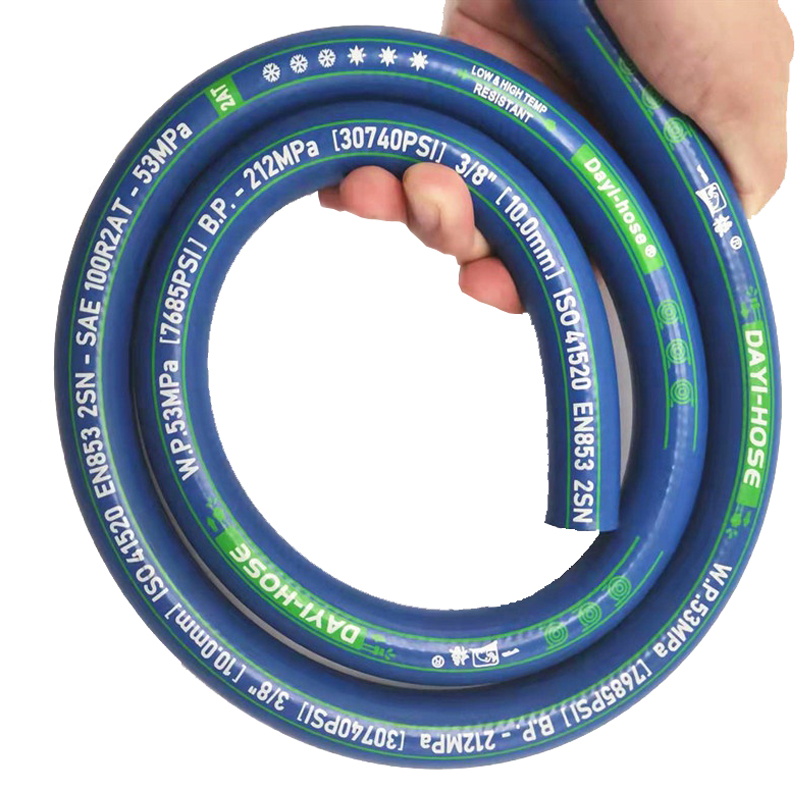
The foundation of industrial hose performance resides in its constituent materials. Common materials include natural rubber, synthetic rubbers (EPDM, NBR, SBR, CR), thermoplastic elastomers (TPEs), and reinforced fibers (textile, steel wire, aramid). Natural rubber offers excellent flexibility and abrasion resistance but limited chemical resistance. Synthetic rubbers provide enhanced resistance to oils, chemicals, and temperature extremes. EPDM excels in weathering and ozone resistance, while NBR is ideal for oil and fuel handling. Thermoplastic elastomers offer a combination of rubbery properties and thermoplastic processability. Reinforcement materials dictate burst pressure and structural integrity. Textile braiding (polyester, nylon) provides moderate reinforcement, while steel wire helical reinforcement offers high-pressure capabilities. Manufacturing processes vary depending on hose type and material. Rubber hoses are typically produced through extrusion, followed by vulcanization (curing) to enhance strength and elasticity. Extrusion involves forcing the rubber compound through a die to achieve the desired inner diameter and wall thickness. Vulcanization, often employing sulfur-based systems, crosslinks the polymer chains, improving mechanical properties. Thermoplastic hoses are produced through extrusion or injection molding. Fiber reinforcement is applied via braiding or spiraling techniques, ensuring precise positioning and consistent tension. Key parameter control during manufacturing includes compound mixing ratios, extrusion temperature and pressure, vulcanization time and temperature, and reinforcement tension. Deviations from optimal parameters can lead to defects such as porosity, uneven wall thickness, and reduced burst strength. Proper adhesion between the rubber compound and reinforcement is also critical, typically achieved through adhesion promoters and surface treatment of the reinforcement material.
Performance & Engineering
Industrial hose performance is governed by a complex interplay of mechanical stresses, environmental factors, and fluid dynamics. Force analysis is crucial for determining the hose’s ability to withstand internal pressure, external loads, and bending stresses. The hoop stress resulting from internal pressure is a critical design parameter, influencing the required reinforcement strength. External loads, such as impact or crushing forces, must be considered, particularly in applications where the hose is exposed to physical hazards. Bending stresses arise during hose routing and movement, requiring consideration of the hose’s bend radius and fatigue life. Environmental resistance encompasses the hose’s ability to withstand temperature extremes, UV radiation, ozone exposure, and chemical attack. Temperature affects material properties, reducing flexibility at low temperatures and accelerating degradation at high temperatures. UV radiation and ozone can cause cracking and embrittlement of rubber compounds. Chemical compatibility is paramount, dictating the selection of materials resistant to the conveyed fluid. Compliance requirements vary by industry and application, with standards such as ISO 6807 (for textile reinforced non-metallic hoses) and SAE J517 (for rubber hoses) defining performance criteria and testing procedures. Functional implementation details include the selection of appropriate hose couplings (flanges, quick disconnects, swivel joints) and the implementation of safety features such as anti-static grounding and burst protection devices. Furthermore, consideration must be given to the hose's weight, flexibility, and ease of handling, impacting installation and maintenance procedures.
Technical Specifications
| Parameter | Unit | Typical Value (Rubber Hose) | Typical Value (Thermoplastic Hose) |
|---|---|---|---|
| Working Pressure | psi | 200 | 300 |
| Burst Pressure | psi | 600 | 900 |
| Temperature Range | °F | -40 to 212 | -65 to 250 |
| Inner Diameter | inch | 0.5 - 12 | 0.25 - 8 |
| Outer Diameter | inch | 0.75 - 14 | 0.5 - 9 |
| Wall Thickness | inch | 0.125 - 0.5 | 0.06 - 0.3 |
Failure Mode & Maintenance
Industrial hose failure can stem from a variety of factors, categorized into mechanical, chemical, and thermal causes. Mechanical failure modes include fatigue cracking (resulting from repeated bending and flexing), burst failure (due to exceeding the working pressure), and abrasion (caused by internal or external abrasive particles). Fatigue cracking initiates at stress concentration points, such as hose couplings or imperfections in the reinforcement layer. Burst failure typically occurs due to material defects, overpressure events, or damage to the reinforcement. Chemical attack leads to degradation of the rubber or thermoplastic material, reducing its strength and elasticity. Common chemical degradation mechanisms include swelling, cracking, and embrittlement. Thermal degradation occurs at elevated temperatures, accelerating material aging and reducing its mechanical properties. Oxidation is a primary contributor to thermal degradation. Maintenance strategies are critical for extending hose service life and preventing catastrophic failures. Regular visual inspections should be conducted to identify signs of cracking, abrasion, swelling, or discoloration. Pressure testing can be performed to verify the hose’s structural integrity. Proper storage is essential, protecting hoses from UV radiation, ozone exposure, and extreme temperatures. Avoid sharp bends and excessive tension during installation and operation. When handling abrasive materials, consider using abrasion-resistant hose linings or employing filtration systems. Implement a preventative maintenance schedule, replacing hoses at predetermined intervals based on application severity and operating conditions. Detailed records of hose usage, inspection findings, and maintenance activities should be maintained to track performance and identify potential issues.
Industry FAQ
Q: What are the key differences between rubber and thermoplastic hoses in terms of chemical resistance?
A: Thermoplastic hoses generally exhibit broader chemical resistance compared to rubber hoses. While specific rubbers (like Viton or PTFE-lined rubber) can resist highly corrosive chemicals, thermoplastic materials like PTFE, polypropylene, and nylon offer inherent resistance to a wider range of acids, bases, and solvents. Rubber hoses, however, often excel in applications requiring flexibility and resistance to certain specific chemicals like oils and fuels.
Q: How does steel wire reinforcement affect the hose’s bend radius and flexibility?
A: Steel wire reinforcement significantly reduces the hose’s flexibility and increases its minimum bend radius. The rigidity of the steel wire limits the hose’s ability to conform to tight curves. High-pressure hoses typically utilize multiple layers of steel wire, further exacerbating this effect. Textile reinforcement offers superior flexibility but provides lower burst pressure.
Q: What is the significance of the ‘lay angle’ in spiral-wound hoses?
A: The lay angle, referring to the angle of the steel wire helix relative to the hose axis, directly influences the hose’s pressure handling capability and resistance to kinking. A smaller lay angle provides higher pressure resistance, while a larger lay angle improves flexibility and kink resistance. The optimal lay angle is application-specific, balancing these competing requirements.
Q: How can I determine the appropriate safety factor for hose selection in a given application?
A: The appropriate safety factor depends on the application’s severity and the consequences of failure. A safety factor of 4:1 is commonly used for general industrial applications, meaning the hose’s burst pressure should be at least four times the working pressure. Critical applications, such as those involving hazardous materials or high-pressure systems, may require higher safety factors (e.g., 6:1 or 8:1).
Q: What are the best practices for storing industrial hoses to prevent degradation?
A: Hoses should be stored in a cool, dry, and well-ventilated area, away from direct sunlight, ozone sources (electric motors), and extreme temperatures. Hoses should be coiled loosely, avoiding sharp bends or kinks. Avoid storing hoses in contact with incompatible materials. For long-term storage, consider using protective coverings or storing hoses in their original packaging.
Conclusion
Industrial hose technology is a multifaceted field, demanding careful consideration of material science, manufacturing processes, and application-specific requirements. Successful hose selection hinges on a thorough understanding of pressure ratings, chemical compatibility, temperature limitations, and environmental factors. Proper maintenance and regular inspection are crucial for maximizing hose service life and ensuring safe operation. The trends toward lightweight materials, increased durability, and specialized hose designs will continue to drive innovation in this sector.
Ultimately, the correct industrial hose is not simply a component, but a vital link in the integrity of an industrial process. Future advancements will likely focus on the development of smart hoses with integrated sensors for real-time monitoring of pressure, temperature, and flow rates, enabling predictive maintenance and enhanced system control. The continued emphasis on sustainability and environmentally friendly materials will also shape the future landscape of industrial hose technology.