
Apr . 01, 2024 17:55 Back to list
industrial air hose Performance Analysis
Introduction
Industrial air hose constitutes a critical component in numerous pneumatic systems across diverse industries, including manufacturing, construction, mining, and automotive. Functioning as a flexible conduit for compressed air, these hoses facilitate the operation of power tools, automated machinery, and various pneumatic devices. Their technical position within the industry chain lies between the air compressor – the energy source – and the end-use application. Core performance characteristics are defined by working pressure, burst pressure, temperature resistance, flexibility, and resistance to abrasion and chemical exposure. A key industry pain point centers on maintaining hose integrity under demanding conditions to prevent catastrophic failures, ensuring worker safety, and minimizing downtime. Another significant challenge is selecting hose materials compatible with the specific contaminants present in the operating environment. Finally, adhering to stringent safety regulations and industry standards adds complexity to procurement and maintenance decisions.
Material Science & Manufacturing
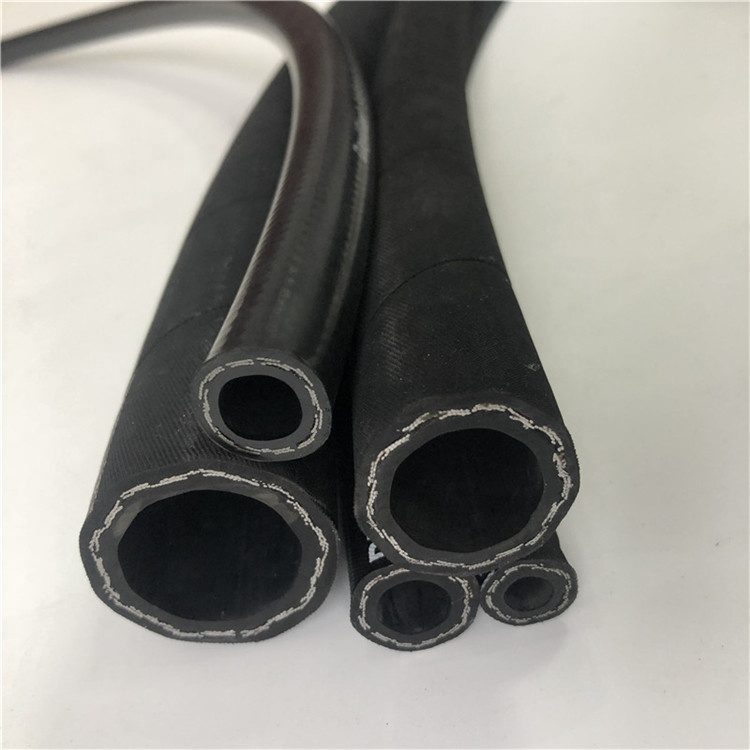
Industrial air hoses are typically constructed from several layers, each contributing to specific performance attributes. The inner tube, in direct contact with compressed air, is commonly composed of synthetic rubbers like nitrile (NBR), styrene-butadiene rubber (SBR), or polyurethane (PU). NBR offers excellent oil resistance, crucial in environments with lubricating aerosols. SBR provides good abrasion resistance and cost-effectiveness for general-purpose applications. PU delivers superior flexibility and resistance to hydrolysis. The reinforcement layer, responsible for pressure containment, is usually a braided textile (polyester or nylon) or a spiral-wound steel wire. Braided reinforcement provides flexibility and moderate pressure capacity, while steel wire reinforcement is utilized for high-pressure applications. The outer cover provides environmental protection and abrasion resistance, commonly made from EPDM (ethylene propylene diene monomer) rubber for its excellent weather and ozone resistance, or PVC (polyvinyl chloride) for cost-effectiveness and general-purpose use.
Manufacturing processes vary depending on the hose construction. Rubber hoses are produced via extrusion, where the rubber compound is forced through a die to form a continuous tube. Braiding is performed using specialized braiding machines that interweave the textile yarns around the inner tube. Steel wire winding is achieved using helical winding machines. The outer cover is then extruded over the reinforcement layer. Critical parameters during manufacturing include rubber compound formulation (precise ratios of polymers, plasticizers, fillers, and curing agents), extrusion temperature and pressure (influencing dimensional accuracy and material homogeneity), braiding tension and angle (affecting pressure resistance and flexibility), and curing time and temperature (determining the final rubber properties). Post-production quality control involves burst pressure testing, dimensional inspection, and visual inspection for defects.
Performance & Engineering
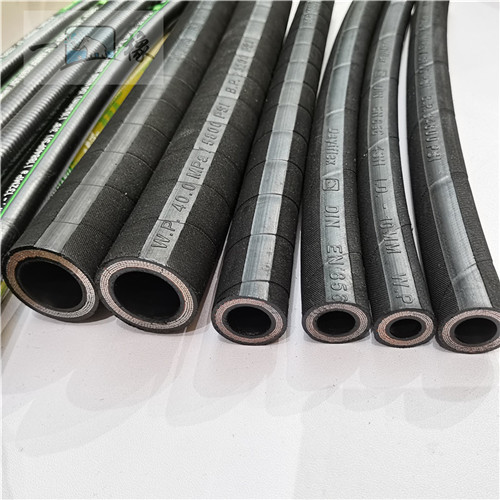
The performance of industrial air hose is heavily dictated by the principles of fluid mechanics and material science. Force analysis involves determining the hoop stress within the hose wall due to internal pressure. This stress is directly proportional to the internal pressure and the hose radius and inversely proportional to the hose wall thickness and reinforcement strength. Therefore, appropriate reinforcement selection and wall thickness calculation are paramount to preventing burst failures. Environmental resistance is crucial; factors such as temperature fluctuations, ozone exposure, UV radiation, and chemical contamination can degrade the rubber compounds, reducing flexibility and increasing the risk of cracking. Hose flexibility is engineered through the selection of polymer types and reinforcement materials; materials with lower Young’s modulus provide greater flexibility.
Compliance requirements vary by region and application. OSHA (Occupational Safety and Health Administration) regulations in the United States dictate safe working pressure limits and hose inspection frequencies. Similarly, European standards (EN) specify performance criteria for air hoses used in various industrial settings. Functional implementation demands consideration of coupling types (NPT, quick-connect, etc.) and their compatibility with the pneumatic system. Leakage prevention at the couplings is critical, achieved through proper sealing mechanisms (O-rings, gaskets) and torque specifications. Furthermore, the hose's bend radius must be carefully considered to avoid kinking and flow restriction.
Technical Specifications
| Working Pressure (PSI) | Burst Pressure (PSI) | Temperature Range (°F) | Inner Diameter (inches) |
|---|---|---|---|
| 300 | 900 | -40 to +212 | 1/4 |
| 200 | 600 | -40 to +180 | 3/8 |
| 400 | 1200 | -40 to +250 | 1/2 |
| 500 | 1500 | -40 to +280 | 3/4 |
| 600 | 1800 | -40 to +300 | 1 |
| 800 | 2400 | -40 to +320 | 1 1/4 |
Failure Mode & Maintenance
Industrial air hoses are susceptible to several failure modes. Fatigue cracking, caused by repeated flexing and pressure cycles, often initiates at points of high stress concentration, such as near couplings or damaged areas. Delamination occurs when the bonding between layers (inner tube, reinforcement, outer cover) weakens, leading to separation and eventual failure. Degradation of the rubber compound due to ozone exposure, UV radiation, and chemical attack results in embrittlement, cracking, and loss of flexibility. Oxidation, particularly at elevated temperatures, can cause hardening and cracking. Abrasion, from contact with rough surfaces, wears away the outer cover, exposing the reinforcement layer.
Professional maintenance is crucial to extending hose lifespan and preventing failures. Regular visual inspections are essential to identify cuts, abrasions, bulges, or signs of degradation. Hose should be checked for proper coupling tightness and replaced if any leaks are detected. After each use, hoses should be fully uncoiled and stored in a clean, dry environment away from direct sunlight and ozone sources. Hoses should be replaced immediately if they fail a pressure test or exhibit significant damage. Implementing a hose management program, including tagging and tracking hose usage, can facilitate proactive maintenance and reduce unplanned downtime. The proper use of hose guards and routing practices to minimize abrasion can also significantly enhance durability.
Industry FAQ
Q: What is the impact of using an air hose with a working pressure rating lower than the system’s maximum output pressure?
A: Using an air hose with an inadequate working pressure rating poses a significant safety hazard. Exceeding the hose's rated pressure can lead to catastrophic failure – a burst – releasing high-velocity air and potentially causing severe injury. Furthermore, even if immediate failure doesn't occur, operating at pressures exceeding the rating accelerates fatigue and degradation, shortening the hose’s lifespan and increasing the risk of future failure.
Q: How does the material of the inner tube affect the hose’s suitability for different applications?
A: The inner tube material dictates the hose’s compatibility with various fluids and contaminants. Nitrile (NBR) is ideal for applications involving oils and fuels. Styrene-butadiene rubber (SBR) offers good abrasion resistance for general-purpose use. Polyurethane (PU) excels in applications requiring flexibility and resistance to hydrolysis, while EPDM is best for applications needing ozone and weather resistance.
Q: What is the difference between braided and spiral-wound reinforcement, and when should each be used?
A: Braided reinforcement provides flexibility and moderate pressure resistance, suitable for general-purpose applications. Spiral-wound reinforcement, typically steel wire, offers significantly higher pressure capacity but reduced flexibility. Braided hoses are preferred where maneuverability is paramount, while spiral-wound hoses are chosen for high-pressure applications like hydraulic systems.
Q: How can I determine if an air hose is degrading due to ozone exposure?
A: Ozone degradation manifests as surface cracking, particularly on the outer cover. The rubber may also become brittle and lose its elasticity. A distinctive "tacky" feel can also indicate ozone attack. Regular visual inspections and replacement of hoses showing these signs are crucial.
Q: What is the proper procedure for connecting and disconnecting quick-connect couplings to maximize hose life and prevent leaks?
A: Ensure the hose end is clean and free of debris before connecting. Push the hose firmly into the coupling until it clicks securely. To disconnect, depress the coupling’s locking mechanism fully before pulling the hose straight out. Avoid twisting or bending the hose during connection and disconnection, as this can damage the couplings and hose end.
Conclusion
Industrial air hose selection and maintenance are critical aspects of pneumatic system reliability and safety. Understanding the material science underpinning hose construction, coupled with knowledge of manufacturing processes and performance characteristics, enables informed decision-making. The selection criteria must align with the specific application requirements – pressure, temperature, chemical exposure, and environmental conditions – to ensure optimal performance and longevity. Neglecting these considerations can lead to premature failure, costly downtime, and potential safety hazards.
Moving forward, advancements in polymer technology will likely result in air hoses with enhanced durability, chemical resistance, and temperature stability. Furthermore, the integration of smart sensors within hoses to monitor pressure, temperature, and structural integrity offers the potential for predictive maintenance and proactive failure prevention. Adherence to relevant industry standards (detailed below) and the implementation of robust hose management programs will remain paramount in maintaining the integrity and safety of pneumatic systems.