
Apr . 01, 2024 17:55 Back to list
hydraulic rubber hose factory Performance Analysis
Introduction
Hydraulic rubber hoses are critical components in fluid power systems, facilitating the transmission of hydraulic fluid to actuators and other components. They are integral to industries ranging from construction and agriculture to manufacturing and aerospace. Their primary function is to convey pressurized hydraulic fluid securely and reliably, converting mechanical energy into fluid power and vice-versa. This guide provides an in-depth technical overview of hydraulic rubber hose manufacturing, material science, performance characteristics, failure modes, and relevant industry standards. The core performance metrics are burst pressure, working pressure, temperature range, and fluid compatibility. The industry faces increasing demands for higher pressure ratings, improved chemical resistance due to evolving fluid types, and extended service life in harsh operating environments. Selection hinges on careful consideration of fluid type, operating pressure, temperature, and potential environmental factors. Improper hose selection or maintenance is a major cause of hydraulic system failures, leading to downtime and safety concerns.
Material Science & Manufacturing
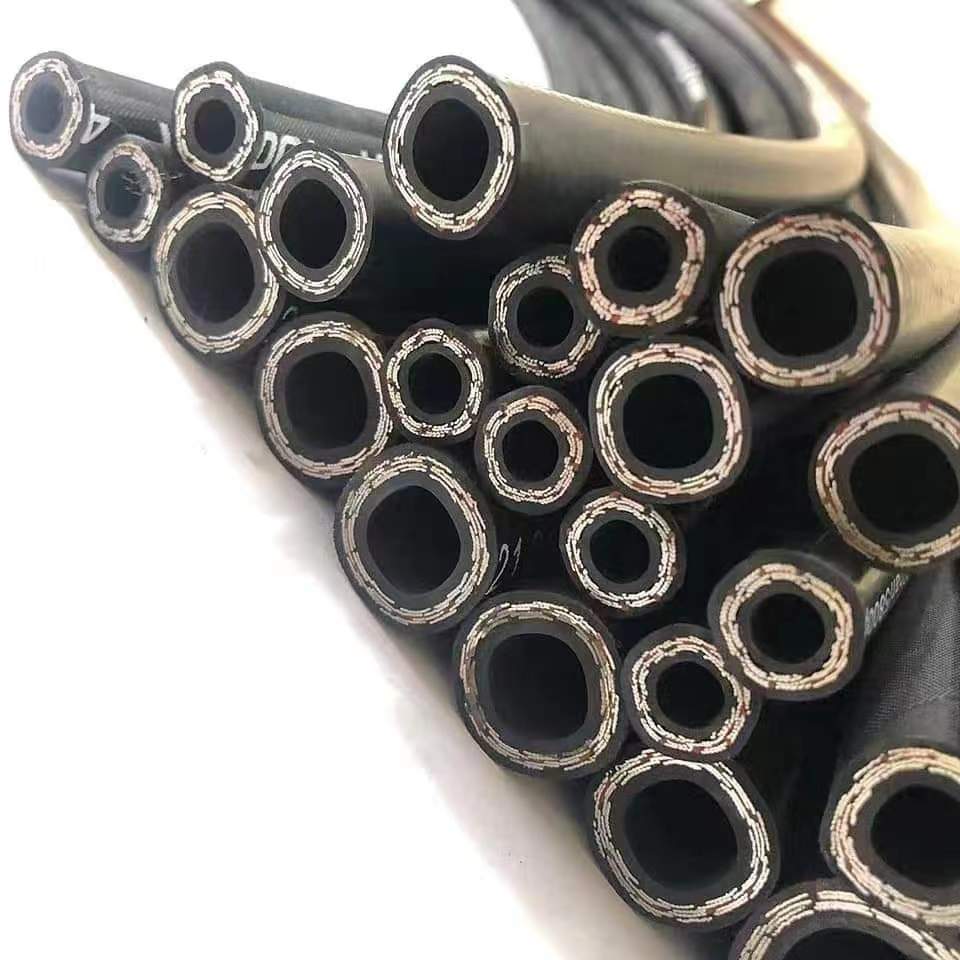
The construction of a hydraulic rubber hose typically involves multiple layers, each contributing to specific performance characteristics. The innermost layer, the tube, is generally composed of a synthetic rubber compound such as nitrile (NBR), ethylene propylene diene monomer (EPDM), or fluorocarbon (FKM/Viton), selected based on fluid compatibility. NBR offers excellent resistance to petroleum-based fluids, EPDM excels in phosphate ester hydraulic fluids and high-temperature applications, and FKM provides superior resistance to aggressive chemicals and extreme temperatures. The reinforcement layer(s) are crucial for withstanding high pressures. Common reinforcement materials include multiple layers of high-tensile steel wire (single or double wire braid), spiral-wound steel wire, or aramid fiber. Steel wire provides high burst strength, while aramid offers a lighter weight alternative with good flexibility. The cover layer, typically made of synthetic rubber like chloroprene (CR) or polyurethane (PU), provides protection against abrasion, ozone, weathering, and oil exposure.
Manufacturing processes involve several key steps. Tube extrusion forms the inner liner to precise dimensions. Reinforcement layers are then applied through braiding or spiral winding machines, ensuring consistent coverage and accurate pitch. These layers are vulcanized—a chemical process involving heat and pressure—to bond the rubber compound to the reinforcement, creating a cohesive structure. Post-vulcanization, the hose undergoes dimensional inspection, pressure testing, and coupling attachment. Parameter control during extrusion (temperature, screw speed, die pressure) is vital for consistent tube thickness and material properties. Braiding tension and pitch are critical for reinforcement strength. Vulcanization time, temperature, and pressure directly influence the cross-link density of the rubber, affecting its elasticity, tensile strength, and resistance to degradation. Automated inspection systems utilizing optical sensors and pressure decay testing ensure quality control.

Performance & Engineering
Hydraulic hose performance is governed by several engineering principles. Burst pressure, the maximum pressure the hose can withstand before failure, is determined by the reinforcement layer’s strength and the rubber compound’s tensile properties. Working pressure is typically 50-75% of burst pressure, providing a safety margin. Fatigue analysis is crucial, especially in applications with pulsating pressures. Repeated flexing and pressure cycles can lead to fatigue cracking in the reinforcement or rubber compound. Hose bend radius is a critical parameter to avoid kinking and excessive stress concentration. Exceeding the minimum bend radius can damage the reinforcement and reduce hose life. Environmental factors like temperature, UV exposure, and chemical exposure significantly impact hose performance. High temperatures can accelerate rubber degradation, while UV radiation can cause cracking and embrittlement. Chemical compatibility is paramount; incompatible fluids can cause swelling, softening, or cracking of the rubber compound.
Force analysis during hose assembly is also critical. Proper crimping of hose couplings ensures a secure and leak-proof connection. Insufficient crimping can lead to coupling blow-off, while over-crimping can damage the hose. Finite element analysis (FEA) is commonly used to simulate stress distribution within the hose and coupling assembly under various loading conditions. Compliance requirements, such as those mandated by SAE International (SAE J517, J1926, J343), dictate performance standards for hydraulic hoses. These standards specify test procedures for burst pressure, pressure impulse, temperature range, and fluid compatibility.
Technical Specifications
| Hose Type | Reinforcement Type | Working Pressure (PSI) | Burst Pressure (PSI) |
|---|---|---|---|
| Two-Wire Braid Hydraulic Hose | Two layers of Steel Wire Braid | 2000 | 8000 |
| Four-Wire Braid Hydraulic Hose | Four layers of Steel Wire Braid | 3000 | 12000 |
| Spiral Hydraulic Hose | Spiral Wound Steel Wire | 4500 | 18000 |
| Aramid Fiber Reinforced Hose | Single or Multiple Layers of Aramid Fiber | 2500 | 10000 |
| Thermoplastic Hydraulic Hose | Synthetic Fiber Reinforcement | 1500 | 6000 |
| Rubber Hydraulic Hose (NBR) | Two Steel Wire Braid | 2000 | 8000 |
Failure Mode & Maintenance
Hydraulic hose failures can manifest in various ways. Fatigue cracking, particularly in the reinforcement layers, is a common failure mode resulting from repeated pressure cycles and flexing. This is often initiated at points of high stress concentration, such as near couplings or at sharp bends. Abrasion, caused by external contact with other components or surfaces, can wear through the cover layer, exposing the reinforcement to corrosion. Chemical degradation occurs when the hose is exposed to incompatible fluids, causing swelling, softening, or cracking of the rubber compound. Heat aging leads to hardening and embrittlement of the rubber, reducing its elasticity and increasing its susceptibility to cracking. Pinholes or cracks in the tube can result in leakage, leading to pressure loss and potential system failure.
Preventive maintenance is crucial for extending hose life and preventing failures. Regular visual inspections should be conducted to identify signs of abrasion, cracking, bulging, or leakage. Hoses should be replaced if any damage is detected. Proper hose routing is essential to avoid sharp bends, abrasion, and excessive heat exposure. Using the correct hose couplings and ensuring proper crimping are critical for preventing leakage and coupling blow-off. Fluid cleanliness is paramount; contaminants can accelerate wear and damage the rubber compound. Regular fluid filtration and monitoring are recommended. Hoses should be stored in a cool, dry, and dark environment to prevent degradation. A proactive replacement schedule based on operating hours and environmental conditions is also advisable.
Industry FAQ
Q: What is the impact of fluid velocity on hose life?
A: Higher fluid velocities increase the risk of erosion and cavitation within the hose, accelerating wear and potentially leading to premature failure. Excessive velocity can also generate heat, contributing to rubber degradation. It’s essential to ensure the hose is rated for the anticipated flow rate.
Q: How does temperature affect hydraulic hose performance?
A: Elevated temperatures accelerate the degradation of rubber compounds, reducing their elasticity and tensile strength. Low temperatures can cause rubber to become brittle and less flexible. Selecting a hose rated for the full operating temperature range is crucial.
Q: What are the key considerations when selecting a hose for intermittent duty?
A: Intermittent duty, characterized by frequent start-stop cycles, subjects the hose to significant pressure impulses. The hose must have a sufficient impulse rating to withstand these pressure fluctuations without fatigue failure. Consider a hose specifically designed for impulse applications.
Q: How important is proper hose coupling installation?
A: Proper coupling installation is paramount. Incorrect crimping—either too loose or too tight—can lead to leakage, coupling blow-off, or hose damage. Use calibrated crimping equipment and follow the coupling manufacturer’s recommendations precisely.
Q: What is the difference between a wire braid and spiral hose, and when should each be used?
A: Wire braid hoses are more flexible and suitable for applications with tighter bend radii. Spiral hoses offer higher burst pressures and are better suited for high-pressure, high-temperature applications where flexibility is less critical. Spiral hoses also handle pressure impulses more effectively.
Conclusion
Hydraulic rubber hose selection and maintenance are critical for ensuring the reliable and safe operation of hydraulic systems. Understanding the material science, manufacturing processes, performance characteristics, and potential failure modes is essential for making informed decisions. Careful consideration of fluid type, operating pressure, temperature, and environmental factors is paramount. Implementing a comprehensive preventive maintenance program, including regular inspections and timely replacement of damaged hoses, significantly extends hose life and minimizes the risk of costly downtime.
The trend towards higher operating pressures and increasingly demanding application environments necessitates the development of advanced hose materials and manufacturing techniques. Future innovations are likely to focus on enhancing chemical resistance, improving fatigue life, and reducing weight. Adhering to relevant industry standards, such as those defined by SAE International and ISO, ensures that hoses meet established performance and safety criteria.