
Apr . 01, 2024 17:55 Back to list
Hydraulic Oil Hose Suppliers Performance Analysis
Introduction
Hydraulic oil hoses are critical components in fluid power systems, responsible for the safe and efficient transmission of pressurized hydraulic fluid. These hoses are not simply conduits; they are engineered assemblies designed to withstand extreme pressures, temperatures, and fluid compatibility challenges across a diverse range of industrial applications – from construction equipment and agricultural machinery to aerospace and manufacturing. The market for hydraulic hoses is highly specialized, demanding adherence to stringent international standards and a deep understanding of material science. Key performance characteristics include burst pressure, working pressure, temperature range, and resistance to abrasion, oil degradation, and chemical exposure. Selection of the appropriate hose is paramount to prevent catastrophic failure, downtime, and potential safety hazards. This guide provides an in-depth technical overview for procurement managers and engineers involved in specifying and utilizing hydraulic oil hoses, addressing material composition, manufacturing processes, performance criteria, failure modes, and relevant industry standards.
Material Science & Manufacturing
Hydraulic hose construction typically involves multiple layers, each contributing to specific performance attributes. The inner tube, in direct contact with the hydraulic fluid, is commonly composed of synthetic rubbers such as nitrile (NBR), ethylene propylene diene monomer (EPDM), or fluorocarbon (FKM/Viton), selected for their resistance to specific fluids and temperature ranges. NBR offers good resistance to petroleum-based oils, EPDM excels in phosphate ester fluid compatibility, and FKM provides superior resistance to high temperatures and aggressive chemicals. Reinforcement layers provide the strength to withstand high pressures. These layers can consist of one or more plies of high-tensile steel wire, textile braids (typically polyester or aramid fibers), or a combination of both. Steel wire reinforcement offers the highest pressure capability, while textile braids provide flexibility and resistance to fatigue. The outer cover, protecting the reinforcement layers from abrasion and environmental damage, is typically a synthetic rubber such as chloroprene (CR) or polyurethane (PU). CR provides excellent abrasion resistance and weathering properties, while PU offers superior resistance to oils and chemicals.
Manufacturing processes vary depending on hose type and construction. For rubber hoses, the inner tube is extruded through a die to create a seamless profile. Reinforcement layers are then applied, often using a spiral winding process for high-pressure applications. The outer cover is then extruded over the reinforcement, and the entire assembly is cured using heat and pressure to vulcanize the rubber compounds. Precise control of temperature, pressure, and curing time is critical to ensure optimal material properties and bond strength. For thermoplastic hoses, the manufacturing process often involves co-extrusion, where multiple layers of thermoplastic materials are simultaneously extruded to create a single, integrated hose structure. Quality control measures include dimensional checks, pressure testing to burst and working pressure, and material analysis to verify chemical compatibility and physical properties.
Performance & Engineering
The performance of a hydraulic hose is dictated by a complex interplay of factors, foremost among them being burst pressure and working pressure. Burst pressure represents the maximum pressure the hose can withstand before catastrophic failure, while working pressure is a fraction of the burst pressure (typically a 4:1 safety factor) representing the maximum continuous operating pressure. Hose selection must account for pressure spikes and surges within the hydraulic system. Temperature range is another critical consideration; elevated temperatures can reduce the hose's strength and accelerate degradation of the rubber compounds. Conversely, low temperatures can cause the hose to become brittle and susceptible to cracking. Flexibility is also important, particularly in applications requiring tight bends or dynamic movement. Hose bend radius is specified by manufacturers and must be adhered to prevent kinking or damage to the reinforcement layers.
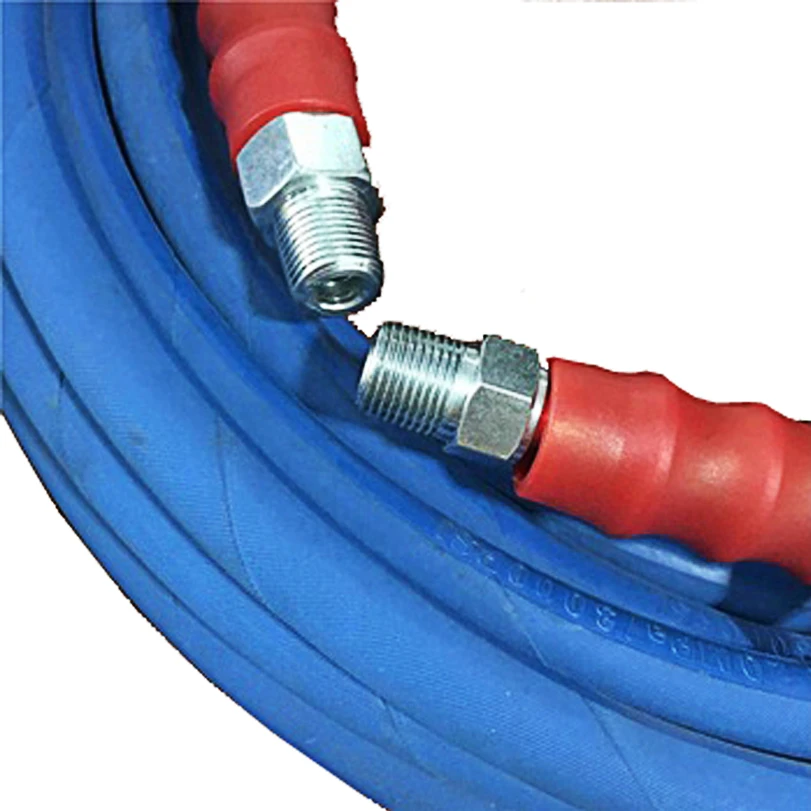
Engineering considerations extend to end fitting compatibility and installation practices. End fittings must be securely crimped onto the hose using properly calibrated crimping equipment and dies. Incorrect crimping can lead to leakage, hose separation, or premature failure. Hose assembly must also consider hose twist, which can reduce the hose's effective pressure rating. Proper hose routing and support are essential to prevent abrasion, kinking, and excessive strain. Finite element analysis (FEA) is often employed to model hose behavior under various loading conditions and optimize hose design for specific applications. Compliance with industry standards, such as SAE J517 and EN 853, is crucial to ensure safety and reliability.
Technical Specifications
| Parameter | SAE J517 R1AT | SAE J517 R2AT | EN 853 1SN | DIN EN 853 2SN |
|---|---|---|---|---|
| Working Pressure (PSI) | 1000 | 2000 | 1000 | 2000 |
| Burst Pressure (PSI) | 4000 | 8000 | 4000 | 8000 |
| Temperature Range (°F) | -40 to 212 | -40 to 212 | -40 to 212 | -40 to 212 |
| Inner Tube | NBR | NBR | NBR | NBR |
| Reinforcement | Single Steel Wire Braid | Double Steel Wire Braid | Single Steel Wire Braid | Double Steel Wire Braid |
| Outer Cover | CR | CR | CR | CR |
Failure Mode & Maintenance
Hydraulic hose failure can manifest in several ways. Fatigue cracking, typically occurring at the fitting crimp or hose bend, is caused by repeated flexing and pressure cycling. Abrasion damage results from external contact with abrasive surfaces, leading to wear of the outer cover and eventual exposure of the reinforcement layers. Oil degradation, caused by incompatibility between the hose material and the hydraulic fluid, leads to swelling, softening, and loss of mechanical properties. Oxidation, particularly at elevated temperatures, causes the rubber compounds to become brittle and prone to cracking. Internal erosion can occur due to particulate contamination in the hydraulic fluid, gradually wearing away the inner tube.
Preventative maintenance is crucial to prolong hose life and prevent catastrophic failures. Regular visual inspections should be conducted to identify signs of abrasion, cracking, blistering, or leaks. Hose assemblies should be pressure tested periodically to verify their integrity. Hydraulic fluid should be regularly filtered to remove particulate contamination. Hose routing should be optimized to minimize stress and abrasion. Damaged hoses should be replaced immediately. When replacing hoses, it is essential to use compatible end fittings and proper crimping procedures. Record keeping of hose replacement dates and maintenance activities is highly recommended to track hose performance and identify potential systemic issues. Proper storage of hoses, shielded from sunlight, ozone, and extreme temperatures, is also vital.
Industry FAQ
Q: What is the primary difference between a 1-wire and 2-wire hydraulic hose, and when would I choose one over the other?
A: The primary difference is the reinforcement layer. A 1-wire hose utilizes a single layer of steel wire braid, providing moderate pressure capability (typically up to 1000 PSI working pressure). A 2-wire hose employs two layers, substantially increasing its pressure rating (typically up to 2000 PSI or higher). Choose a 1-wire hose for lower-pressure applications where flexibility is paramount. Opt for a 2-wire hose when dealing with higher pressures, dynamic loads, or demanding operating conditions where a greater safety factor is required.
Q: How does temperature affect the performance and lifespan of a hydraulic hose?
A: Temperature significantly impacts hydraulic hose performance. High temperatures can accelerate the degradation of rubber compounds, reducing their elasticity and strength. This leads to premature cracking and failure. Conversely, low temperatures can make the rubber brittle and susceptible to cracking under stress. Always select a hose rated for the expected temperature range of your application. Consider using hoses with specialized temperature-resistant compounds (e.g., FKM) for extreme temperature environments.
Q: What are the key considerations when selecting a hydraulic hose for use with phosphate ester fluids?
A: Phosphate ester fluids are incompatible with many standard rubber compounds used in hydraulic hoses. NBR, for example, will rapidly degrade in the presence of phosphate ester fluids. EPDM is generally the preferred inner tube material for phosphate ester applications due to its excellent compatibility. Ensure that all hose components – inner tube, reinforcement, and outer cover – are specifically rated for use with phosphate ester fluids to prevent swelling, softening, and premature failure.
Q: What is the correct procedure for crimping hydraulic hose fittings, and why is it so critical?
A: Correct crimping is paramount for a leak-free and reliable hose assembly. It involves selecting the appropriate die and crimping machine settings based on the hose and fitting specifications. Insufficient crimping can lead to leakage, while over-crimping can damage the hose and reduce its pressure rating. Always use calibrated crimping equipment and follow the manufacturer's recommendations. Regular die inspection and maintenance are also crucial.
Q: How do I determine the appropriate hose bend radius for my application?
A: The minimum bend radius is typically specified by the hose manufacturer and is critical to prevent kinking and damage to the reinforcement layers. Exceeding the specified bend radius can induce stress concentrations, leading to premature failure. Consult the manufacturer's datasheet or catalog for the recommended bend radius for the specific hose type and size. When routing hoses, ensure sufficient clearance to avoid sharp bends and maintain a smooth, gradual curve.
Conclusion
The selection and implementation of hydraulic oil hoses require a comprehensive understanding of material science, manufacturing processes, and performance characteristics. Failure to consider these factors can lead to costly downtime, safety hazards, and potential environmental damage. Adhering to relevant industry standards (SAE, EN, DIN) and implementing a robust preventative maintenance program are essential for maximizing hose life and ensuring the reliable operation of hydraulic systems. Proper crimping techniques and attention to hose routing are also key considerations for creating durable and safe hose assemblies.
Looking ahead, advancements in materials science will likely lead to the development of hydraulic hoses with enhanced performance characteristics, such as higher pressure ratings, improved temperature resistance, and increased chemical compatibility. Furthermore, the integration of sensor technologies into hydraulic hoses will enable real-time monitoring of hose condition, providing valuable insights for predictive maintenance and optimizing system performance. Prioritizing quality, adherence to standards, and ongoing maintenance remain vital to leveraging the full potential of hydraulic hose technology.