
Apr . 01, 2024 17:55 Back to list
Hydraulic Oil Hose Supplier Performance Analysis

Introduction
Hydraulic oil hoses are critical components in hydraulic systems, responsible for transmitting pressurized hydraulic fluid to actuators and other components. Positioned as a crucial link in the power transmission chain – between the pump, control valves, and hydraulic cylinders/motors – hose performance directly impacts system efficiency, reliability, and safety. These hoses are not merely conduits; they are engineered to withstand high pressures, resist fluid degradation, maintain flexibility in dynamic applications, and operate reliably across a wide temperature range. The industrial sector’s dependence on robust hydraulic systems in construction, agriculture, manufacturing, and aerospace necessitates a thorough understanding of hose materials, construction techniques, performance characteristics, and potential failure modes. This guide provides an in-depth technical analysis of hydraulic oil hoses, aimed at procurement managers, engineers, and maintenance professionals seeking to optimize hose selection and lifecycle management.
Material Science & Manufacturing
Hydraulic hoses are typically constructed from multiple layers, each serving a specific function. The innermost layer, the tube, is typically made from a synthetic rubber compound designed for compatibility with the hydraulic fluid being used. Common materials include nitrile rubber (NBR) for petroleum-based fluids, ethylene propylene diene monomer (EPDM) for phosphate ester fluids, and fluorocarbon (FKM/Viton) for high-temperature and aggressive fluid applications. The reinforcement layer provides the hose's pressure-bearing capability. Traditionally, this layer consisted of multiple plies of high-tensile steel wire braided in a helical pattern. However, modern hoses increasingly utilize spiral-wound steel wire reinforcement for higher pressure ratings and improved kink resistance. The cover layer protects the reinforcement from abrasion, weathering, and chemical attack, usually composed of synthetic rubbers like chloroprene (CR) or polyurethane (PU).
Manufacturing processes begin with extrusion of the inner tube, followed by the application of reinforcement layers. Braiding machines meticulously interweave the steel wires, ensuring consistent pitch and coverage. Spiral winding is performed using specialized equipment that precisely wraps the steel wire around a mandrel. Following reinforcement, the cover layer is extruded, and the hose is cured using vulcanization – a process involving heat and pressure to crosslink the rubber polymers, enhancing their strength, elasticity, and resistance to degradation. Key parameters controlled during manufacturing include rubber compound formulation, wire gauge and tensile strength, braiding angle, curing temperature and time, and dimensional tolerances. Post-curing, hoses undergo rigorous testing, including burst pressure tests, impulse pressure tests, and dimensional inspections, to ensure they meet industry standards.
Performance & Engineering
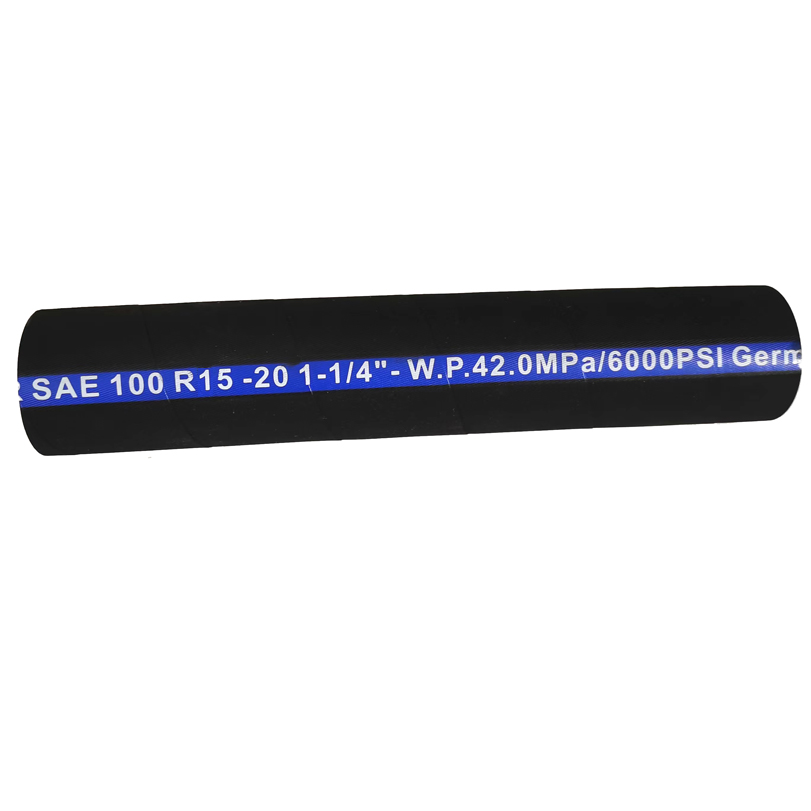
Hydraulic hose performance is dictated by several key engineering principles. Burst pressure, the maximum pressure a hose can withstand before failure, is a primary performance metric, calculated based on reinforcement layer strength and hose diameter. Working pressure, significantly lower than burst pressure, represents the recommended operating pressure with a substantial safety factor (typically 4:1). Impulse pressure, referring to pressure fluctuations and surges within the system, is critical as repeated pressure spikes can lead to fatigue failure. Hose flexibility, essential for routing in confined spaces, is affected by hose diameter, reinforcement type, and rubber compound durometer.
Environmental resistance, including temperature range, ozone exposure, and chemical compatibility, is paramount. Hydraulic fluids can degrade rubber compounds over time, reducing their elasticity and increasing the risk of leakage. Abrasion resistance, especially in mobile applications, protects against external damage. Hose end fitting connection is also a critical engineering consideration. Fittings must be securely crimped onto the hose to prevent leakage and separation under pressure. Finite Element Analysis (FEA) is increasingly employed to optimize hose designs, predicting stress distributions and identifying potential weak points. Compliance requirements, dictated by standards like SAE J517 and EN 853, specify minimum performance criteria for hydraulic hoses.
Technical Specifications
| Parameter | SAE J517 100R2AT | DIN EN 853 2SN | SAE J517 100R6 |
|---|---|---|---|
| Working Pressure (PSI) | 2000 | 210 bar (3045 PSI) | 6000 |
| Burst Pressure (PSI) | 8000 | 840 bar (12180 PSI) | 24000 |
| Temperature Range (°F) | -40 to 212 | -40 to 100 | -40 to 250 |
| Reinforcement | Two Steel Wire Braids | Two Steel Wire Braids | Six Steel Wire Spirals |
| Tube Material | Synthetic Rubber (NBR) | Synthetic Rubber (NBR) | Synthetic Rubber (NBR) |
| Cover Material | Synthetic Rubber (CRM) | Synthetic Rubber (CRM) | Synthetic Rubber (CRM) |
Failure Mode & Maintenance
Hydraulic hose failures are often attributed to several common modes. Fatigue cracking, resulting from repeated flexing and pressure cycles, is a prevalent issue, particularly in dynamic applications. The steel wire reinforcement is susceptible to fatigue, initiating cracks that propagate over time. Abrasion, caused by rubbing against other components or abrasive environments, can compromise the cover layer, exposing the reinforcement to corrosion. Kinking, resulting from sharp bends exceeding the hose's minimum bend radius, can restrict fluid flow and lead to localized stress concentrations. Chemical degradation, stemming from incompatibility between the hose material and the hydraulic fluid, causes the rubber to swell, soften, and lose its elasticity. Improper installation, specifically incorrect crimping of fittings, can lead to leakage and eventual hose failure.
Preventive maintenance is crucial for extending hose lifespan and mitigating failures. Regular visual inspections should identify signs of abrasion, cracking, bulging, or leakage. Periodic pressure testing can detect subtle weaknesses before they escalate. Correct hose routing, avoiding sharp bends and contact with hot surfaces, is essential. Maintaining fluid cleanliness, using appropriate filters, and preventing contamination minimizes internal degradation. Replacement should occur at predetermined intervals based on operating conditions and manufacturer recommendations. When replacing hoses, ensuring compatibility with the hydraulic fluid and using properly sized and crimped fittings are critical. Proper storage, shielded from UV exposure and extreme temperatures, also extends hose life.
Industry FAQ
Q: What is the primary difference between braided and spiral-wound hydraulic hoses?
A: Braided hoses, constructed with multiple layers of interwoven steel wire, are generally more flexible and suitable for applications requiring frequent bending. Spiral-wound hoses, utilizing a single continuous steel wire wrapped at an angle, offer higher pressure ratings and improved kink resistance, making them ideal for high-pressure, demanding environments. The choice depends on the specific application requirements and operating conditions.
Q: How does hydraulic fluid type affect hose selection?
A: The compatibility of the hose tube material with the hydraulic fluid is paramount. Petroleum-based fluids typically require nitrile rubber (NBR) tubes, while phosphate ester fluids necessitate EPDM tubes. Fluorocarbon (FKM/Viton) is used for aggressive fluids like synthetic lubricants or those operating at high temperatures. Using an incompatible fluid will lead to degradation of the hose material and eventual failure.
Q: What is the impact of impulse pressure on hose lifespan?
A: Impulse pressure – pressure spikes and fluctuations – significantly reduces hose lifespan. Repeated pressure surges cause fatigue in the reinforcement layer, leading to cracking and eventual failure. Hoses specifically designed for high-impulse applications incorporate features like thicker reinforcement and improved damping characteristics to mitigate these effects.
Q: What are the common causes of hose leakage at the fitting?
A: Leakage at the fitting is typically caused by improper crimping, damaged fittings, or corrosion. Insufficient crimping creates a loose connection, allowing fluid to escape. Damaged or corroded fittings compromise the seal. Using the correct crimping equipment and regularly inspecting fittings for damage are crucial preventative measures.
Q: What maintenance practices are most effective in prolonging hydraulic hose life?
A: Regular visual inspections for abrasion, cracking, and leakage, maintaining fluid cleanliness through filtration, proper hose routing to avoid sharp bends and contact with hot surfaces, and periodic pressure testing are the most effective maintenance practices. Adhering to manufacturer recommendations for hose replacement intervals is also critical.
Conclusion
The selection and maintenance of hydraulic oil hoses are vital for the reliable and efficient operation of hydraulic systems. Understanding the underlying material science, manufacturing processes, performance parameters, and potential failure modes is essential for procurement professionals and engineers. Proper hose selection, based on application requirements and fluid compatibility, coupled with a robust preventative maintenance program, minimizes downtime, reduces operating costs, and enhances overall system safety.
Future advancements in hydraulic hose technology will likely focus on developing lighter-weight, higher-strength materials, improving hose durability, and incorporating smart sensors for real-time monitoring of hose condition. As hydraulic systems become increasingly sophisticated, a continued emphasis on hose technology will be critical for optimizing performance and ensuring long-term reliability. The integration of advanced materials and predictive maintenance strategies will define the next generation of hydraulic hose solutions.