
Apr . 01, 2024 17:55 Back to list
hydraulic oil hose manufacturers Performance Engineering

Introduction
Hydraulic oil hoses are critical components in fluid power systems, responsible for the safe and efficient transmission of hydraulic fluid to actuators and other components. They are engineered to withstand high pressures, varying temperatures, and exposure to potentially corrosive fluids. Positioned within the broader industrial hose and fluid conveyance industry, hydraulic hoses represent a specialized segment demanding rigorous manufacturing controls and adherence to stringent performance standards. Their core performance characteristics – pressure rating, temperature range, fluid compatibility, and bend radius – directly impact the reliability and safety of the systems in which they are employed. This guide provides an in-depth examination of hydraulic oil hose technology, covering materials, manufacturing processes, performance criteria, failure modes, and relevant industry standards. A primary pain point for users is premature hose failure leading to downtime, safety hazards, and costly repairs. Therefore, understanding the nuances of hose selection and maintenance is paramount.
Material Science & Manufacturing
The construction of a hydraulic hose typically involves four key layers: the inner tube, reinforcement layers, and the outer cover. The inner tube, in direct contact with the hydraulic fluid, is commonly composed of synthetic rubbers such as nitrile (NBR), ethylene propylene diene monomer (EPDM), or fluorocarbon (FKM, Viton®). NBR provides excellent resistance to petroleum-based fluids, EPDM excels in phosphate ester fluids, and FKM offers superior resistance to high temperatures and aggressive chemicals. Reinforcement layers provide the hose’s strength and pressure handling capability. These layers are usually constructed from one or more braids of high-tensile steel wire, or from spirally wound steel wire. The number and configuration of these layers directly correlate with the hose’s working pressure. The outer cover, typically made of synthetic rubber like chloroprene (CR) or polyurethane (PU), provides abrasion, ozone, and weathering resistance.
Manufacturing processes vary depending on hose type. Braided hoses are produced by extruding the inner tube, followed by the application of one or more helical steel wire braids. The cover is then extruded over the braid. Spiral-wound hoses involve continuously wrapping steel wire around the inner tube, followed by extrusion of the outer cover. Critical parameters during manufacturing include consistent rubber compound mixing, precise braid winding tension, and proper vulcanization (curing) of the rubber compounds. Vulcanization temperature and duration are crucial for achieving optimal physical properties – tensile strength, elongation, and hardness. Inconsistent vulcanization can lead to reduced service life and premature failure. Quality control measures include dimensional checks, pressure testing to destruction, and material composition analysis using techniques like Fourier-transform infrared spectroscopy (FTIR).
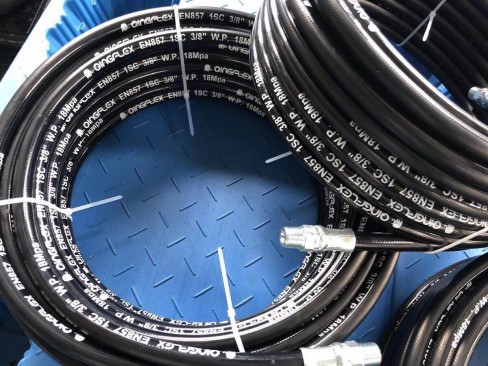
Performance & Engineering
Hydraulic hose performance is governed by several key engineering considerations. Burst pressure, working pressure, and temperature rating are paramount. Burst pressure is the pressure at which the hose will fail catastrophically, while working pressure is a fraction of the burst pressure (typically a 4:1 safety factor) representing the maximum recommended operating pressure. Temperature range defines the upper and lower limits within which the hose can operate without significant degradation of its properties. Bend radius is critical to avoid kinking and excessive stress concentration. Exceeding the minimum bend radius can lead to hose collapse or premature fatigue failure. Force analysis considers the internal pressure acting on the inner tube, the tensile stress in the reinforcement layers, and the external loads imposed by routing and connections. Finite element analysis (FEA) is often employed to model stress distributions and optimize hose design.
Environmental resistance is a significant concern. Hydraulic fluids often contain contaminants, and hoses must be resistant to degradation from these substances. Ozone, UV radiation, and exposure to chemicals can also affect hose performance. Compliance requirements vary by region. In Europe, the Machinery Directive 2006/42/EC sets safety requirements for machinery, including hydraulic systems. In the United States, OSHA regulations address workplace safety. Specific hose designs must adhere to standards established by organizations like SAE International (J517, J189, J1926) which define performance characteristics and testing procedures. Proper hose assembly, including correct fitting selection and crimping, is crucial for achieving rated performance and preventing leaks or failures. Improper crimping can lead to fitting slippage or hose deformation.
Technical Specifications
| Parameter | SAE 100R1AT | SAE 100R2AT | DIN EN 853 1SN | DIN EN 857 2SN |
|---|---|---|---|---|
| Working Pressure (PSI) | 600 | 1200 | 400 | 800 |
| Burst Pressure (PSI) | 2400 | 4800 | 1600 | 3200 |
| Temperature Range (°F) | -40 to +212 | -40 to +212 | -40 to +212 | -40 to +212 |
| Inner Tube | NBR | NBR | NBR | NBR |
| Reinforcement | 1 Wire Braid | 2 Wire Braid | 1 Steel Wire Spiral | 2 Steel Wire Spiral |
| Cover | CPE | CPE | CPE | CPE |
Failure Mode & Maintenance
Hydraulic hose failures are often attributed to a combination of factors, including exceeding pressure limits, improper installation, fluid contamination, and environmental degradation. Common failure modes include: burst failure (sudden rupture due to exceeding pressure limits), extrusion failure (the inner tube extrudes through the reinforcement layers due to high pressure or weakening of the reinforcement), and fatigue cracking (initiated by repeated flexing and stress concentration). Pinholes and leaks can develop due to abrasion or chemical attack on the inner tube. Fitting corrosion can also lead to leaks and hose detachment. Hose kinking, resulting from exceeding the minimum bend radius, can restrict fluid flow and cause localized stress concentrations. Swelling or shrinking of the rubber components can occur due to fluid incompatibility. A critical failure analysis step involves examining the fracture surface to determine the root cause of the failure – whether it was due to overpressure, material defects, or environmental factors.
Preventative maintenance is crucial for maximizing hose service life and preventing catastrophic failures. Regular visual inspections should be conducted to check for signs of abrasion, cracking, leaks, or deformation. Fluid filtration is essential to remove contaminants that can damage the inner tube and fittings. Proper hose routing, avoiding sharp bends and abrasion points, is important. Hoses should be replaced on a scheduled basis, even if no visible defects are present, based on the operating conditions and manufacturer's recommendations. Proper storage is also vital; hoses should be stored in a cool, dry, and dark environment away from ozone sources. When replacing hoses, it is critical to use compatible fittings and ensure they are crimped correctly using calibrated crimping equipment.
Industry FAQ
Q: What is the impact of fluid velocity on hydraulic hose life?
A: High fluid velocity can accelerate wear and erosion of the inner tube, particularly in areas of turbulence caused by fittings or bends. It also increases pressure drop, potentially leading to cavitation. Selecting a hose with an appropriate inner diameter to maintain recommended fluid velocities (typically 5-15 ft/s) is crucial.
Q: How do I select the correct hose for a specific hydraulic fluid?
A: Fluid compatibility is paramount. Consult the hose manufacturer’s chemical resistance chart to ensure the inner tube material is compatible with the hydraulic fluid being used. Incompatibility can lead to swelling, degradation, and premature failure.
Q: What are the differences between spiral-wound and braided hose constructions?
A: Spiral-wound hoses generally offer higher pressure ratings and greater flexibility compared to braided hoses. They are better suited for applications requiring long lengths and tight bends. Braided hoses are typically less expensive and easier to assemble.
Q: What is the proper procedure for crimping hose fittings?
A: Correct crimping is essential for a leak-free and reliable connection. The crimp must be precise and conform to the fitting manufacturer’s specifications. Using calibrated crimping equipment and following the recommended crimp chart for the hose and fitting size is vital. Improper crimping can lead to fitting slippage or hose damage.
Q: How does temperature affect hydraulic hose performance?
A: High temperatures can reduce the rubber’s tensile strength and flexibility, while low temperatures can make the rubber brittle. Exceeding the hose’s temperature range can lead to premature failure. Ensure the selected hose is rated for the operating temperature range of the application.
Conclusion
Hydraulic oil hoses are complex engineered products requiring careful selection, installation, and maintenance. Understanding the underlying material science, manufacturing processes, and performance characteristics is vital for ensuring system reliability and safety. Premature hose failure represents a significant cost and safety concern for industries relying on hydraulic power. By adhering to industry standards, employing preventative maintenance practices, and selecting hoses compatible with the application requirements, users can mitigate these risks and maximize hose service life.
Looking ahead, advancements in hose technology are focused on developing lighter-weight materials, enhancing chemical resistance, and incorporating sensor technologies for real-time condition monitoring. The integration of smart hoses with predictive maintenance capabilities will further optimize performance and minimize downtime. Continuous investment in materials research and quality control will be crucial for meeting the evolving demands of the hydraulic industry.