
Apr . 01, 2024 17:55 Back to list
Hydraulic Hose Suppliers Performance Analysis

Introduction
Hydraulic hoses are a critical component in fluid power systems, facilitating the transmission of pressurized hydraulic fluid to actuators and other components. Serving as the circulatory system for hydraulic machinery, these hoses are integral to applications spanning construction, agriculture, manufacturing, and aerospace. Hydraulic hose suppliers provide a diverse range of hose types, fittings, and related accessories, tailored to meet specific performance requirements regarding pressure rating, temperature range, fluid compatibility, and environmental conditions. The core performance of a hydraulic hose is defined by its burst pressure, working pressure, bend radius, and resistance to abrasion and chemical attack. The industry faces increasing demands for higher performance, extended service life, and compliance with stringent safety and environmental regulations, particularly regarding leak prevention and material traceability. Selection criteria are driven by the operating environment, fluid type, and system pressure, leading to a complex supply chain and a need for expert consultation.
Material Science & Manufacturing
The construction of hydraulic hoses typically involves multiple layers, each contributing to specific performance characteristics. The inner tube, in direct contact with the fluid, is commonly made from synthetic rubbers such as Nitrile (NBR) for general oil-based fluids, Ethylene Propylene Diene Monomer (EPDM) for phosphate ester fluids, and Fluorocarbon (FKM) for aggressive fluids like synthetic hydrocarbons. Reinforcement layers provide strength and pressure resistance. These often consist of multiple braids or spirals of high-tensile steel wire. The number of layers directly correlates to the hose’s maximum working pressure. Between the reinforcement and the outer cover, a rubber compound provides bonding and protection. The outer cover is generally made from a synthetic rubber, such as Chloroprene (CR), offering abrasion, ozone, and weathering resistance. Manufacturing processes vary based on hose type. Braided hoses are created by helically winding steel wire around a mandrel, followed by vulcanization. Spiral hoses involve continuously wrapping steel wire around a mandrel, offering higher pressure capabilities. Critical manufacturing parameters include precise control of rubber compound mixing ratios, curing temperatures and times, wire tension during winding, and dimensional tolerances to ensure consistent performance and prevent premature failure. Chemical compatibility testing of the inner tube material with the intended hydraulic fluid is essential to prevent swelling, degradation, and permeation.
Performance & Engineering
Hydraulic hose performance is governed by several key engineering principles. Burst pressure, typically four times the working pressure, represents the hose’s ultimate failure point. Working pressure must be carefully selected to accommodate system peaks and fluctuations. Hose bend radius is critical; exceeding the minimum bend radius can cause kinking, flow restriction, and eventual failure. Fatigue resistance is paramount in applications with cyclical pressure and movement; repeated flexing can lead to reinforcement wire fatigue and cracking. Environmental factors, such as temperature extremes, UV exposure, and chemical contamination, significantly impact hose life. Finite element analysis (FEA) is increasingly used to model hose behavior under various loading conditions, optimizing reinforcement design and material selection. The hose assembly, including fittings, represents a critical system component. Incorrect fitting selection or improper crimping can compromise the hose’s integrity, leading to leaks or catastrophic failure. Proper hose routing, employing support devices to minimize abrasion and excessive bending, is vital for maximizing service life. Compliance requirements, such as those stipulated by SAE International (SAE J517, SAE J1926), dictate minimum performance standards for hose construction and testing.
Technical Specifications
| Hose Type | Working Pressure (PSI) | Burst Pressure (PSI) | Temperature Range (°F) |
|---|---|---|---|
| Braided Rubber Hose (2-wire) | 2000 | 8000 | -40 to 212 |
| Spiral Wire Hose (4-spiral) | 4000 | 16000 | -40 to 250 |
| Thermoplastic Hose | 3000 | 12000 | -65 to 250 |
| Ultra High Pressure Hose (7-spiral) | 6000 | 24000 | -40 to 300 |
| Specialty Hose (EPDM) | 2500 | 10000 | -50 to 275 |
| Specialty Hose (FKM) | 3000 | 12000 | -20 to 400 |
Failure Mode & Maintenance
Hydraulic hose failure typically manifests in several common modes. Reinforcement wire fatigue, resulting from repeated bending and pressure cycling, leads to cracking and eventual rupture. Abrasion damage, caused by rubbing against surrounding components, weakens the outer cover and exposes the reinforcement layers. Chemical attack, from incompatible fluids, causes swelling, degradation, and loss of flexibility. Heat aging degrades the rubber compounds, reducing their elasticity and strength. Fitting failures, often stemming from improper crimping or corrosion, create leak paths. Kinking, exceeding the minimum bend radius, restricts flow and creates stress concentrations. Preventive maintenance is crucial. Regular visual inspections should identify signs of abrasion, cracking, swelling, or leaks. Hose assemblies should be periodically pressure tested to verify integrity. Proper hose routing and support mechanisms minimize abrasion and bending stress. Fluid contamination should be controlled through filtration to prevent internal damage. When replacing hoses, it’s imperative to use compatible fittings and ensure proper crimping techniques. Maintain detailed records of hose installations, inspections, and replacements to track performance and identify potential systemic issues.
Industry FAQ
Q: What is the significance of hose "layline" markings?
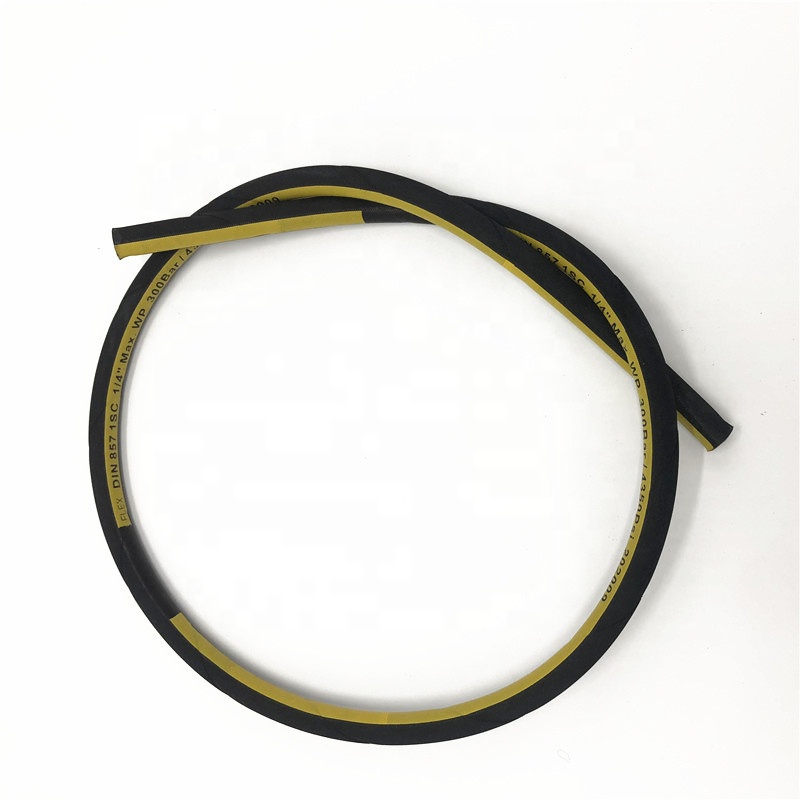
A: Layline markings, permanently embossed on the hose cover, provide critical traceability information. They typically include the manufacturer’s name or logo, hose type, working pressure, manufacturing date, and production batch number. This information is essential for quality control, warranty claims, and failure analysis, allowing for identification of potential manufacturing defects or material inconsistencies.
Q: How does fluid velocity affect hose life?
A: Excessive fluid velocity can accelerate erosion of the inner tube, particularly with abrasive particles present in the fluid. High velocity also increases pressure drop and can contribute to hose vibration and fatigue. Proper hose sizing and system design are critical to maintain fluid velocity within acceptable limits.
Q: What are the best practices for storing hydraulic hoses?
A: Hydraulic hoses should be stored in a cool, dry, and dark environment, away from direct sunlight, ozone sources, and extreme temperatures. Hoses should be coiled loosely and supported to avoid kinking or distortion. Avoid storing hoses in contact with oils, solvents, or other chemicals that could cause degradation.
Q: What are the key differences between JIC and DIN fittings?
A: JIC (Joint Industry Council) fittings utilize a 37-degree flared seat, offering a robust and leak-resistant connection. DIN (Deutsches Institut für Normung) fittings, prevalent in European applications, typically employ a 24-degree cone seat. The two standards are not interchangeable; using the wrong fitting type can lead to leaks or failure.
Q: What is the impact of synthetic fluids on hose selection?
A: Synthetic hydraulic fluids, such as phosphate esters and water glycols, require specialized hose materials that are compatible with their unique chemical properties. Standard nitrile rubber hoses are often not suitable, as they can swell and degrade in contact with these fluids. EPDM or fluorocarbon hoses are typically recommended for synthetic fluid applications.
Conclusion
The selection and maintenance of hydraulic hoses are critical to the reliable operation of any hydraulic system. Understanding the material science, manufacturing processes, and performance characteristics of different hose types is essential for ensuring optimal performance and preventing costly failures. Adherence to industry standards, coupled with regular inspections and preventive maintenance practices, maximizes hose service life and minimizes downtime.
Future trends in hydraulic hose technology will likely focus on the development of lighter-weight materials, improved abrasion resistance, and enhanced chemical compatibility. The integration of smart sensors into hose assemblies will enable real-time monitoring of pressure, temperature, and hose condition, facilitating predictive maintenance and further enhancing system reliability. Sustainable material options and environmentally responsible manufacturing processes will also gain prominence.