
Apr . 01, 2024 17:55 Back to list
hydraulic hose pipe ferrules factories Performance Analysis

Introduction
Hydraulic hose pipe ferrules are critical components in fluid power systems, serving as the essential interface between flexible hoses and rigid connections. These components, often manufactured in specialized factories, dictate the integrity and safety of hydraulic circuits across diverse industries – including construction, agriculture, manufacturing, and aerospace. Their primary function is to provide a leak-proof, high-pressure seal resisting both internal fluid pressure and external mechanical stresses. The selection and manufacturing quality of ferrules directly impact system performance, reliability, and longevity. This guide provides an in-depth analysis of hydraulic hose pipe ferrules, covering material science, manufacturing processes, performance characteristics, failure modes, and relevant industry standards. A significant pain point in the industry lies in the consistency of ferrule crimp quality and material traceability, impacting the overall reliability of high-pressure systems and increasing the risk of catastrophic failures. Furthermore, ensuring compatibility with evolving hose materials and fluid types presents a continuous engineering challenge.
Material Science & Manufacturing
The materials used in hydraulic hose ferrules are selected based on strength, ductility, corrosion resistance, and compatibility with hydraulic fluids. Carbon steel (typically SAE 1045 or equivalent) is the most common material due to its cost-effectiveness and good mechanical properties. Stainless steel (304, 316) is employed in corrosive environments or applications demanding higher temperature resistance. Brass alloys are used for specific fluid compatibility needs, though less frequently due to lower pressure ratings. The manufacturing process generally involves cold forming (stamping, drawing) to create the ferrule’s shape, followed by machining for critical dimensions. Heat treatment is crucial – typically involving hardening and tempering – to achieve the required yield and tensile strengths. Surface treatments like zinc plating or phosphate coating provide corrosion protection. Parameter control during cold forming is paramount; variations in wall thickness and geometric imperfections can significantly weaken the ferrule. Critical parameters include die geometry, lubrication, forming speed, and post-forming stress relief. Furthermore, raw material composition must be rigorously controlled, with verification via chemical analysis and mechanical testing (hardness, tensile strength, elongation). The proper selection of the cold-forming lubricant is essential, as it impacts surface finish and reduces galling during the process. Quality control includes dimensional inspection using calipers, micrometers, and coordinate measuring machines (CMMs), as well as non-destructive testing (NDT) methods like dye penetrant inspection to detect surface cracks.
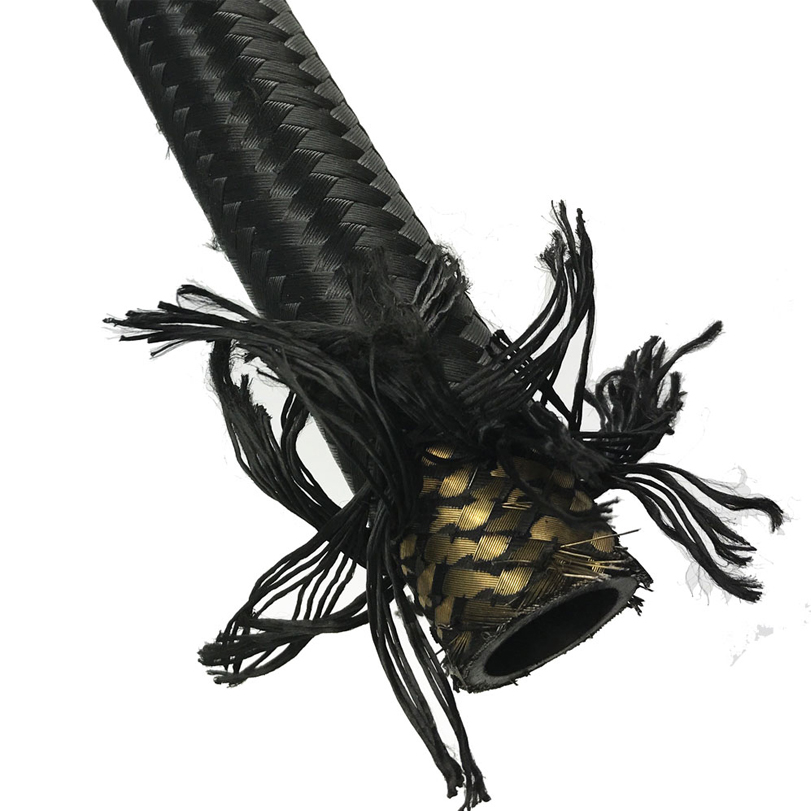
Performance & Engineering
The performance of a hydraulic hose ferrule is defined by its ability to withstand internal pressure, external stresses (bending, vibration, axial loading), and dynamic fatigue. Force analysis is critical, considering hoop stress from internal pressure, bending moments from hose routing, and axial forces from system movement. Finite Element Analysis (FEA) is often used to optimize ferrule geometry and predict stress distribution under various loading conditions. Environmental resistance – including resistance to corrosion from hydraulic fluids, moisture, and chemicals – is a key engineering consideration. Material selection and surface treatments are tailored to the specific operating environment. Compliance requirements, dictated by standards like SAE J518 and EN 853, specify minimum burst pressures, proof pressures, and fatigue life. Functional implementation involves precise crimping of the ferrule onto the hose. Crimp parameters – including crimp height, crimp diameter, and crimp angle – are critical and must be controlled within tight tolerances. Improper crimping can lead to leakage, hose blow-out, or premature failure. The crimping process introduces residual stresses in both the ferrule and the hose; understanding and managing these stresses is essential for long-term reliability. Consideration must also be given to thermal expansion and contraction, particularly in applications with wide temperature swings. The ferrule material’s coefficient of thermal expansion should be compatible with the hose material to minimize stress at the interface.
Technical Specifications
| Ferrule Material | Hose Inner Diameter (in) | Working Pressure (psi) | Burst Pressure (psi) |
|---|---|---|---|
| Carbon Steel (SAE 1045) | 0.5 | 3000 | 9000 |
| Carbon Steel (SAE 1045) | 1.0 | 2500 | 7500 |
| Stainless Steel (316) | 0.5 | 4000 | 12000 |
| Stainless Steel (316) | 1.0 | 3500 | 10500 |
| Brass Alloy (C36000) | 0.5 | 2000 | 6000 |
| Brass Alloy (C36000) | 1.0 | 1500 | 4500 |
Failure Mode & Maintenance
Common failure modes for hydraulic hose ferrules include fatigue cracking (due to cyclic pressure and bending), corrosion (particularly in harsh environments), and crimp failure (resulting from improper crimping or material defects). Fatigue cracking typically initiates at stress concentrations, such as the root of threads or sharp corners. Corrosion can lead to pitting and weakening of the ferrule material. Crimp failure manifests as leakage or hose blow-out. Oxidation of the material, especially at elevated temperatures, can embrittle the ferrule and reduce its strength. Failure analysis should involve visual inspection (for cracks, corrosion, and deformation), metallographic examination (to assess microstructure and crack propagation), and chemical analysis (to verify material composition). Preventive maintenance includes regular visual inspections for signs of corrosion or damage, proper torqueing of connections, and periodic pressure testing. Lubrication of threaded connections is also crucial to prevent galling and corrosion. If a ferrule shows signs of damage, it should be replaced immediately. Incorrect crimping procedures, or the use of damaged or worn crimping tools, are primary contributors to premature failure. Proper training of crimping personnel and regular calibration of crimping equipment are essential for maintaining ferrule integrity. The use of compatible hose and ferrule materials is also vital; incompatibility can lead to galvanic corrosion and reduced performance.
Industry FAQ
Q: What is the impact of hydraulic fluid type on ferrule material selection?
A: Different hydraulic fluids have varying levels of corrosivity and compatibility with different materials. For example, phosphate ester fluids require specialized materials (like stainless steel or fluoropolymers) due to their aggressive chemical properties. Mineral oil-based fluids are generally compatible with carbon steel, but additives in the fluid can affect corrosion rates. Always consult the fluid manufacturer's recommendations and ensure the ferrule material is certified for use with the specific hydraulic fluid.
Q: How does temperature affect ferrule performance?
A: Temperature fluctuations can cause thermal expansion and contraction, inducing stress at the ferrule-hose interface. Elevated temperatures can reduce the yield strength and fatigue life of the ferrule material. Cryogenic temperatures can embrittle the material. Material selection must consider the operating temperature range, and appropriate derating factors should be applied to pressure ratings at extreme temperatures.
Q: What are the critical parameters to control during the crimping process?
A: Critical parameters include crimp height, crimp diameter, crimp angle, and the force applied during crimping. These parameters must be precisely controlled to ensure a leak-proof seal and prevent damage to the hose. Using calibrated crimping tools and following the hose manufacturer’s specifications are essential.
Q: What NDT methods are commonly used to inspect ferrules?
A: Dye penetrant inspection is commonly used to detect surface cracks. Magnetic particle inspection can be used for ferromagnetic materials. Ultrasonic testing can detect internal flaws. Radiographic inspection (X-ray) provides a comprehensive view of the ferrule’s internal structure, but is less frequently used due to cost and safety concerns.
Q: What are the key considerations for long-term storage of ferrules?
A: Ferrules should be stored in a clean, dry environment to prevent corrosion. They should be protected from direct sunlight and extreme temperatures. If the ferrules are coated, ensure the coating is not damaged during storage. Regular inspection of stored ferrules for signs of corrosion or damage is recommended.
Conclusion
Hydraulic hose pipe ferrules are a vital, often underestimated, component in any hydraulic system. Their performance directly correlates with system reliability, safety, and longevity. The selection of appropriate materials, precise manufacturing control, rigorous quality assurance, and adherence to industry standards are paramount. Understanding the potential failure modes and implementing proactive maintenance strategies are crucial for minimizing downtime and preventing catastrophic failures.
Future developments in ferrule technology will likely focus on improved materials (such as higher-strength alloys and composite materials), advanced manufacturing processes (like additive manufacturing), and smart ferrules with integrated sensors for monitoring pressure, temperature, and fatigue life. Continuous innovation in ferrule design and manufacturing is essential to meet the evolving demands of increasingly complex hydraulic systems.