
Apr . 01, 2024 17:55 Back to list
hydraulic hose manufacturer supplier Technical Analysis
Introduction
Hydraulic hose, a fundamental component in fluid power systems, facilitates the transmission of pressurized hydraulic fluid to actuators and other system components. As a critical link in industries ranging from construction and agriculture to manufacturing and aerospace, the performance and reliability of hydraulic hose directly impacts operational efficiency and safety. This guide provides an in-depth technical analysis of hydraulic hose, covering material science, manufacturing processes, performance characteristics, failure modes, and relevant industry standards. The current market is driven by demand for higher working pressures, improved temperature resistance, and specialized hose constructions tailored to increasingly complex hydraulic systems. Procurement managers and engineers face challenges in selecting hoses that meet specific application requirements while optimizing lifecycle costs and minimizing downtime. This comprehensive technical guide aims to address those core pain points by providing a detailed understanding of hydraulic hose technology.
Material Science & Manufacturing
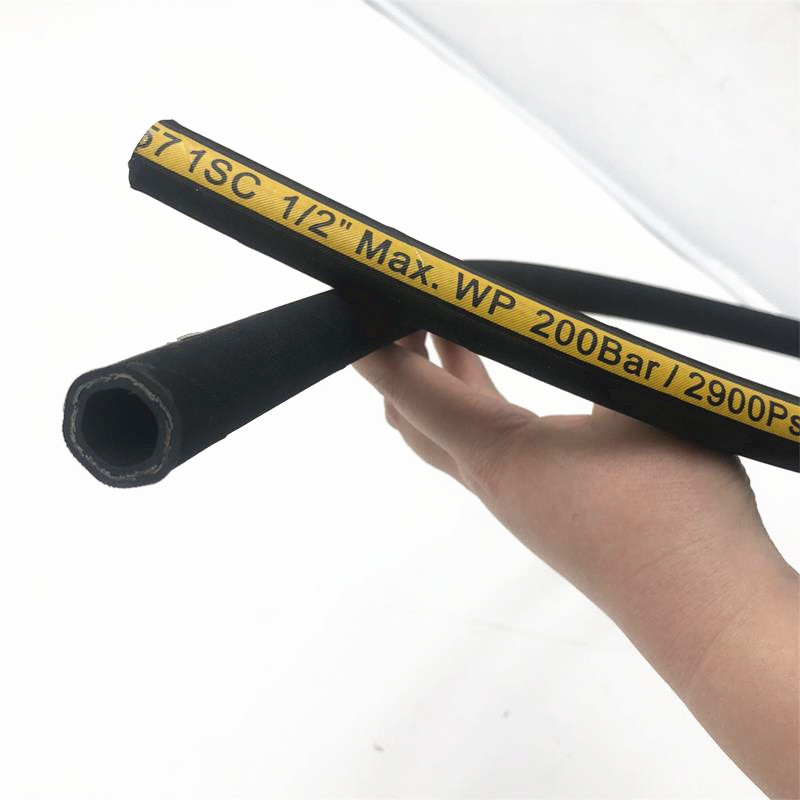
Hydraulic hose construction typically involves four primary layers: the inner tube, reinforcement layers, and the outer cover. The inner tube, which directly contacts the hydraulic fluid, is commonly composed of synthetic rubbers like nitrile (NBR), ethylene propylene diene monomer (EPDM), or fluorocarbon (FKM – Viton). NBR provides excellent resistance to petroleum-based fluids, while EPDM excels in phosphate ester fluid compatibility and high-temperature applications. FKM offers superior resistance to a wider range of aggressive chemicals and high temperatures, but at a higher cost. Reinforcement layers provide the hose's pressure-bearing capacity and are typically constructed from multiple braids or spirals of high-strength steel wire. The number and configuration of these layers dictate the hose’s working pressure rating. Outer covers are typically made from abrasion, ozone, and weathering-resistant rubbers like chloroprene (CR) or a polyurethane blend. Manufacturing processes vary depending on hose type. Braided hose utilizes a helical winding of steel wire over a mandrel, followed by vulcanization. Spiral-cut hose involves wrapping a continuous steel wire at a precise angle, also followed by vulcanization. Key parameter control during manufacturing includes precise rubber compound mixing ratios, consistent wire winding tension, and accurate vulcanization temperature and time to ensure optimal material properties and hose performance. The consistency of these parameters directly impacts the hose’s burst pressure, fatigue life, and resistance to permeation. Failure to control these parameters can lead to early failure due to layer separation, cracking, or reduced pressure capacity.

Performance & Engineering
Hydraulic hose performance is primarily characterized by its working pressure, burst pressure, and temperature range. Working pressure is the maximum continuous operating pressure recommended by the manufacturer, with a significant safety factor applied. Burst pressure represents the pressure at which the hose is expected to fail catastrophically. Engineering considerations involve conducting force analysis to determine hoop stress within the hose layers under pressure. This is critical for ensuring the hose can withstand the dynamic loads experienced during operation, including pressure pulsations and bending. Environmental resistance is also paramount. Hose materials must resist degradation from exposure to oil, chemicals, UV radiation, and extreme temperatures. Compliance requirements, such as those outlined by SAE International (J517, J1926) and EN 853, dictate minimum performance standards for hydraulic hose. Hose end fitting selection and installation are equally crucial. Incorrect fitting selection or improper crimping can significantly reduce hose performance and lead to leakage or failure. Finite Element Analysis (FEA) is frequently employed to model stress distribution within the hose and optimize its design for specific applications, particularly in high-pressure or dynamic systems.
Technical Specifications
| Parameter | Hydraulic Hose Type A (NBR Inner, 2 Wire Braid) | Hydraulic Hose Type B (EPDM Inner, 4 Wire Braid) | Hydraulic Hose Type C (FKM Inner, Spiral Wire) |
|---|---|---|---|
| Working Pressure (PSI) | 2000 | 3000 | 5000 |
| Burst Pressure (PSI) | 8000 | 12000 | 20000 |
| Temperature Range (°F) | -40 to 212 | -40 to 250 | -40 to 400 |
| Inner Tube Material | Nitrile (NBR) | Ethylene Propylene Diene Monomer (EPDM) | Fluorocarbon (FKM - Viton) |
| Reinforcement | 2 Wire Braid (Steel) | 4 Wire Braid (Steel) | Spiral Wire (Steel) |
| Outer Cover Material | Chloroprene (CR) | Chloroprene (CR) | Polyurethane |
Failure Mode & Maintenance
Common failure modes in hydraulic hose include fatigue cracking, abrasion of the outer cover, permeation of fluid through the inner tube, and fitting failure. Fatigue cracking typically occurs due to repeated bending and flexing, especially in areas near fittings. Abrasion is caused by contact with abrasive surfaces or debris. Permeation results in fluid loss and reduced system efficiency. Fitting failure can be attributed to improper crimping, corrosion, or material degradation. Failure analysis frequently reveals that many hose failures are preventable through proper maintenance. Regular visual inspections are crucial for identifying signs of wear, such as cracks, blisters, or abrasions. Hose routing should be optimized to minimize bending and contact with sharp objects. Hydraulic fluid should be regularly analyzed for contamination, which can accelerate hose degradation. When replacing hoses, it is essential to use compatible fittings and ensure they are properly crimped according to manufacturer specifications. Preventative maintenance programs, including scheduled hose replacement based on operating hours or fluid analysis results, can significantly reduce downtime and improve system reliability. Leak testing should be performed after any hose replacement or repair.
Industry FAQ
Q: What is the impact of impulse pressure on hydraulic hose life?
A: Impulse pressure, or pressure pulsations, significantly reduces hydraulic hose fatigue life. These pulsations create dynamic stress cycles within the hose layers, accelerating crack initiation and propagation. Hoses specifically designed for impulse applications incorporate features like internal anti-spin layers or heavier reinforcement to mitigate these effects. Selecting a hose with an appropriate impulse pressure rating for the application is critical.
Q: How does hydraulic fluid compatibility affect hose selection?
A: Hydraulic fluid compatibility is paramount. Using an incompatible fluid can cause the inner tube to swell, soften, or degrade, leading to permeation, leakage, and ultimately, hose failure. It’s crucial to consult the hose manufacturer’s chemical compatibility chart to ensure the hose material is compatible with the specific hydraulic fluid being used.
Q: What are the key differences between braided and spiral hydraulic hose?
A: Braided hose offers good flexibility and is suitable for moderate pressure applications. Spiral hose, with its continuous winding of wire, provides significantly higher pressure capacity and is more resistant to bending and kinking. Spiral hose generally exhibits lower flexibility than braided hose.
Q: What is the proper procedure for crimping hydraulic hose fittings?
A: Proper crimping is essential for a leak-free and reliable connection. The fitting and hose must be compatible, and the crimping machine must be calibrated and set to the manufacturer’s specifications for that specific hose and fitting combination. Incorrect crimping can lead to over-compression, damaging the hose, or under-compression, resulting in leakage.
Q: How can I extend the service life of hydraulic hose?
A: Extending service life involves proper hose routing to minimize bending and abrasion, regular visual inspections for wear and damage, maintaining clean hydraulic fluid, using compatible fittings, and ensuring proper crimping. Implementing a preventative maintenance program with scheduled hose replacements based on operating hours or fluid analysis results is also highly recommended.
Conclusion
Hydraulic hose, despite appearing as a simple component, embodies complex material science and engineering principles. Proper selection, installation, and maintenance are crucial for ensuring the reliability and safety of hydraulic systems. Understanding the interplay between material properties, manufacturing processes, performance characteristics, and potential failure modes is paramount for procurement managers and engineers seeking to optimize hose performance and minimize lifecycle costs.
The future of hydraulic hose technology will likely focus on developing lighter-weight, higher-strength materials, improving chemical resistance, and incorporating smart sensing capabilities for real-time monitoring of hose condition. Continued adherence to industry standards and best practices will be essential for ensuring the continued reliability and safety of hydraulic systems across diverse industrial applications.