
Apr . 01, 2024 17:55 Back to list
Hydraulic Hose Manufacturer Manufacturer Material Science and Manufacturing

Introduction
Hydraulic hose, a critical component in fluid power systems, facilitates the transmission of hydraulic fluid to actuate machinery. Positioned within the industrial supply chain as a direct Tier 2 or 3 supplier to Original Equipment Manufacturers (OEMs) and a readily available aftermarket component, its performance dictates system efficiency, reliability, and safety. These hoses are engineered to withstand extreme pressures, temperatures, and chemical exposure, differing significantly in construction based on application requirements. Core performance characteristics include working pressure, burst pressure, temperature range, fluid compatibility, and abrasion resistance. The industry faces ongoing challenges related to material cost fluctuations, stringent safety regulations, and the demand for lighter, more flexible, and longer-lasting hose assemblies, driving innovation in materials and manufacturing techniques.
Material Science & Manufacturing
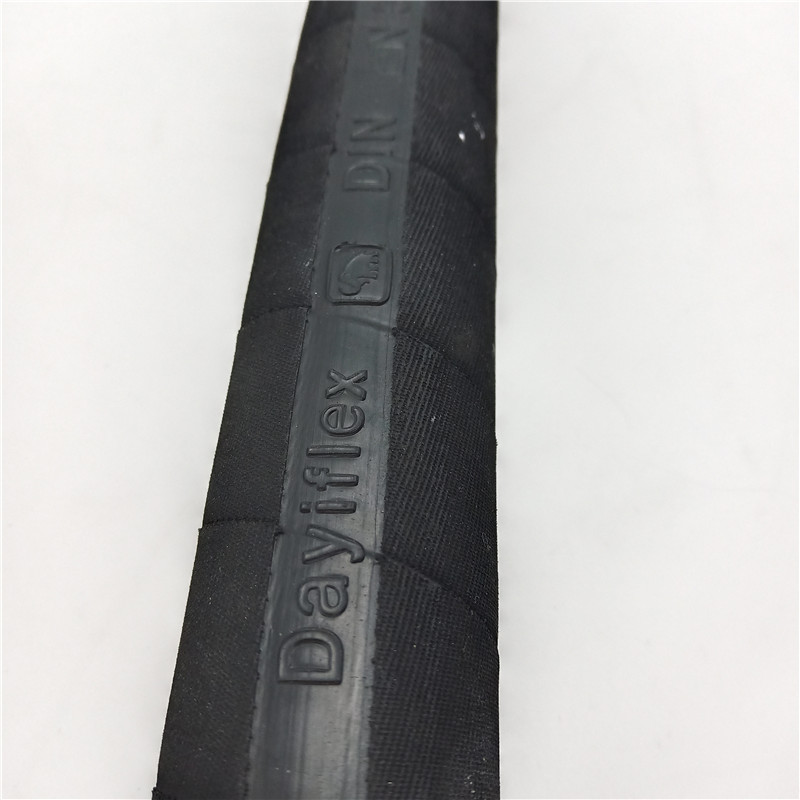
Hydraulic hoses are typically constructed from an inner tube, reinforcement layers, and an outer cover. The inner tube, responsible for fluid containment, is commonly made from synthetic rubbers like nitrile (NBR) for oil-based fluids, ethylene-propylene diene monomer (EPDM) for water-based fluids, or fluoropolymers (FKM/Viton) for aggressive chemicals and high temperatures. Reinforcement layers provide strength to withstand internal pressure and are usually composed of multiple plies of high-tensile steel wire, aramid fiber (Kevlar), or synthetic textiles. The outer cover protects the reinforcement from abrasion, weather, and chemical attack, often utilizing materials like polyurethane or a specialized rubber compound. Manufacturing processes vary based on hose type. Braided hoses are created by intertwining steel wire helically around a mandrel, followed by vulcanization. Spiral-cut hoses utilize a single, continuous wire spirally wrapped and then vulcanized. Critical parameters include wire diameter, ply angle, rubber compound formulation, and vulcanization time and temperature. Precise control of these parameters is crucial for achieving desired mechanical properties and ensuring long-term durability. Post-manufacturing testing includes pressure testing, impulse testing (cyclic pressure), and dimensional verification.
Performance & Engineering
The performance of a hydraulic hose is governed by several engineering principles. Hoop stress, calculated using Barlow's formula (σ = PD/2t, where σ is hoop stress, P is internal pressure, D is inner diameter, and t is wall thickness), dictates the hose’s ability to resist bursting. Fatigue analysis is paramount, considering cyclic pressure fluctuations, particularly in applications like hydraulic hammers or construction equipment. Finite Element Analysis (FEA) is routinely employed to model stress distribution and predict failure points. Environmental resistance is critical; hoses must withstand UV exposure, ozone degradation, and temperature extremes. Fluid compatibility is also key – incompatible fluids can cause swelling, softening, or degradation of the inner tube, leading to leaks and failure. Compliance standards (detailed in the footer) mandate minimum burst pressures, temperature ranges, and fluid resistance requirements. Flexibility and bend radius are engineered to prevent kinking and excessive stress concentration. Proper fitting selection and installation are crucial for maintaining performance and avoiding premature failure – incorrect fitting types or improper crimping can significantly reduce hose life.
Technical Specifications
| Parameter | SAE 100R1AT | SAE 100R2AT | DIN EN 853 1SN | DIN EN 857 2SN |
|---|---|---|---|---|
| Working Pressure (PSI) | 1000 | 2000 | 150 | 300 |
| Burst Pressure (PSI) | 3000 | 6000 | 450 | 900 |
| Temperature Range (°F) | -40 to +212 | -40 to +212 | -40 to +100 | -40 to +100 |
| Inner Tube Material | NBR | NBR | NBR | NBR |
| Reinforcement | Single Wire Braid | Double Wire Braid | Single Steel Wire Spiral | Double Steel Wire Spiral |
| Outer Cover Material | Synthetic Rubber | Synthetic Rubber | Synthetic Rubber | Synthetic Rubber |
Failure Mode & Maintenance
Hydraulic hose failures typically stem from several modes. Fatigue cracking, caused by repeated pressure cycling, initiates at stress concentration points (e.g., fitting interfaces, kinks). Abrasion, resulting from external contact with abrasive surfaces, degrades the outer cover, exposing the reinforcement. Pinholes and leaks can develop due to inner tube degradation caused by fluid incompatibility or aging. Blistering occurs when fluid permeates through the hose wall, leading to delamination. Catastrophic failure, characterized by a sudden burst, is often preceded by gradual weakening from one of the aforementioned modes. Maintenance involves regular visual inspection for cracks, abrasions, and leaks. Hoses should be replaced if damage is detected or if they exceed their recommended service life. Proper routing, avoiding sharp bends and contact with hot surfaces, is crucial. Regular fluid analysis can identify contaminants that accelerate hose degradation. Crimping procedures should be periodically inspected to ensure correct fitting attachment and prevent premature failure. Replacement hoses should always match or exceed the specifications of the original equipment.
Industry FAQ
Q: What is the significance of "lay line" markings on a hydraulic hose?
A: The lay line is a continuous spiral marking along the hose's length. It indicates the hose's manufacturing date and, more importantly, allows for visual inspection of hose twist. Excessive hose twist introduces internal stress, significantly reducing hose life and potentially leading to premature failure. The lay line should remain consistently straight along the hose’s length; any deviation indicates twist.
Q: How does temperature affect hydraulic hose performance?
A: Temperature affects both the rubber compounds and the steel reinforcement. High temperatures can accelerate rubber degradation, reducing its elasticity and increasing the risk of leaks. Conversely, low temperatures can reduce rubber flexibility, making the hose more susceptible to cracking. Steel reinforcement strength can also be affected by extreme temperatures. Exceeding the specified temperature range compromises the hose’s integrity.
Q: What are the key differences between SAE and DIN hydraulic hose standards?
A: SAE (Society of Automotive Engineers) standards are prevalent in North America, while DIN (Deutsches Institut für Normung) standards are common in Europe. They differ in testing methodologies, pressure ratings, and dimensional tolerances. DIN standards often specify higher working pressures for equivalent hose sizes. Selecting the correct standard depends on the application and regional requirements.
Q: What role do hose fittings play in overall system reliability?
A: Hose fittings are integral to system reliability. Incorrect fitting selection (e.g., wrong thread type, size mismatch) can lead to leaks and failures. Improper crimping creates stress concentrations and reduces the hose’s burst pressure. Fittings must be compatible with the hose and fluid being used and installed using calibrated crimping equipment.
Q: Can a hydraulic hose be repaired, or should it always be replaced?
A: Generally, hydraulic hoses should not be repaired. Field repairs are often unreliable and compromise the hose's structural integrity. While splicing kits exist, they rarely restore the hose to its original strength and safety characteristics. Replacement is the recommended course of action to ensure system reliability and prevent catastrophic failures.
Conclusion
Hydraulic hose technology represents a complex interplay of material science, engineering design, and manufacturing precision. Achieving optimal performance necessitates a comprehensive understanding of pressure ratings, fluid compatibility, temperature limitations, and potential failure modes. Selecting the appropriate hose for a specific application, coupled with diligent maintenance and adherence to industry standards, is paramount for ensuring the safe and reliable operation of hydraulic systems.
Future advancements in hydraulic hose technology will likely focus on developing lighter-weight materials, enhancing abrasion resistance, and incorporating intelligent sensing capabilities for real-time condition monitoring. The pursuit of sustainable materials and manufacturing processes will also play an increasingly important role, aligning with growing environmental concerns and regulatory pressures.