
Apr . 01, 2024 17:55 Back to list
hydraulic hose made in china factories Performance Engineering
Introduction
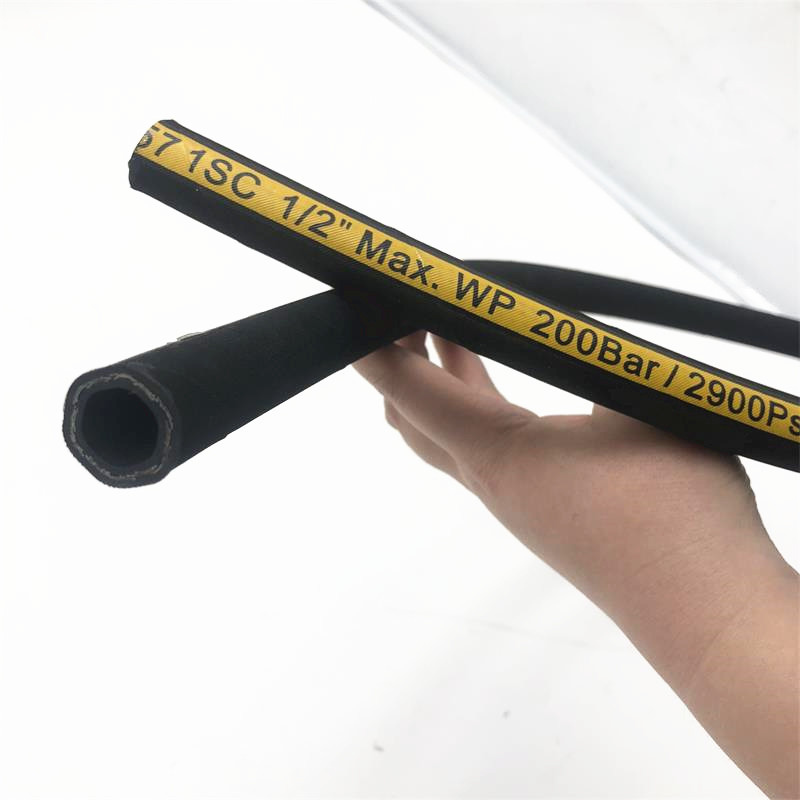
Hydraulic hose, manufactured extensively in Chinese factories, represents a critical component within fluid power systems, facilitating the transmission of hydraulic fluid to actuators and other components. These hoses are ubiquitous across diverse industries, including construction, agriculture, manufacturing, and automotive. The technical position of hydraulic hose within the supply chain is pivotal, linking hydraulic pump and valve manufacturers to end-users. Core performance characteristics defining the utility of these hoses include working pressure, burst pressure, temperature range, fluid compatibility, and resistance to abrasion and kinking. Chinese manufacturing has become a dominant force in global hydraulic hose production, driven by cost competitiveness and increasing technical capability. However, understanding variations in material quality, manufacturing processes, and adherence to international standards is crucial for informed procurement and reliable system performance. This guide provides a comprehensive overview of hydraulic hose manufacturing in China, detailing material science, performance engineering, failure modes, and relevant industry standards.
Material Science & Manufacturing
The core material in most hydraulic hoses is synthetic rubber, primarily Nitrile (NBR), due to its excellent oil resistance. Other elastomers used include Ethylene Propylene Diene Monomer (EPDM) for water and phosphate ester fluids, and Chloroprene rubber (CR) for high-temperature applications. Reinforcement layers are critical for withstanding pressure. These commonly utilize high-tensile steel wire, spirally wound or braided, to provide strength. The number of layers dictates the hose’s pressure rating. Manufacturing processes begin with the extrusion of the inner tube. Precise control of temperature and screw speed is essential to achieve consistent wall thickness and eliminate voids. Reinforcement layers are then applied, often through automated winding machines ensuring uniform layer spacing and tension. Following reinforcement, the outer cover is extruded, typically using a blend of synthetic rubbers to provide abrasion, weather, and chemical resistance. Key parameter control during manufacturing includes maintaining consistent rubber compound formulations, precise control of wire tension during braiding/winding, and proper vulcanization (curing) to achieve optimal elastomer properties. Post-production quality control involves pressure testing to 1.5 times the working pressure, dimensional inspection, and visual assessment for defects. Chinese factories often employ a mix of automated and manual processes; variations in automation levels significantly impact consistency and quality. Material traceability and rigorous quality management systems are increasingly important for reputable Chinese manufacturers.

Performance & Engineering
Hydraulic hose performance is governed by fundamental engineering principles. Burst pressure is a critical safety parameter, determined by the tensile strength of the reinforcement layers and the adhesion between layers. Working pressure is typically rated at 50% of burst pressure, providing a safety factor. Force analysis involves calculating hoop stress within the hose wall under internal pressure, utilizing the Lamé equation, which dictates the required reinforcement layer strength. Environmental resistance is paramount; factors like ozone exposure, UV radiation, and fluid degradation contribute to hose failure. EPDM compounds excel in ozone resistance, while additives are incorporated into NBR to enhance UV protection. Compliance requirements vary by region. SAE J517, DIN EN 853, and GB/T 3686 are common standards. These standards specify testing procedures for pressure, temperature, impulse, and fluid compatibility. Finite Element Analysis (FEA) is increasingly used to optimize hose designs, predicting stress distributions and identifying potential failure points. Impulse testing, simulating pressure pulsations, is crucial for assessing fatigue life. Proper hose routing is essential to prevent kinking and excessive bending, which can reduce flow and accelerate wear. Selecting the correct hose end fittings, ensuring proper crimping, and utilizing guard sleeves are also integral to system performance and longevity.
Technical Specifications
| Parameter | SAE J517 R1AT | DIN EN 853 1SN | GB/T 3686-2018 |
|---|---|---|---|
| Working Pressure (PSI) | Up to 1000 | Up to 400 Bar (5800 PSI) | Up to 31.5 MPa (4563 PSI) |
| Burst Pressure (PSI) | 3000 | 1200 Bar (17400 PSI) | 94.5 MPa (13688 PSI) |
| Temperature Range (°C) | -40 to +100 | -40 to +100 | -40 to +100 |
| Inner Tube Material | NBR | NBR | NBR |
| Reinforcement | Single Steel Wire Braid | Single Steel Wire Braid | Single Steel Wire Braid |
| Outer Cover Material | CR | CR | CR |
Failure Mode & Maintenance
Hydraulic hose failures can stem from several mechanisms. Fatigue cracking, particularly in the reinforcement layers, is common due to cyclic pressure loading. This is exacerbated by improper hose routing or excessive bending. Delamination, the separation of rubber layers, occurs when adhesion between layers is compromised, often due to temperature fluctuations or chemical attack. Degradation of the elastomer material occurs through oxidation, ozone cracking, and exposure to incompatible fluids. Abrasion damage arises from external contact with surfaces. Pinholes can develop in the inner tube due to corrosion or manufacturing defects. To mitigate failures, regular visual inspections are crucial, looking for cracks, bulges, abrasions, or leaks. Proper hose routing, minimizing bending radius, and protecting the hose from physical damage are essential preventative measures. Fluid contamination can significantly reduce hose life; regular fluid filtration is vital. When replacing hoses, ensure compatibility with the hydraulic fluid and operating conditions. Proper crimping of hose ends is paramount – under-crimping leads to leaks, while over-crimping damages the hose. Regularly torque hose end connections to specified values. Maintaining a record of hose replacement dates and failure analysis data can help identify recurring issues and improve system reliability. Implementing a preventative maintenance schedule based on operating hours or calendar intervals is a best practice.
Industry FAQ
Q: What is the primary difference between R1AT and 1SN hydraulic hoses, and how does that impact selection for a high-pressure application?
A: R1AT (SAE standard) and 1SN (DIN EN standard) both designate single wire braid reinforced hoses, but the key difference lies in the manufacturing and testing standards. 1SN hoses generally have tighter tolerances and more stringent testing requirements, especially regarding impulse performance, making them more suitable for high-pressure, high-impulse applications. R1AT hoses are typically more cost-effective but may exhibit a shorter service life under severe conditions. Therefore, for critical high-pressure systems, a 1SN hose is often the preferred choice, despite the higher initial cost.
Q: How does the choice of inner tube material (NBR vs. EPDM) affect the longevity of a hydraulic hose exposed to varying fluid types?
A: NBR (Nitrile) offers excellent resistance to petroleum-based hydraulic fluids, making it the standard choice for most applications. However, it is less compatible with phosphate ester fluids and hot water. EPDM (Ethylene Propylene Diene Monomer) excels in resistance to water, glycol-based fluids, and phosphate ester fluids, but its oil resistance is limited. Selecting the wrong inner tube material leads to swelling, degradation, and eventual hose failure. Careful fluid compatibility assessment is critical during hose selection.
Q: What are the common causes of hose end fitting failure, and what preventative measures can be taken?
A: Common causes include improper crimping (under or over-crimping), corrosion of fittings, exceeding the fitting’s pressure rating, and fatigue due to vibration. Preventative measures include ensuring proper crimping techniques are followed, utilizing corrosion-resistant fitting materials, selecting fittings with appropriate pressure ratings, employing anti-vibration measures, and regularly inspecting fittings for signs of damage or leaks.
Q: What role does hose guard (sleeving) play in extending the service life of hydraulic hoses, particularly in demanding environments?
A: Hose guard, typically made from abrasion-resistant polymers, provides critical protection against external damage, including abrasion, cutting, and impact. It also shields the hose from extreme temperatures and UV radiation. In environments with significant physical hazards, hose guard substantially extends hose life and improves safety by preventing catastrophic failures due to external damage.
Q: What quality control measures should be expected from a reputable hydraulic hose manufacturer in China?
A: Reputable manufacturers should have robust quality control systems in place, including material traceability, incoming material inspection, in-process quality checks (dimensional accuracy, reinforcement layer integrity), final pressure testing to 1.5x working pressure, and rigorous visual inspection. Certifications such as ISO 9001 demonstrate a commitment to quality management. Transparency in manufacturing processes and willingness to provide test reports are also indicators of a reliable supplier.
Conclusion
Hydraulic hose manufactured in China presents a compelling value proposition, but requires careful consideration of material quality, manufacturing processes, and adherence to international standards. Understanding the interplay between material science, performance engineering, and potential failure modes is crucial for selecting the appropriate hose for a specific application. Prioritizing robust quality control measures, comprehensive testing, and fluid compatibility assessment ensures reliable system performance and minimizes the risk of costly downtime.
Looking ahead, advancements in hose materials, such as thermoplastic hoses offering higher strength-to-weight ratios, and the integration of smart sensing technologies for real-time condition monitoring, are poised to further enhance the performance and reliability of hydraulic hose systems. Continued investment in quality control and standardization within Chinese manufacturing will solidify its position as a leading global supplier of hydraulic hose solutions.