
Apr . 01, 2024 17:55 Back to list
Hydraulic Hose Factory Supplier Performance Analysis
Introduction
Hydraulic hose assemblies are critical components in fluid power systems, responsible for the safe and efficient transmission of hydraulic fluid under high pressure. A hydraulic hose factory supplier provides manufactured hoses, fittings, and associated services to a broad spectrum of industries including construction, agriculture, mining, oil & gas, and manufacturing. The performance and reliability of these hoses directly impact the functionality and safety of the entire system. This guide provides a comprehensive technical overview of hydraulic hoses, covering material science, manufacturing processes, performance characteristics, failure modes, and relevant industry standards. The core performance characteristics defining a hydraulic hose include pressure rating, temperature range, fluid compatibility, bend radius, and resistance to abrasion and weathering. Industry pain points often revolve around premature failure due to incorrect material selection, improper installation, exceeding pressure limits, and inadequate maintenance practices. Selecting a qualified hydraulic hose factory supplier capable of consistently meeting stringent quality control measures is paramount.
Material Science & Manufacturing
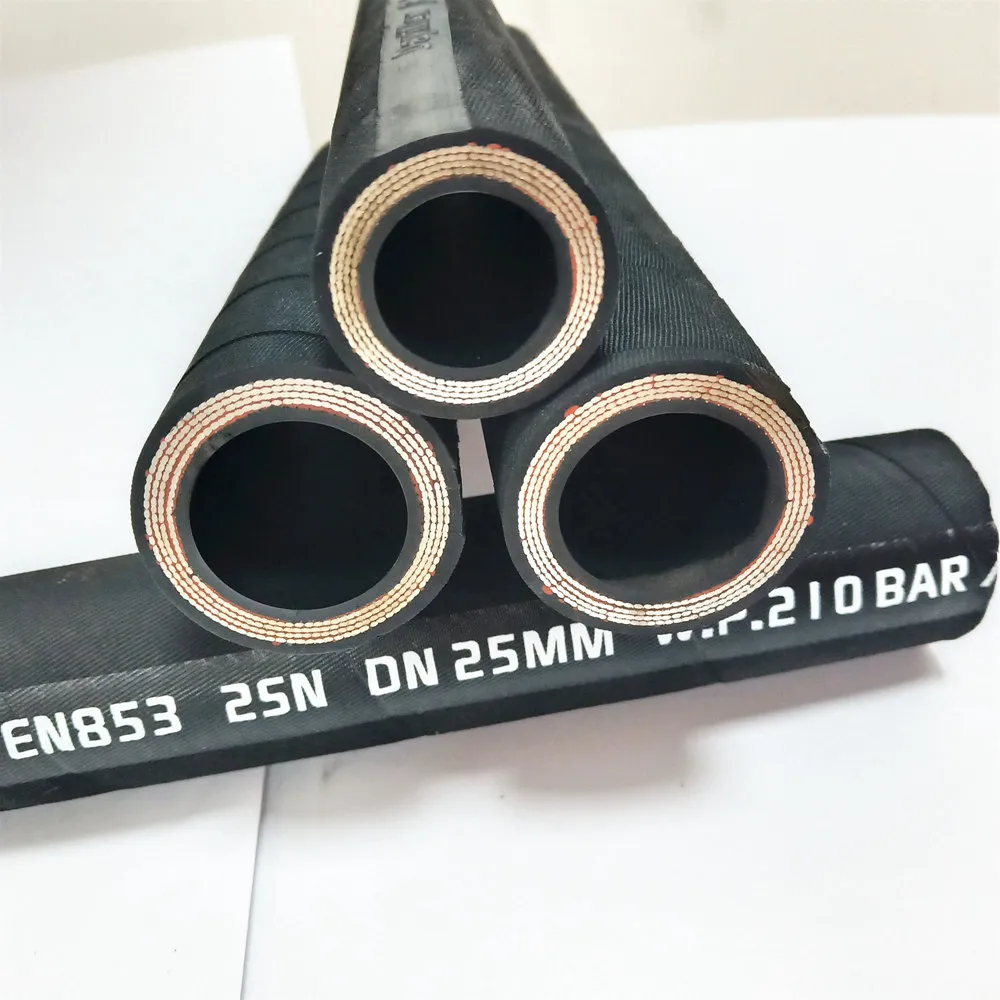
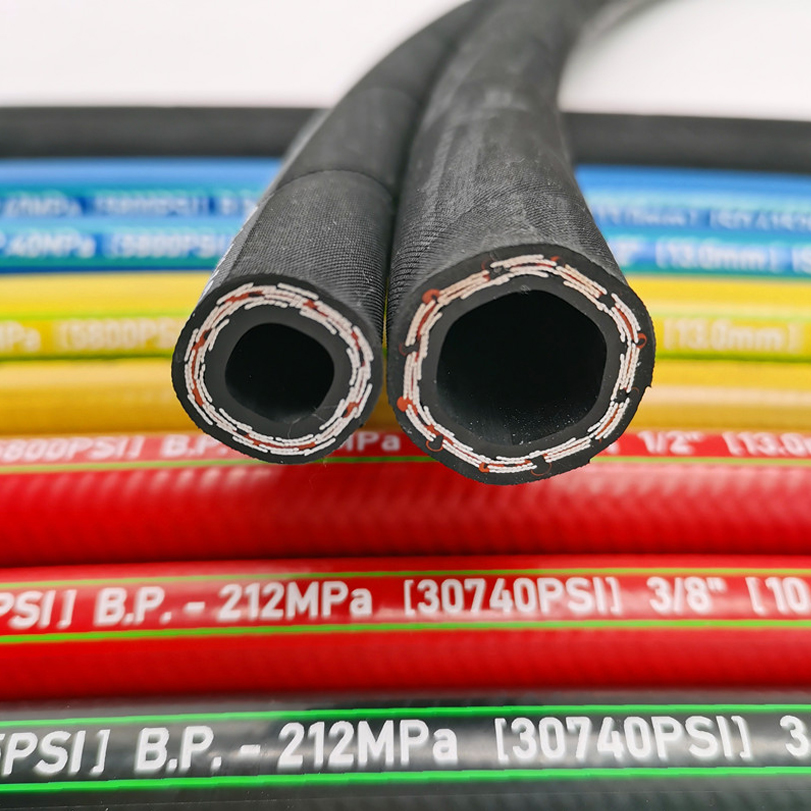
Hydraulic hoses are typically constructed from multiple layers, each contributing to specific performance characteristics. The inner tube, responsible for fluid containment, is commonly made from synthetic rubbers like Nitrile (NBR), Ethylene Propylene Diene Monomer (EPDM), or Fluoroelastomer (FKM - Viton). NBR offers excellent resistance to petroleum-based fluids, EPDM provides superior heat and weather resistance, and FKM exhibits exceptional chemical compatibility and high-temperature performance. The reinforcement layer provides strength and pressure resistance. Materials include synthetic fibers (polyester, nylon, aramid) braided in various patterns, or spiraled steel wire. Steel wire reinforcement is utilized in high-pressure applications. The outer cover protects the reinforcement layer from abrasion, weathering, and chemical attack. Common cover materials include Chloroprene rubber (CR) and Polyurethane (PU).
Manufacturing processes vary depending on hose type and reinforcement. Braided hoses are created by interlacing fibers around a mandrel, followed by rubber vulcanization. Spiral wire hoses involve winding steel wire helically around a mandrel, also followed by vulcanization. Extrusion is used to create the inner tube and outer cover, carefully controlling compound temperature, pressure, and screw speed to ensure dimensional accuracy and material homogeneity. Key parameter control involves maintaining consistent rubber compound formulations (batch-to-batch variability is critical), precise braid angle and tension, and accurate wire pitch and diameter. Vulcanization time and temperature are also meticulously controlled to achieve optimal rubber crosslinking, impacting hose flexibility, strength, and fluid resistance. Post-manufacturing, hoses undergo rigorous testing, including pressure testing, impulse testing, and bend testing to verify performance compliance.
Performance & Engineering
The performance of a hydraulic hose is dictated by its ability to withstand internal pressure, external loads, and environmental factors. Force analysis focuses on hoop stress within the hose wall, determined by the internal pressure and hose diameter. Reinforcement layer configuration directly influences the hose's burst pressure and working pressure (typically defined as 50% of burst pressure). Bend radius is crucial; exceeding the minimum bend radius induces stress concentrations, leading to premature failure. Environmental resistance encompasses temperature stability, fluid compatibility, and resistance to ozone, UV radiation, and abrasion. Hydraulic hose selection requires careful consideration of the operating temperature range of the hydraulic fluid and the surrounding environment.
Compliance requirements vary depending on the industry and geographic location. SAE J517 (hydraulic hose standards) and EN 853/856 (European standards) define performance requirements and testing procedures. Impulse testing simulates pressure pulsations, assessing the hose’s resistance to fatigue failure. Leakage testing verifies the integrity of the hose and fitting connection. In safety-critical applications (e.g., aircraft hydraulics), hoses must meet stringent certification requirements, demonstrating compliance with relevant aviation standards. Furthermore, understanding the impact of fluid velocity on pressure drop within the hose is essential for optimizing system efficiency and preventing cavitation.
Technical Specifications
| Parameter | Unit | SAE 100R1 AT | SAE 100R2 AT |
|---|---|---|---|
| Working Pressure | MPa | 20.7 | 34.5 |
| Burst Pressure | MPa | 82.7 | 138 |
| Temperature Range | °C | -40 to +100 | -40 to +100 |
| Inner Tube | Material | NBR | NBR |
| Reinforcement | Material | Single Textile Braid | Double Textile Braid |
| Cover | Material | CR | CR |
Failure Mode & Maintenance
Hydraulic hose failure can stem from several sources. Fatigue cracking, particularly at the fitting connection, results from repeated pressure cycles and bending. Abrasion, caused by external contact with abrasive surfaces, degrades the outer cover, exposing the reinforcement layer. Internal corrosion or degradation occurs when incompatible fluids attack the inner tube material. Over-pressurization exceeds the hose’s rated working pressure, leading to burst failure. Kinking or excessive bending induces stress concentrations, causing localized failure. Improper installation, such as incorrect fitting selection or over-tightening, can also compromise hose integrity.
Preventative maintenance is critical. Regular visual inspections should identify abrasions, cracks, and leaks. Hoses should be replaced proactively based on service life guidelines (typically 5-7 years) or if signs of damage are observed. Proper hose routing and support are essential to prevent kinking and abrasion. Fluid compatibility must be verified to avoid internal degradation. Fittings should be properly torqued according to manufacturer’s specifications. When replacing hoses, it is best practice to replace fittings as well to ensure a reliable connection. Detailed records of hose replacement and maintenance activities should be maintained for traceability and performance analysis.
Industry FAQ
Q: What are the key differences between synthetic rubber and thermoplastic hydraulic hoses?
A: Synthetic rubber hoses, typically utilizing NBR or EPDM, offer excellent flexibility and are generally more cost-effective. However, they are more susceptible to degradation from certain fluids and have lower temperature ranges. Thermoplastic hoses, like those made from polyester or polyamide, provide superior chemical resistance, higher temperature capability, and lower permeability, but are generally less flexible and more expensive.
Q: How does reinforcement type (braid vs. spiral) impact hose performance?
A: Braided reinforcement offers good flexibility and is suitable for moderate pressure applications. Spiral wire reinforcement provides significantly higher pressure resistance but reduces flexibility. The choice depends on the system's pressure requirements and bend radius limitations.
Q: What is the significance of impulse testing, and what does a high impulse rating indicate?
A: Impulse testing simulates the effects of pressure pulsations within a hydraulic system. A high impulse rating indicates that the hose can withstand a large number of pressure cycles without failure, essential for applications with frequent valve switching or pump pulsations.
Q: How do I determine the appropriate working pressure for a hydraulic hose?
A: The working pressure should be selected based on the maximum system pressure, with a safety factor applied. It’s crucial to consider pressure spikes and surges. Typically, a hose's working pressure is 50% of its burst pressure. Consult system schematics and component specifications to accurately determine the maximum pressure.
Q: What are the best practices for storing hydraulic hoses to maximize their service life?
A: Store hoses in a cool, dry, and dark environment, away from direct sunlight, ozone sources, and extreme temperatures. Hoses should be stored coiled loosely or hung, avoiding sharp bends. Avoid storing hoses near chemicals or solvents that could cause degradation. Regularly inspect stored hoses for signs of deterioration.
Conclusion
The selection and maintenance of hydraulic hoses are critical for ensuring the reliable and safe operation of hydraulic systems. A thorough understanding of material science, manufacturing processes, performance characteristics, and potential failure modes is essential for mitigating risks and maximizing hose service life. Choosing a reputable hydraulic hose factory supplier who consistently adheres to stringent quality control standards, and provides comprehensive technical support is paramount.
Future trends in hydraulic hose technology focus on the development of lighter-weight materials, improved chemical resistance, and enhanced durability. Advanced materials like thermoplastic composites and multi-layer constructions are emerging to address demanding application requirements. Continuous monitoring of hose performance through sensor integration and predictive maintenance techniques will further enhance system reliability and minimize downtime.