
Apr . 01, 2024 17:55 Back to list
hydraulic hose factory Performance Analysis
Introduction
Hydraulic hose assemblies are critical components in fluid power systems, responsible for the safe and efficient transmission of pressurized hydraulic fluid. These assemblies aren't simply rubber tubes; they represent a complex engineering solution addressing factors such as pressure rating, temperature extremes, fluid compatibility, and operational longevity. The hydraulic hose factory represents the foundational stage in this supply chain, encompassing raw material selection, hose construction, testing protocols, and ultimately, delivering a product vital to industries spanning construction, agriculture, manufacturing, and aerospace. The core performance metric is maintaining fluid integrity under dynamic and static pressure, preventing leaks that can lead to system failure, environmental hazards, and potentially dangerous operating conditions. This guide provides an in-depth technical exploration of hydraulic hose manufacturing, material science, performance characteristics, failure modes, and relevant industry standards.
Material Science & Manufacturing
The construction of a hydraulic hose is multi-layered, each contributing to its overall performance. The innermost layer, the tube, is typically composed of synthetic rubbers like nitrile (NBR), ethylene propylene diene monomer (EPDM), or fluoropolymers (FKM/Viton). NBR offers excellent resistance to petroleum-based hydraulic fluids, while EPDM excels in phosphate ester fluid compatibility and high-temperature applications. FKM provides superior resistance to aggressive chemicals and extreme temperatures, but at a higher cost. Manufacturing the tube involves extrusion, a process where heated rubber compound is forced through a die to create a continuous, seamless profile. Precise control of extrusion temperature, screw speed, and die geometry is critical to maintain consistent wall thickness and eliminate defects.
The reinforcement layer provides the hose’s strength and pressure-withstanding capability. This layer commonly consists of multiple braids or spirals of high-tensile steel wire. Single wire braid is suitable for lower pressure applications, while multiple braids (typically two or four) increase pressure capacity. Spiral reinforcement, using wound steel wire, allows for higher flexibility and burst pressures. The wire undergoes surface treatment (zinc plating or epoxy coating) to inhibit corrosion. The manufacturing process involves precisely winding the wire around a mandrel, followed by vulcanization to bind the reinforcement to the inner tube.
The outer cover protects the reinforcement layer from abrasion, environmental degradation (UV exposure, ozone), and chemical attack. Materials commonly used for the cover include synthetic rubbers like chloroprene (CR) and polyurethane (PU). CR offers good abrasion and weather resistance, while PU provides exceptional abrasion resistance and oil resistance. The cover is applied via extrusion, similar to the inner tube. Post-extrusion, hoses undergo vulcanization – a chemical process involving heat and pressure to crosslink the rubber polymers, enhancing strength, elasticity, and chemical resistance. Parameter control during vulcanization (temperature, time, pressure) is paramount to achieve optimal material properties and prevent under- or over-curing.
Performance & Engineering
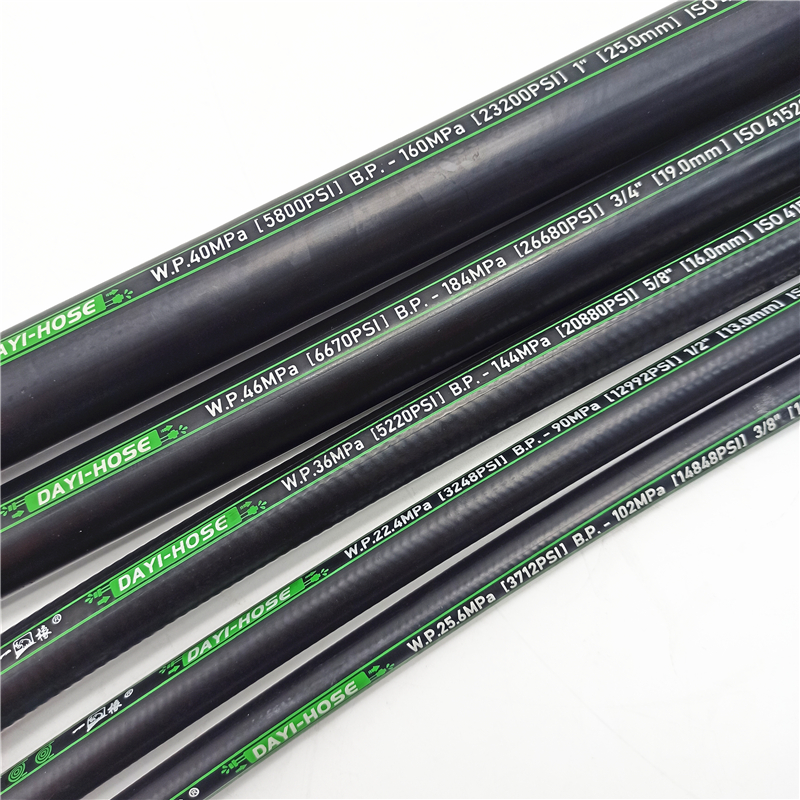
Hydraulic hose performance is governed by several critical engineering parameters. Burst pressure, the maximum pressure the hose can withstand before rupture, is a primary specification. Working pressure, typically 50-75% of burst pressure, defines the safe operating limit. Hose assemblies are subjected to rigorous testing, including hydrostatic testing (filling with fluid to a specified pressure) and impulse testing (cyclic pressure application) to verify pressure capabilities and fatigue resistance.
Flexibility, or bend radius, is crucial for installation and operation in confined spaces. Spiral-wound hoses generally offer superior flexibility compared to braided hoses. Temperature range is another critical factor, as rubber compounds exhibit varying performance characteristics at different temperatures. Fluid compatibility must be carefully considered to prevent hose degradation and swelling. The hose material must resist chemical attack from the hydraulic fluid and any contaminants present in the system.
Failure analysis often focuses on stress concentration points, particularly at hose ends. Proper crimping of fittings is essential to create a secure, leak-proof connection. Improper crimping can lead to premature failure due to fatigue or extrusion of the hose material. Finite element analysis (FEA) is employed during the design phase to simulate stress distribution within the hose assembly and optimize reinforcement configuration for maximum performance and durability. Environmental resistance testing, including exposure to UV radiation, ozone, and salt spray, ensures long-term performance in harsh operating conditions. Compliance with industry standards (SAE, DIN EN) dictates minimum performance requirements and testing procedures.
Technical Specifications
| Parameter | SAE 100R1 AT | SAE 100R2 AT | DIN EN 853 1SN | DIN EN 857 1ST |
|---|---|---|---|---|
| Working Pressure (psi) | 2000 | 2400 | 200 | 250 |
| Burst Pressure (psi) | 8000 | 9600 | 800 | 1000 |
| Temperature Range (°F) | -40 to 212 | -40 to 212 | -40 to 212 | -40 to 212 |
| Reinforcement | Single Wire Braid | Two Wire Braids | Single Wire Spiral | Two Steel Wire Spirals |
| Tube Material | NBR | NBR | NBR | NBR |
| Cover Material | CR | CR | CR | CR |
Failure Mode & Maintenance
Hydraulic hose failures are often categorized as either catastrophic (sudden rupture) or progressive (gradual degradation). Catastrophic failures typically result from exceeding the hose's pressure rating or experiencing a sudden pressure surge. Progressive failures are more common and stem from factors like abrasion, ozone cracking, oil permeation, and fatigue. Abrasion occurs due to rubbing against surrounding components, gradually wearing away the outer cover and exposing the reinforcement layer. Ozone cracking is caused by exposure to ozone, leading to small cracks in the rubber compound. Oil permeation occurs when hydraulic fluid diffuses through the tube material, causing swelling and weakening. Fatigue failure results from cyclic pressure and bending, leading to crack initiation and propagation within the reinforcement layer.
Common failure analysis techniques include visual inspection, microscopic examination of fracture surfaces, and chemical analysis of the hose material. Preventative maintenance is crucial to extend hose life and prevent failures. Regular inspections should focus on identifying signs of abrasion, cracking, swelling, or leakage. Hoses should be replaced if any damage is detected. Proper routing and support are essential to prevent excessive bending and abrasion. Using hose guards and clamps can provide additional protection. Maintaining clean hydraulic fluid and using appropriate filtration systems reduces the risk of contamination and premature wear. Regularly checking crimp connections ensures they remain secure and leak-free. Record-keeping of hose installation and replacement dates facilitates proactive maintenance planning.
Industry FAQ
Q: What is the significance of the 'dash size' in hydraulic hose specification?
A: The dash size (e.g., -6, -8, -10) refers to the internal diameter of the hose in sixteenths of an inch. Therefore, a -6 hose has a 6/16-inch (or 3/8-inch) internal diameter. The dash size directly impacts flow rate; larger dash sizes accommodate higher flow volumes but require higher pressure ratings and may be less flexible.
Q: How does temperature affect hydraulic hose performance?
A: Extreme temperatures can significantly degrade hydraulic hose performance. High temperatures can cause rubber compounds to soften and swell, reducing pressure capacity and increasing leakage risk. Low temperatures can make the rubber brittle and prone to cracking. The specified temperature range for a hose should always be considered in the application.
Q: What is the role of the fitting in the overall hose assembly?
A: The fitting creates the connection between the hose and the hydraulic system. It must be compatible with the hose material and the fluid being conveyed. Proper crimping is vital to ensure a secure, leak-proof connection. Incorrectly crimped fittings are a primary cause of hose failure.
Q: Can I use a hydraulic hose with a different fluid than its original specification?
A: No, this is strongly discouraged. Different hydraulic fluids have varying chemical compositions. Using a hose with an incompatible fluid can cause the tube material to swell, degrade, or dissolve, leading to premature failure and potential safety hazards. Always verify fluid compatibility before selecting a hose.
Q: What is the difference between a braided hose and a spiral hose?
A: Braided hoses utilize multiple layers of interwoven steel wire for reinforcement, offering good flexibility and moderate pressure ratings. Spiral hoses use a single, continuously wound steel wire, providing higher pressure capacity and enhanced flexibility, but generally at a higher cost. The application dictates the appropriate reinforcement type.
Conclusion
The hydraulic hose factory’s output is a critical, engineered product demanding rigorous material selection, precise manufacturing control, and adherence to stringent industry standards. Understanding the interplay between material science, reinforcement configurations, and performance characteristics is paramount to ensuring safe, reliable operation in demanding applications. The longevity and integrity of hydraulic systems are intrinsically linked to the quality and proper specification of these seemingly simple, yet highly engineered, components.
Looking forward, advancements in hose technology are focused on developing lighter-weight materials, increasing pressure ratings, and improving resistance to aggressive fluids. Furthermore, increased emphasis on sustainable manufacturing practices and environmentally friendly materials is driving innovation within the industry. Proper maintenance and inspection routines, guided by the technical knowledge outlined in this guide, remain the cornerstone of maximizing hose lifespan and minimizing operational risks.