
Apr . 01, 2024 17:55 Back to list
hydraulic hose crimping machine Performance Analysis
Introduction
Hydraulic hose crimping machines are essential components in the manufacturing and maintenance of hydraulic systems across numerous industries. These machines permanently attach fittings to hydraulic hoses, creating leak-proof connections capable of withstanding high pressures and dynamic loads. Their technical position within the supply chain is pivotal; they bridge the gap between hose and fitting manufacturers and the end-users of hydraulic power, including construction, agriculture, mining, and manufacturing sectors. Core performance characteristics revolve around crimp diameter accuracy, centering capabilities, force control, and overall reliability. Poor crimping can lead to premature hose failure, resulting in costly downtime, safety hazards, and environmental damage, highlighting the criticality of machine precision and operator skill. The industry faces ongoing challenges in adapting to new hose materials (e.g., thermoplastic), tighter tolerances, and increasing demands for automation and data logging.
Material Science & Manufacturing
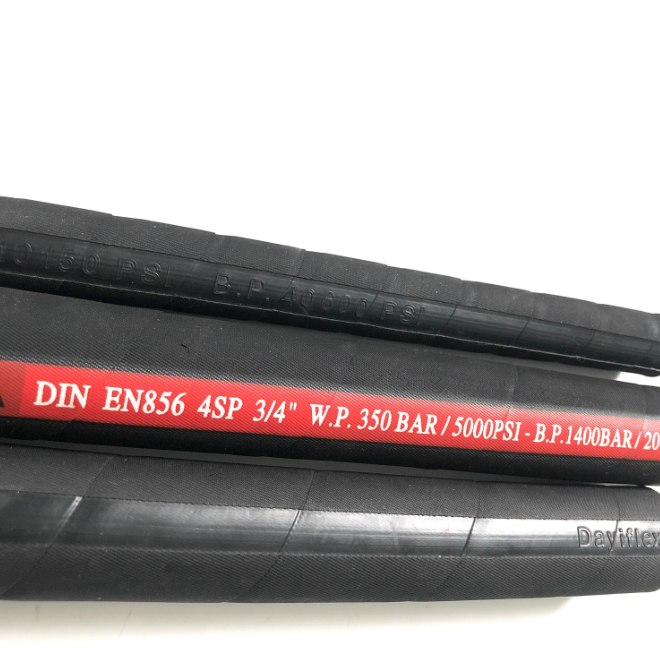
The core components of a hydraulic hose crimping machine are constructed from high-strength materials. Machine frames typically utilize hardened steel (AISI 1045 or equivalent) to withstand the immense forces generated during crimping. Crimping dies are manufactured from tool steel (e.g., D2, H13) selected for their hardness, wear resistance, and ability to maintain dimensional stability under repeated stress. The hydraulic systems rely on high-grade carbon steel cylinders and pistons, often incorporating surface hardening treatments like nitriding or chrome plating to enhance durability. Hoses themselves are composed of multiple layers. The inner tube is commonly made from nitrile rubber (NBR), polyethylene (PE), or thermoplastic polyurethane (TPU), chosen for their fluid resistance and flexibility. Reinforcement layers consist of braided high-tensile steel wire or spiral-wound steel wire, providing burst strength. The outer cover, typically synthetic rubber (e.g., SBR, EPDM), protects the reinforcement layers from abrasion, weathering, and chemical attack.
Manufacturing processes involve precision machining of die sets to ensure accurate crimp diameters. Die geometry is critical and is tailored to specific hose and fitting combinations. Frame fabrication utilizes heavy-duty welding techniques, followed by stress-relieving heat treatment to prevent cracking. Hydraulic cylinder construction involves honing and lapping operations to achieve a smooth bore finish and tight tolerances. Parameter control during manufacturing is paramount. Die hardness is verified using Rockwell testing. Frame alignment is checked using laser alignment systems. Hydraulic pressure testing is conducted to validate system performance and leak tightness. Quality control procedures adhere to ISO 9001 standards, emphasizing traceability and documentation.
Performance & Engineering
The performance of a hydraulic hose crimping machine is fundamentally governed by force analysis. The crimping process requires substantial force to plastically deform the fitting ferrule onto the hose reinforcement. This force is dictated by the hose outer diameter, fitting ferrule dimensions, and the material properties of both components. The machine’s hydraulic system must deliver sufficient pressure and flow rate to generate the required crimping force. Finite element analysis (FEA) is employed during the design phase to optimize die geometry and minimize stress concentrations. Centering accuracy is also critical. Misalignment between the hose, fitting, and die can result in uneven crimping and premature failure. Sophisticated machines incorporate automatic centering mechanisms to ensure precise alignment. Environmental resistance is a key consideration. Machines operating in harsh environments (e.g., extreme temperatures, corrosive atmospheres) require specialized coatings and seals to prevent degradation. Compliance requirements, such as those outlined by SAE J518 (Hydraulic Hose – Performance Characteristics), dictate minimum crimp strength and burst pressure requirements. Functional implementation often involves programmable logic controllers (PLCs) to automate the crimping cycle, monitor key parameters, and provide diagnostic information.
Technical Specifications
| Parameter | Unit | Typical Value (Small Machine) | Typical Value (Large Machine) |
|---|---|---|---|
| Crimping Force | kN | 50 | 200 |
| Maximum Hose Outer Diameter | mm | 50 | 152 |
| Maximum Fitting Ferrule Angle | degrees | 30 | 45 |
| Hydraulic System Pressure | MPa | 25 | 70 |
| Crimping Cycle Time | seconds | 10-20 | 20-40 |
| Power Supply | V/Hz/Ph | 230/50/1 | 400/50/3 |
Failure Mode & Maintenance
Hydraulic hose crimping machines are subject to several potential failure modes. Fatigue cracking in the die set is common, particularly in machines handling high-volume production. This is caused by repeated stress cycles during crimping. Delamination of the die surface can also occur due to inadequate lubrication or improper heat treatment. Hydraulic system failures, such as pump cavitation, seal leakage, and cylinder drift, are relatively frequent. These failures are often linked to contamination of the hydraulic fluid or worn components. Electrical component failures, including PLC malfunctions and sensor failures, can disrupt the automated crimping cycle. Oxidation of machine components, especially in outdoor installations, can lead to corrosion and reduced performance. Proper maintenance is crucial to prevent these failures. Regular lubrication of moving parts is essential. Periodic inspection of die sets for cracks or wear is recommended. Hydraulic fluid should be filtered regularly and replaced according to manufacturer's recommendations. Electrical connections should be checked for tightness and corrosion. Die sets should be ground or replaced when wear exceeds acceptable limits. Implement a preventative maintenance schedule adhering to manufacturer guidelines and industry best practices. Thorough cleaning of the machine and surrounding area prevents contaminant ingress.
Industry FAQ
Q: What are the key differences between manual and automatic crimping machines, and which is best suited for my application?
A: Manual crimping machines require the operator to initiate and control the crimping cycle, offering lower initial cost but relying heavily on operator skill and consistency. Automatic machines, governed by PLCs, provide precise control, repeatability, and data logging capabilities, reducing operator error and improving production efficiency. The choice depends on production volume, hose variety, and quality control requirements. High-volume, diverse applications benefit significantly from automation. Lower volume or specialized applications may suffice with manual operation.
Q: How do I select the correct die set for a specific hose and fitting combination?
A: Die set selection is critical. Consult the die set manufacturer’s catalog, which provides compatibility charts specifying the appropriate die set based on hose outer diameter, fitting ferrule angle, and fitting series. Using an incorrect die set can result in under-crimping or over-crimping, both leading to premature hose failure. Always verify the compatibility before crimping.
Q: What is the impact of hose material (e.g., rubber vs. thermoplastic) on the crimping process?
A: Thermoplastic hoses generally require different crimping parameters compared to traditional rubber hoses. Thermoplastics have lower elasticity and require more precise crimping force and die geometry to achieve a secure connection. Die sets specifically designed for thermoplastic hoses are often necessary. Improper crimping of thermoplastic hoses can lead to kinking, cracking, or leakage.
Q: How often should I inspect and maintain the hydraulic system of my crimping machine?
A: Hydraulic system maintenance should be performed regularly. Check hydraulic fluid levels daily. Inspect hoses and connections for leaks weekly. Replace hydraulic filters every 6-12 months, depending on usage. Perform a complete hydraulic fluid analysis annually to identify potential contamination or degradation. Address any leaks or abnormalities immediately to prevent more significant issues.
Q: What safety precautions should be taken when operating a hydraulic hose crimping machine?
A: Safety is paramount. Always wear appropriate personal protective equipment (PPE), including safety glasses and gloves. Ensure the machine is properly grounded. Never place hands or body parts near the crimping area during operation. Follow the manufacturer’s safety guidelines diligently. Implement lockout/tagout procedures during maintenance or repair.
Conclusion
Hydraulic hose crimping machines represent a critical juncture in ensuring the integrity and reliability of hydraulic systems. The selection, operation, and maintenance of these machines demand a comprehensive understanding of material science, engineering principles, and industry standards. Accurate crimping, achieved through proper die selection, precise force control, and diligent maintenance, directly correlates to hose longevity, system efficiency, and operator safety.
Future trends in hydraulic hose crimping technology are focused on increased automation, real-time data monitoring, and adaptive control algorithms. Integrating sensors and data analytics will enable predictive maintenance, optimizing machine performance and minimizing downtime. The development of specialized die sets for emerging hose materials and fitting designs will also be crucial in meeting the evolving demands of the hydraulic industry. Continued adherence to international standards and best practices will remain fundamental to ensuring the safety and reliability of these essential machines.