
Apr . 01, 2024 17:55 Back to list
Hydraulic Brake Hose Performance Analysis
Introduction
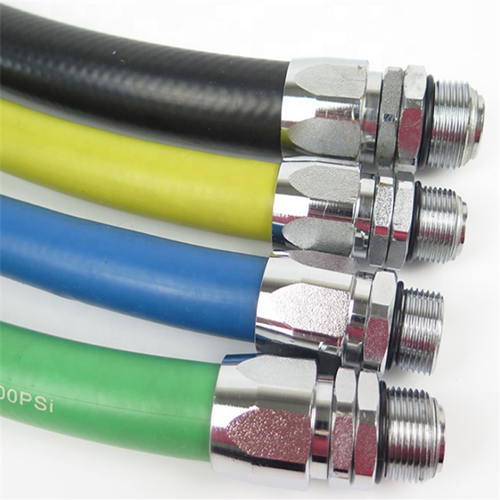
Hydraulic brake hose is a critical component in automotive braking systems, responsible for transmitting hydraulic pressure from the master cylinder to the brake calipers, enabling vehicle deceleration. Positioned within the fluid power transmission chain, its integrity directly impacts braking performance and vehicle safety. These hoses are engineered to withstand significant pressures, temperature fluctuations, and corrosive fluids. Modern hydraulic brake hoses typically comprise an inner tube, reinforcement layers, and an outer protective cover. Core performance characteristics include burst pressure, operating pressure, flexibility, and resistance to degradation from brake fluid and environmental factors. A primary industry pain point revolves around ensuring long-term reliability and preventing premature failure due to material degradation and compatibility issues with evolving brake fluid formulations.
Material Science & Manufacturing
The core materials for hydraulic brake hose production dictate its performance. The inner tube is typically constructed from a synthetic rubber compound, commonly a blend of nitrile rubber (NBR) or ethylene propylene diene monomer (EPDM) rubber. NBR offers excellent resistance to petroleum-based brake fluids, while EPDM exhibits superior temperature resistance and compatibility with newer glycol-ether based fluids. Reinforcement layers are crucial for withstanding high pressure. These commonly consist of one or more braids of high-strength steel wire, or alternatively, spirally wound synthetic fiber (aramid or polyester). The outer cover provides environmental protection and abrasion resistance and is generally comprised of a chloroprene rubber (CR) or a similar synthetic rubber blend.
Manufacturing processes begin with the extrusion of the inner tube to the specified dimensions. Following extrusion, the reinforcement layer(s) are applied via braiding or spiraling machinery. Precise tension control is vital during reinforcement application to ensure uniform pressure resistance. A bonding agent is applied between the inner tube and reinforcement to promote adhesion and prevent separation. The outer cover is then extruded over the reinforced inner tube. Critical parameters during extrusion include die temperature, screw speed, and cooling rates to achieve consistent wall thickness and material properties. Curing, typically conducted using a hot air vulcanization process, crosslinks the rubber compounds, enhancing their strength, elasticity, and chemical resistance. Post-curing, hoses undergo rigorous pressure testing and dimensional inspection to verify compliance with specifications. Flare fittings are attached using mechanical crimping processes, ensuring a leak-proof connection.
Performance & Engineering
Hydraulic brake hoses are subjected to significant stress during operation. Force analysis reveals that hoses experience internal pressure, tensile stress due to bending and routing, and external loads from vibrations and impacts. Burst pressure is a primary performance metric, defined as the maximum pressure the hose can withstand before failure. Operating pressure is significantly lower, accounting for a safety factor. Flexibility is paramount to enable proper routing and prevent kinking, which can restrict fluid flow and compromise braking performance. Finite element analysis (FEA) is commonly used during the design phase to optimize hose geometry and reinforcement configuration for optimal pressure resistance and flexibility.
Environmental resistance is another critical consideration. Brake fluid is hygroscopic, absorbing moisture over time, which can lead to corrosion and reduced braking efficiency. Hoses must be resistant to brake fluid degradation and the corrosive effects of water. Temperature extremes, ranging from sub-zero winter conditions to high operating temperatures during heavy braking, can affect rubber compound properties. Compliance with automotive industry standards, such as FMVSS 106 in the US and ECE R31 in Europe, is mandatory. These standards define minimum performance requirements for burst pressure, fatigue life, and compatibility with brake fluids. Fatigue testing, involving cyclical pressure and bending, is essential to assess the hose’s long-term durability.
Technical Specifications
| Parameter | SAE J1404 | ECE R31 | Typical Value (High-Performance Hose) |
|---|---|---|---|
| Burst Pressure (PSI) | 3,000 min | 2,500 min | 4,000 |
| Operating Pressure (PSI) | 1,500 max | 1,250 max | 2,000 |
| Minimum Bend Radius (inches) | 2.5 | 2.0 | 1.8 |
| Temperature Range (°C) | -40 to +125 | -40 to +150 | -55 to +175 |
| Fluid Compatibility | Brake Fluid DOT 3, DOT 4, DOT 5.1 | Brake Fluid DOT 3, DOT 4 | DOT 3, DOT 4, DOT 5.1, DOT 5 |
| Reinforcement Material | Steel Wire Braid | Steel Wire Braid / Synthetic Fiber | High-Tensile Steel Wire Spiral |
Failure Mode & Maintenance
Hydraulic brake hose failure can manifest in several ways. Fatigue cracking, arising from repeated bending and pressure cycling, is a common failure mode, often initiating at the fitting crimp. Delamination, the separation of reinforcement layers from the inner tube, can occur due to poor bonding or exposure to corrosive fluids. Rubber degradation, caused by ozone exposure, UV radiation, or incompatible brake fluids, leads to hardening, cracking, and loss of flexibility. Oxidation within the brake fluid can promote corrosion of the steel reinforcement, leading to weakening and eventual failure. Pinholes or cracks in the inner tube can result in fluid leaks, reducing braking effectiveness.
Preventative maintenance is crucial for extending hose life. Regular visual inspections should be conducted to identify cracks, bulges, or leaks. Brake fluid should be flushed and replaced periodically, according to manufacturer recommendations, to remove contaminants and maintain optimal fluid properties. Hoses should be replaced as a preventative measure every 5-7 years, or sooner if signs of degradation are observed. When replacing hoses, ensure correct routing to avoid kinking or abrasion. Proper torqueing of fittings is essential to prevent leaks and ensure secure connections. Avoid using petroleum-based lubricants on hose fittings, as these can degrade the rubber compounds.
Industry FAQ
Q: What is the impact of switching to low-viscosity brake fluid on hose compatibility?
A: Low-viscosity brake fluids, like DOT 5.1, can permeate rubber compounds more readily than traditional DOT 3 or DOT 4 fluids. This increased permeation can lead to swelling and softening of the inner tube, potentially compromising its structural integrity. Therefore, it’s critical to select hoses specifically rated for compatibility with low-viscosity fluids, typically constructed from EPDM rubber.
Q: How does the type of reinforcement (braid vs. spiral) affect hose performance?
A: Braided reinforcement generally provides higher tensile strength and resistance to bursting, making it suitable for high-pressure applications. However, it offers less flexibility. Spiral wound reinforcement provides superior flexibility and kink resistance, making it ideal for complex routing scenarios. The choice depends on the specific application requirements and pressure levels.
Q: What are the signs that a hydraulic brake hose needs to be replaced, even if it’s not visibly leaking?
A: Cracks or weathering in the outer cover, localized bulges or soft spots, difficulty in bending the hose without kinking, and a spongy brake pedal feel can all indicate internal degradation requiring replacement. Even if no visible leaks are present, these symptoms suggest compromised structural integrity.
Q: Can improper hose routing cause premature failure?
A: Yes. Routing hoses across sharp edges, near exhaust components, or in areas exposed to excessive abrasion will significantly reduce their lifespan. Kinking the hose restricts fluid flow and creates stress concentrations, accelerating fatigue failure. Following recommended routing guidelines is crucial for optimal performance.
Q: What role does the fitting crimp play in hose reliability?
A: The fitting crimp creates a leak-proof seal between the hose end and the fitting. An improperly crimped fitting—either too loose or too tight—can lead to fluid leaks or premature failure. Too loose a crimp allows fluid to seep out, while too tight a crimp can damage the hose reinforcement, reducing its strength. Consistent and accurate crimping processes are essential.
Conclusion
Hydraulic brake hose technology represents a critical intersection of materials science, manufacturing precision, and automotive engineering. Maintaining braking system integrity relies heavily on the hose's ability to withstand demanding operating conditions and adhere to stringent industry standards. Careful material selection, rigorous quality control during manufacturing, and proactive maintenance practices are all essential to ensuring long-term reliability and vehicle safety.
As automotive technologies evolve, particularly with the emergence of electric vehicles and advanced braking systems, the demands on hydraulic brake hoses will continue to increase. Future developments may focus on lighter-weight materials, enhanced corrosion resistance, and improved compatibility with novel brake fluid formulations. Continued innovation in hose design and manufacturing will be vital to meeting these challenges and upholding the highest standards of braking performance.