
Apr . 01, 2024 17:55 Back to list
hose for gasoline Performance Analysis
Introduction
Gasoline hose is a critical component in fuel delivery systems, specifically engineered for the safe and efficient transfer of gasoline. Positioned within the automotive, industrial, and emergency response supply chains, its performance directly impacts operational safety and regulatory compliance. Unlike general-purpose rubber hoses, gasoline hose must exhibit specific resistance to hydrocarbon degradation, permeation, and static electricity buildup. Core performance characteristics include permeation resistance (measured in grams/m²/day), burst pressure (typically in PSI), working pressure, and temperature range. The industry faces ongoing challenges related to increasingly stringent emissions standards, the need for biofuels compatibility (ethanol blends), and the demand for longer service life and reduced environmental impact. This guide provides a comprehensive technical overview of gasoline hose, covering material science, manufacturing processes, performance criteria, failure modes, and relevant industry standards.
Material Science & Manufacturing
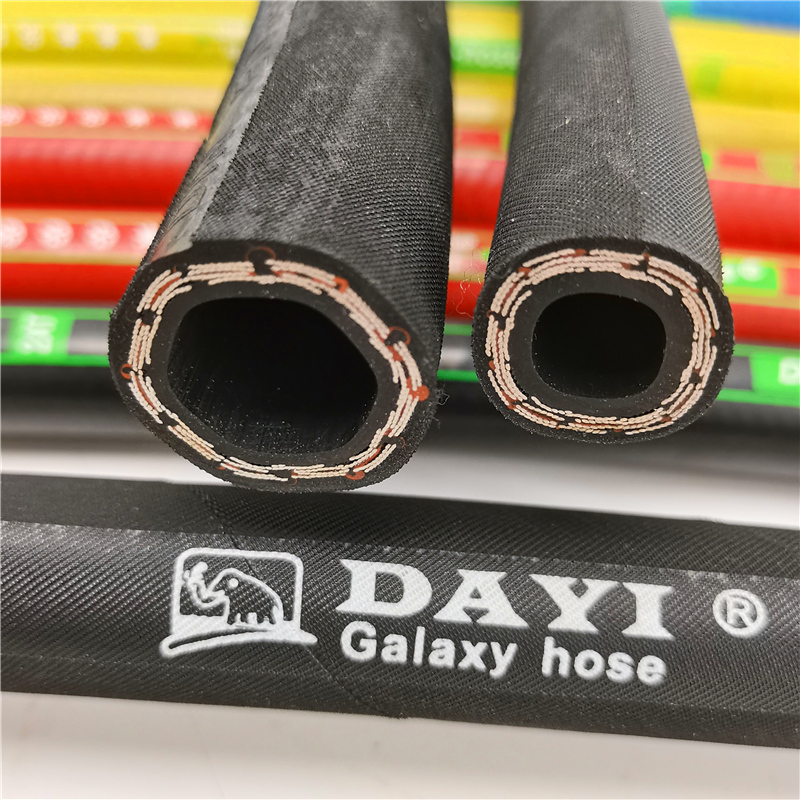
The dominant material for gasoline hose is a synthetic rubber compound, typically a blend of materials to achieve the necessary performance characteristics. Historically, nitrile rubber (NBR) was widely used, providing good resistance to aliphatic hydrocarbons. However, modern gasoline blends, particularly those containing ethanol, necessitate the use of more specialized polymers. Common materials include fluorocarbon elastomers (FKM, such as Viton®), which offer superior resistance to a wider range of fuels, including those with high ethanol content, and chloroprene rubber (CR, Neoprene®), often used in blends for flexibility and cost-effectiveness. The rubber compound is reinforced with multiple layers of textile or wire braiding to provide strength and prevent kinking. Polyester yarns are frequently used for textile reinforcement due to their high tensile strength and resistance to stretching. Steel wire, either single or multi-helix, provides the highest burst pressure capability.
Manufacturing typically involves extrusion of the rubber compound through a die to form the hose body. Multiple layers are co-extruded to create the inner fuel-resistant liner, the reinforcement layer(s), and the outer cover, which provides abrasion and weathering protection. Precise control of extrusion parameters – temperature, pressure, and screw speed – is crucial for ensuring consistent wall thickness and uniform material distribution. Following extrusion, the hose is cured (vulcanized) in an autoclave or continuous vulcanization process. Curing involves heating the rubber compound in the presence of a curing agent (typically sulfur-based) to initiate cross-linking of the polymer chains, resulting in increased strength, elasticity, and resistance to degradation. Quality control measures include dimensional checks, burst pressure testing, permeation testing, and visual inspection for defects. Special attention is given to bond strength between the rubber compound and the reinforcement layers. Post-curing processes may include surface treatment to improve abrasion resistance or application of a protective coating.
Performance & Engineering
Gasoline hose performance is governed by a complex interplay of mechanical stress, chemical exposure, and environmental factors. Force analysis focuses on withstanding both internal pressure from the flowing fuel and external stresses from bending, kinking, and vibration. Burst pressure, a critical safety parameter, is determined by the reinforcement layer’s strength and the rubber compound’s tensile properties. Fatigue life is a significant concern, particularly in applications involving repeated flexing. Hose design must minimize stress concentration points and utilize materials with high fatigue resistance. Permeation, the diffusion of gasoline vapor through the hose wall, is a key factor in emissions control. Low permeation rates are essential to meet increasingly stringent environmental regulations. Environmental resistance encompasses exposure to temperature extremes, ozone, ultraviolet radiation, and various fluids encountered in service.
Compliance requirements are substantial. In the automotive industry, hoses must meet standards set by organizations such as SAE International (SAE J30R7, J30R9). These standards specify requirements for materials, construction, performance, and marking. Industrial applications may require compliance with standards from organizations like the American Petroleum Institute (API) or NFPA. Static electricity buildup can create a spark hazard, particularly during fuel transfer. Hose construction incorporates conductive materials (typically carbon black) to dissipate static charge and prevent ignition of flammable vapors. The hose's flexibility and bend radius are also critical engineering considerations, impacting ease of installation and preventing stress cracking.
Technical Specifications
| Parameter | Unit | SAE J30R7 (Typical) | SAE J30R9 (Typical) |
|---|---|---|---|
| Inner Tube Material | - | NBR (Nitrile Rubber) | FKM (Fluorocarbon) |
| Reinforcement | - | Textile Braid (Polyester) | Spiral Wire (Steel) |
| Cover Material | - | EPDM (Ethylene Propylene Diene Monomer) | EPDM |
| Working Pressure | PSI | 300 | 500 |
| Burst Pressure | PSI | 900 | 1500 |
| Temperature Range | °F | -40 to 212 | -40 to 275 |
| Permeation Rate (Gasoline) | g/m²/day | < 2.0 | < 0.8 |
Failure Mode & Maintenance
Gasoline hose is susceptible to several failure modes. Degradation of the rubber compound due to prolonged exposure to fuel, ozone, or UV radiation leads to loss of flexibility, cracking, and eventual leakage. Permeation can cause swelling and weakening of the hose wall over time. Kinking and bending fatigue can cause localized stress cracking and rupture, particularly in hoses with insufficient bend radius. Delamination, the separation of the rubber compound from the reinforcement layers, is often caused by poor bonding during manufacturing or exposure to harsh chemicals. Abrasion from rubbing against other components can wear through the cover, exposing the reinforcement layer to corrosion. Internal corrosion of steel wire reinforcement can occur due to exposure to moisture and contaminants.
Preventative maintenance is crucial for extending hose life and ensuring safe operation. Regular visual inspection for cracks, swelling, abrasion, and leaks is essential. Hoses should be replaced if any signs of degradation are observed. Avoid sharp bends and kinking during installation and operation. Protect hoses from exposure to direct sunlight and extreme temperatures whenever possible. When handling ethanol-blended fuels, ensure the hose is specifically rated for ethanol compatibility (FKM is recommended). Periodically check hose connections for tightness and corrosion. Proper storage of unused hoses in a cool, dark, and dry environment will minimize degradation. Do not attempt to repair damaged hoses; replacement is the only safe option.
Industry FAQ
Q: What is the difference between SAE J30R7 and SAE J30R9 gasoline hose?
A: SAE J30R7 hose typically utilizes a nitrile rubber (NBR) inner tube and textile braid reinforcement, making it suitable for general-purpose gasoline and diesel fuel applications. SAE J30R9 hose features a fluorocarbon (FKM) inner tube and spiral wire reinforcement, providing superior resistance to aggressive fuels, including ethanol blends, and offering higher working and burst pressures. R9 is preferred where enhanced chemical resistance and pressure handling are critical.
Q: How does ethanol affect gasoline hose?
A: Ethanol is a solvent that can cause swelling and degradation of certain rubber compounds, particularly NBR. This leads to increased permeation rates, reduced flexibility, and ultimately, hose failure. Hoses designed for use with ethanol-blended fuels (E10, E85) must utilize materials like FKM that are resistant to ethanol’s effects.
Q: What is the recommended bend radius for gasoline hose?
A: The minimum bend radius depends on the hose construction and diameter, but generally, it should be at least six times the hose’s outer diameter. Exceeding this limit can cause kinking, stress cracking, and premature failure.
Q: How can I identify a hose that is nearing the end of its service life?
A: Look for signs of cracking, swelling, hardening, or discoloration of the rubber compound. Check for leaks at the connections. If the hose feels brittle or loses its flexibility, it should be replaced. Regular inspection and adherence to a planned replacement schedule are vital.
Q: What measures can be taken to prevent static electricity buildup in gasoline hose?
A: Gasoline hose is typically manufactured with carbon black incorporated into the rubber compound to provide electrical conductivity. Ensuring good electrical grounding of the fuel dispensing system is also crucial to dissipate any static charge that may build up. Avoid using hoses with damaged or worn covers, as this can compromise their conductivity.
Conclusion
Gasoline hose represents a sophisticated engineered product, critical for safe and reliable fuel handling. Its performance hinges on a careful selection of materials, precise manufacturing processes, and adherence to stringent industry standards. The increasing prevalence of ethanol-blended fuels necessitates the adoption of FKM-based hoses to ensure long-term compatibility and prevent premature failure. Understanding the potential failure modes and implementing a robust preventative maintenance program are essential for maximizing hose service life and mitigating safety risks.
Future developments in gasoline hose technology will likely focus on further reducing permeation rates to meet ever-tightening emissions regulations, developing more sustainable and environmentally friendly materials, and enhancing the durability and service life of hoses in demanding applications. Ongoing research into advanced polymer blends and reinforcement techniques will be key to addressing these challenges and ensuring the continued safe and efficient transfer of gasoline.

