
Apr . 01, 2024 17:55 Back to list
High pressure washing hose Performance Engineering
Introduction
High pressure washing hose is a reinforced flexible conduit designed to safely convey fluid – typically water, but also potentially specialized cleaning solutions – at elevated pressures for industrial and commercial cleaning applications. Positioned as a critical component within the broader pressure washing equipment chain, its performance dictates the efficacy and safety of the entire system. Core performance characteristics are defined by burst pressure, working pressure, temperature resistance, and chemical compatibility. The industry faces significant challenges relating to hose lifespan, especially in abrasive or chemically aggressive environments, and ensuring consistent performance under dynamic loading conditions. Failure can lead to equipment damage, operator injury, and costly downtime. This guide provides an in-depth technical overview of high pressure washing hose, encompassing material science, manufacturing processes, performance engineering, failure analysis, and relevant industry standards.
Material Science & Manufacturing
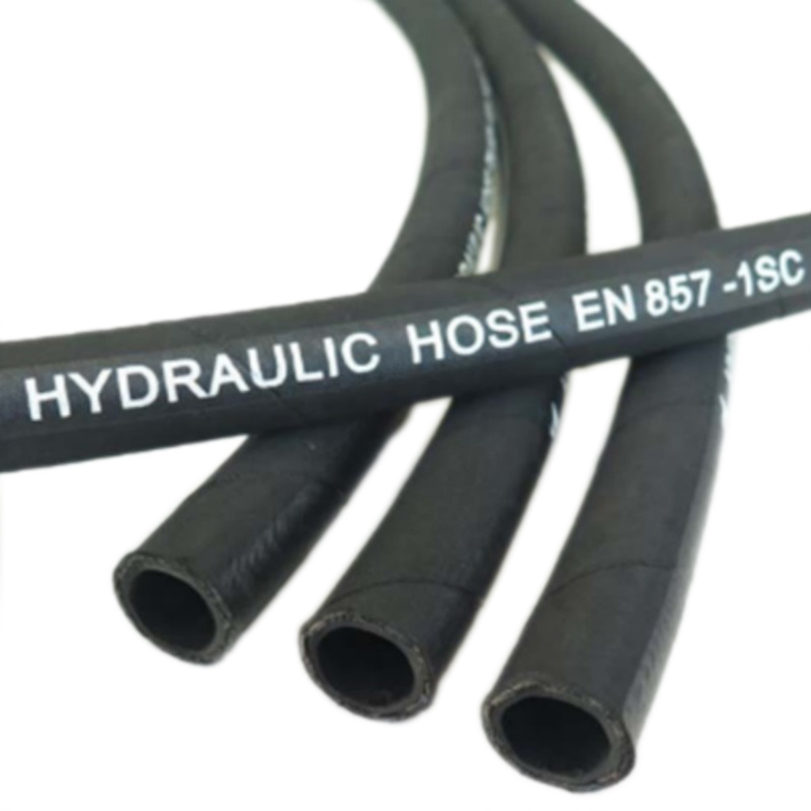
The construction of high pressure washing hose typically involves multiple layers, each serving a specific function. The innermost layer, or liner tube, is generally composed of a thermoplastic material such as thermoplastic polyurethane (TPU), polyvinyl chloride (PVC), or polyethylene (PE). TPU offers superior abrasion resistance and flexibility, while PVC provides a cost-effective solution for less demanding applications. PE is often used where chemical resistance to specific solvents is paramount. The reinforcement layer is crucial for withstanding high pressures. This commonly consists of multiple spiraled or braided high-tensile strength fibers – typically steel wire (for extremely high pressures), synthetic fibers like polyester or aramid (Kevlar), or a combination thereof. Steel wire provides the highest burst strength but is heavier and less flexible. Aramid offers a high strength-to-weight ratio and excellent resistance to stretching. The outer cover, providing environmental protection and abrasion resistance, is usually a blend of synthetic rubbers, such as chloroprene rubber (Neoprene) or styrene-butadiene rubber (SBR). Manufacturing processes vary depending on hose type. Braided hoses are created by interweaving the reinforcement fibers around the inner tube, while spiraled hoses employ helically wound reinforcement. Extrusion is used to form the inner and outer layers. Key parameter control during manufacturing includes precise fiber tension during braiding/spiraling, consistent material extrusion thickness, and proper vulcanization (curing) of the rubber compounds to achieve optimal physical properties. Chemical compatibility between layers is also critical, preventing delamination and ensuring long-term integrity. The curing process, typically involving sulfur or peroxide systems, must be meticulously controlled for crosslink density and uniform distribution.
Performance & Engineering
The performance of high pressure washing hose is governed by several engineering principles. Hose burst pressure is determined by the tensile strength of the reinforcement layers and the inner tube. Working pressure is significantly lower than burst pressure, typically specified as a fraction (e.g., 50% or 70%) of the burst pressure to provide a safety margin. Force analysis under pressure involves hoop stress (tangential stress in the hose wall) and longitudinal stress (stress along the hose length). These stresses increase with pressure and hose diameter. Fatigue life is a critical consideration, as hoses are subjected to cyclic loading during operation. Factors influencing fatigue life include pressure amplitude, frequency of cycles, and the presence of internal flaws. Environmental resistance is paramount. Exposure to UV radiation, ozone, and extreme temperatures can degrade the rubber compounds, reducing flexibility and increasing the risk of cracking. Chemical compatibility dictates the hose’s suitability for various cleaning solutions. Hydrolytic stability (resistance to degradation by water) is also important. Compliance requirements are stringent, particularly regarding safety standards. Hoses must meet pressure ratings, material specifications, and dimensional tolerances as defined by relevant international standards (detailed in the footer). Functional implementation requires careful consideration of hose length, diameter, and fitting compatibility. Improper fittings can lead to leaks and catastrophic failure. The hose's bend radius must also be within specified limits to prevent kinking and damage to the reinforcement layers.
Technical Specifications
| Parameter | Unit | Typical Value (Standard Duty) | Typical Value (Heavy Duty) |
|---|---|---|---|
| Working Pressure | psi | 3000 | 5000 |
| Burst Pressure | psi | 9000 | 15000 |
| Inner Diameter | inch | 0.25 | 0.5 |
| Outer Diameter | inch | 0.5 | 0.75 |
| Temperature Range | °F | -40 to 194 | -40 to 212 |
| Reinforcement | Material | Polyester Braid | Steel Wire Spiral |
Failure Mode & Maintenance
High pressure washing hose is susceptible to several failure modes. Fatigue cracking, initiated by cyclic pressure loading, typically occurs in the reinforcement layer, often around imperfections or stress concentrations. Delamination, the separation of layers, can result from incompatible materials, inadequate bonding, or prolonged exposure to aggressive chemicals. Degradation of the rubber compounds, caused by UV radiation, ozone, or extreme temperatures, leads to cracking and loss of flexibility. Oxidation can also contribute to rubber degradation. Abrasion, particularly in applications involving abrasive cleaning media, wears down the outer cover, exposing the reinforcement layer. Fitting failure, often due to corrosion or improper installation, can lead to leaks and sudden pressure loss. Maintenance is crucial for maximizing hose lifespan. Regular visual inspections should be conducted to identify signs of cracking, abrasion, or delamination. Hoses should be flushed with clean water after each use to remove abrasive particles and chemical residues. Proper storage is essential – hoses should be stored in a cool, dry place away from direct sunlight and ozone sources. Avoid kinking or sharply bending the hose, as this can damage the reinforcement layer. Fittings should be checked for corrosion and replaced as needed. Pressure testing, conducted at regular intervals, can help identify potential weaknesses before they lead to catastrophic failure. Following manufacturer's recommendations for maximum working pressure and temperature is paramount.
Industry FAQ
Q: What is the impact of water hammer on high pressure hose lifespan?
A: Water hammer, the sudden pressure surge caused by rapidly closing valves, generates significant shock loading on the hose. Repeated exposure to water hammer drastically reduces fatigue life and can lead to immediate failure, particularly at fittings. Implementing slow-closing valves, using pressure accumulators, and ensuring proper system grounding are critical mitigation strategies.
Q: How does the chemical composition of cleaning solutions affect hose compatibility?
A: Aggressive cleaning solutions, particularly those containing strong acids, alkalis, or solvents, can cause swelling, softening, or degradation of the inner tube and outer cover materials. Selecting a hose specifically rated for the intended chemical environment is essential. Compatibility charts provided by hose manufacturers should be consulted.
Q: What is the benefit of using aramid reinforcement over steel wire in certain applications?
A: Aramid reinforcement offers a significantly higher strength-to-weight ratio than steel wire, resulting in a lighter and more flexible hose. This is advantageous in applications where maneuverability and ease of handling are important. Aramid also exhibits superior corrosion resistance compared to steel.
Q: How can I determine the appropriate safety factor for working pressure?
A: The appropriate safety factor depends on the application's criticality and the potential consequences of failure. Generally, a safety factor of 4:1 (working pressure is 25% of burst pressure) is considered minimum for most industrial applications. More critical applications may require a higher safety factor (e.g., 5:1 or 7:1).
Q: What are the key considerations when selecting hose fittings?
A: Fittings must be compatible with the hose material and rated for the same working pressure and temperature. Proper crimping or swaging of the fittings onto the hose is essential to ensure a leak-proof seal. Material compatibility between the fitting and the hose is critical to prevent galvanic corrosion.
Conclusion
High pressure washing hose is a complex engineered product requiring careful consideration of material science, manufacturing processes, and performance characteristics. Effective selection and maintenance are crucial for ensuring safe and reliable operation. Understanding the potential failure modes and implementing preventative measures, such as regular inspections and proper storage, significantly extends hose lifespan and minimizes downtime.
Ongoing advancements in polymer technology and reinforcement materials continue to drive improvements in hose performance, enabling higher pressures, wider temperature ranges, and greater chemical resistance. Adherence to relevant international standards and a thorough understanding of application-specific requirements remain paramount for procuring and utilizing high pressure washing hose effectively and safely.