
Apr . 01, 2024 17:55 Back to list
High Pressure Thermoplastic Hose Performance Analysis
Introduction
High pressure thermoplastic hose constitutes a critical fluid transfer component across diverse industrial applications, including hydraulic systems, chemical processing, oil & gas, and high-pressure cleaning. Distinguished from traditional rubber hoses by its inner liner composed of thermoplastic polymers, it offers superior performance characteristics regarding chemical resistance, temperature tolerance, and reduced permeation. Within the industrial chain, it functions as a crucial intermediary between the fluid source (pump, reactor, etc.) and the point of application (actuator, nozzle, etc.). Core performance attributes center around burst pressure, working pressure, flexibility, and resistance to abrasion and environmental degradation. Unlike elastomeric hoses that rely on reinforcement layers to achieve pressure ratings, thermoplastic hose achieves significant pressure capabilities through the inherent strength of the polymer matrix, often reinforced with textile or steel braiding. This guide provides an in-depth technical assessment of high-pressure thermoplastic hoses, encompassing material science, manufacturing processes, performance parameters, failure modes, and relevant industry standards.
Material Science & Manufacturing
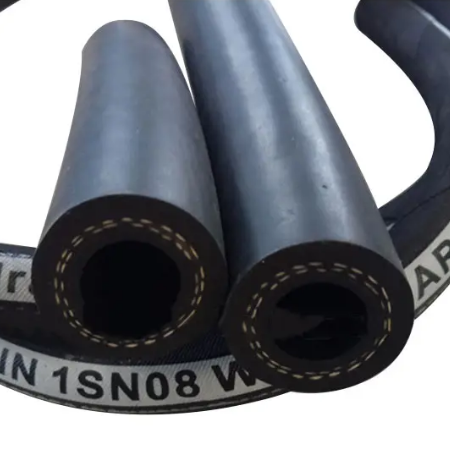
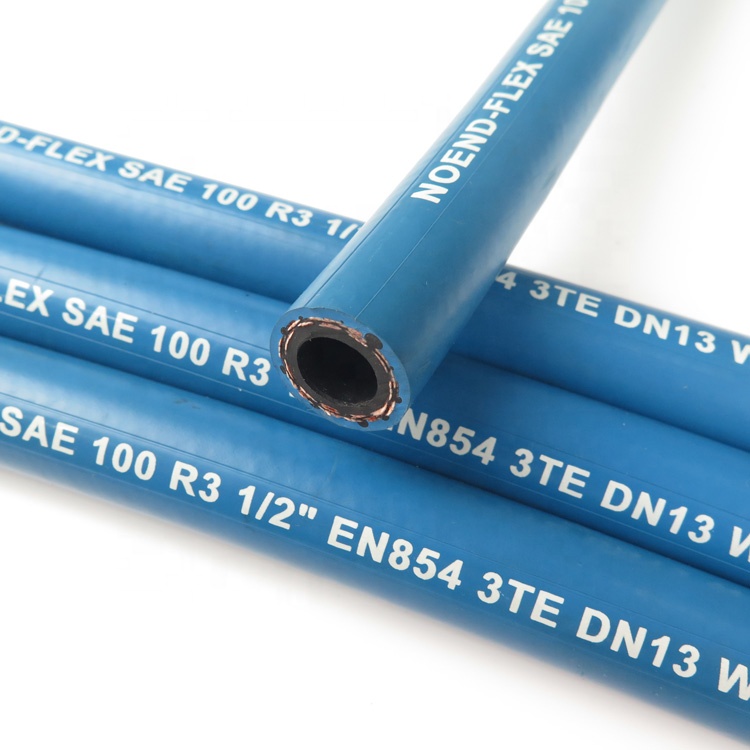
The core material in high-pressure thermoplastic hose is the thermoplastic polymer utilized for the inner liner. Common materials include Polyamide (Nylon – PA6, PA12), Polypropylene (PP), Polyethylene (PE), and Polyvinylidene Fluoride (PVDF). Nylon, particularly PA12, is favored for hydraulic applications due to its high tensile strength (typically 200-300 MPa) and good abrasion resistance. PVDF provides exceptional chemical resistance, vital for corrosive fluid handling. The selection of polymer dictates the hose's temperature range and fluid compatibility. Manufacturing begins with polymer extrusion. Precise temperature control during extrusion (typically 200-300°C depending on the polymer) is critical to ensure a homogenous liner thickness and void-free structure. Following extrusion, the liner undergoes cooling and sizing. Reinforcement layers, typically high-tensile strength steel wire or synthetic fiber braiding (polyester, aramid), are then applied. Braiding angle and yarn density directly impact burst pressure and flexibility. Multiple layers of reinforcement are common. Post-braiding, an outer cover, often made of polyurethane or a specialized rubber compound, is extruded to provide environmental protection and abrasion resistance. Critical parameters monitored during manufacturing include polymer melt flow index, braiding tension, and cover thickness. Quality control utilizes hydrostatic testing (up to 1.5 times the working pressure) and impulse testing to verify burst strength and fatigue resistance. Further characterization includes Differential Scanning Calorimetry (DSC) to confirm polymer crystallinity and tensile testing to validate mechanical properties.
Performance & Engineering
The performance of high-pressure thermoplastic hose is dictated by a complex interplay of material properties and geometric configuration. Burst pressure, the maximum pressure the hose can withstand before failure, is governed by the reinforcement layer’s tensile strength and the thermoplastic liner's yield strength. Working pressure is typically 50-75% of the burst pressure, providing a safety factor. Flexibility, crucial for routing in confined spaces, is influenced by the braid angle and the liner’s elasticity. Force analysis considers both internal pressure forces acting radially on the liner and external bending moments during installation and operation. Environmental resistance necessitates consideration of temperature effects; thermoplastic materials exhibit temperature-dependent mechanical properties. Exposure to UV radiation can cause polymer degradation, reducing tensile strength and increasing brittleness. Chemical compatibility is paramount; improper fluid selection can lead to swelling, softening, or cracking of the liner. Compliance requirements vary by industry and region. Hydraulic hoses must adhere to SAE J517 standards, specifying pressure ratings, temperature ranges, and fluid compatibility. Hoses used in food and beverage applications must comply with FDA regulations regarding material leachability. Electrostatic Dissipation (ESD) is critical in flammable environments, often requiring a conductive inner liner to prevent static charge buildup. The hose’s creep resistance – its tendency to lengthen under sustained pressure – also dictates long-term performance and must be considered in system design. Finite Element Analysis (FEA) is frequently employed to model stress distributions and predict hose behavior under various operating conditions.
Technical Specifications
| Parameter | Typical Value (PA12, Steel Braid) | Typical Value (PVDF, Stainless Steel Braid) | Testing Standard |
|---|---|---|---|
| Working Pressure | 400 bar (5800 psi) | 630 bar (9100 psi) | SAE J517 / EN 857 |
| Burst Pressure | 1200 bar (17400 psi) | 1890 bar (27400 psi) | SAE J517 / EN 857 |
| Temperature Range | -40°C to +100°C (-40°F to +212°F) | -20°C to +150°C (-4°F to +302°F) | ASTM D395 |
| Inner Diameter | 6 mm to 50 mm (0.24 in to 1.97 in) | 4 mm to 38 mm (0.16 in to 1.5 in) | ISO 1307 |
| Outer Diameter | 10 mm to 60 mm (0.39 in to 2.36 in) | 8 mm to 50 mm (0.31 in to 1.97 in) | ISO 1307 |
| Minimum Bend Radius | 4x Outer Diameter | 6x Outer Diameter | Manufacturer Specification |
Failure Mode & Maintenance
High-pressure thermoplastic hose is susceptible to several failure modes. Fatigue cracking, initiated by repeated pressure cycling and bending, is a common issue, particularly at connection points. Delamination, the separation of reinforcement layers, can occur due to inadequate bonding or exposure to corrosive fluids. Chemical attack, resulting from incompatible fluid selection, can lead to liner swelling, softening, or cracking. Oxidation, especially at elevated temperatures, can degrade the polymer matrix, reducing its mechanical properties. Abrasion, caused by contact with abrasive surfaces, can wear through the outer cover and expose the reinforcement layers. Pinholes, small punctures in the liner, can lead to leakage. Failure analysis involves visual inspection (looking for cracks, swelling, or abrasion), hydrostatic testing (to determine burst pressure), and microscopic examination (to identify crack initiation sites and material degradation). Maintenance recommendations include regular visual inspections for signs of damage, proper fluid selection, avoiding excessive bending or kinking, and replacing hoses at predetermined intervals based on operating conditions and manufacturer recommendations. Correct installation – ensuring proper crimping of fittings and avoiding over-tightening – is crucial. Storage of hoses should be in a cool, dry, and dark environment to minimize UV degradation and maintain flexibility. Periodic pressure testing can proactively identify weakened hoses before catastrophic failure occurs.
Industry FAQ
Q: What is the impact of different braiding materials (steel vs. synthetic) on hose performance?
A: Steel braiding offers significantly higher burst pressure and abrasion resistance compared to synthetic braiding. However, it adds weight and reduces flexibility. Synthetic braiding, such as aramid or polyester, provides a better balance between strength and flexibility, making it suitable for applications where weight and maneuverability are critical. Steel braid is preferred for high-pressure hydraulic systems, while synthetic braid is often used in chemical transfer applications where corrosion resistance is paramount.
Q: How does temperature affect the working pressure of a thermoplastic hose?
A: Increasing temperature generally reduces the working pressure of a thermoplastic hose. Higher temperatures decrease the polymer’s tensile strength and creep resistance. Manufacturers provide derating curves that specify the permissible working pressure at different temperatures. Exceeding the recommended temperature and pressure limits can lead to premature failure.
Q: What are the key considerations when selecting a hose for a specific chemical application?
A: Chemical compatibility is the primary concern. The hose liner material must be resistant to swelling, softening, or degradation when exposed to the fluid. Consult a chemical resistance chart provided by the hose manufacturer. Consider the concentration of the chemical, temperature, and duration of exposure. Furthermore, ensure the outer cover is also compatible with any external chemicals it might encounter.
Q: What is the role of hose fittings in ensuring safe and reliable operation?
A: Hose fittings are critical components. Incorrectly sized or installed fittings can lead to leakage, hose blow-out, or premature failure. Fittings must be compatible with the hose material and the fluid being conveyed. Proper crimping is essential to ensure a secure and leak-proof connection. Regular inspection of fittings for corrosion, damage, or loosening is crucial.
Q: How can electrostatic discharge (ESD) be mitigated when handling flammable fluids?
A: ESD can ignite flammable fluids. Utilizing a hose with a conductive inner liner, typically made with carbon black loaded polymers, is crucial. Grounding the hose assembly and ensuring proper bonding of all components are also essential. Anti-static outer covers can help dissipate static charge.
Conclusion
High-pressure thermoplastic hose provides a robust and reliable solution for fluid transfer in demanding industrial applications. The selection of appropriate materials, coupled with precise manufacturing controls, dictates its performance characteristics, including burst pressure, temperature resistance, and chemical compatibility. Understanding potential failure modes and implementing proactive maintenance practices are critical to ensuring long-term operational safety and minimizing downtime.
Future developments in thermoplastic hose technology are focused on enhancing material properties, improving manufacturing efficiency, and incorporating smart sensing capabilities for real-time monitoring of hose condition. The trend towards lighter-weight materials and more flexible designs will continue to drive innovation. Furthermore, adherence to evolving industry standards and regulations is paramount for ensuring product compliance and maintaining a competitive edge.