
Apr . 01, 2024 17:55 Back to list
high pressure steel wire braided hydraulic hose suppliers Performance Analysis
Introduction
High pressure steel wire braided hydraulic hose represents a critical component in fluid power systems across a diverse range of industries, including construction, agriculture, manufacturing, and automotive. These hoses are engineered to reliably transmit hydraulic fluid under extreme pressures and challenging environmental conditions. Their technical position within the industrial chain falls between the hydraulic pump/valve manufacturing and the final machinery or equipment application. Core performance characteristics center around burst pressure, working pressure, temperature resistance, and compatibility with various hydraulic fluids. The inherent risks associated with hydraulic system failure—including potential for injury and downtime—demand stringent quality control and adherence to industry standards for hose construction and testing. Suppliers must demonstrate a comprehensive understanding of these factors to deliver reliable and safe products. This guide provides an in-depth technical analysis of these hoses, covering materials, manufacturing, performance, failure modes, and relevant industry standards, geared towards informed procurement decisions and technical understanding.
Material Science & Manufacturing
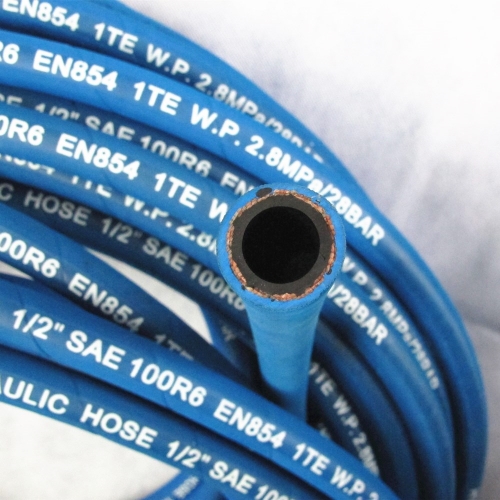
The construction of high-pressure steel wire braided hydraulic hose involves a multi-layered design utilizing specific materials chosen for their compatibility and performance. The inner tube is typically composed of oil-resistant synthetic rubber, commonly nitrile rubber (NBR), chlorinated polyethylene (CM), or fluorocarbon (FKM) depending on the intended fluid compatibility and temperature range. NBR offers good resistance to petroleum-based fluids but limited temperature range; CM provides improved ozone and weather resistance; and FKM provides superior resistance to a wider range of fluids and higher temperatures. The reinforcement layer consists of high-strength steel wire, spirally wound to provide tensile strength and pressure resistance. The wire is typically carbon steel, though stainless steel is utilized in corrosive environments. The steel wire undergoes a surface treatment, often zinc plating, to improve corrosion resistance and bonding with the rubber layers. The outer cover is typically a synthetic rubber compound, frequently SBR (styrene-butadiene rubber) or CR (chloroprene rubber), providing abrasion, ozone, and weather resistance. Manufacturing processes begin with extrusion of the inner tube, followed by the helical winding of the steel wire reinforcement. Precise tension control during winding is crucial, as it directly impacts the hose’s pressure rating and flexibility. Subsequently, the outer cover is extruded, bonding with the reinforcement layer through vulcanization – a chemical process using heat and pressure to crosslink the rubber polymers. Key parameters controlled during manufacturing include rubber compound formulation, wire gauge and winding tension, vulcanization temperature and time, and dimensional accuracy. Improper vulcanization leads to insufficient bonding between layers, ultimately leading to premature failure.

Performance & Engineering
Performance of high-pressure hydraulic hose is dictated by several critical engineering parameters. Burst pressure, defined as the pressure at which the hose fails catastrophically, is a primary safety specification. Working pressure is significantly lower, typically 50-75% of the burst pressure, representing the maximum recommended operating pressure. Hose dimensions (inner diameter, outer diameter, and bend radius) are determined by flow rate requirements and space constraints. Fatigue resistance is a crucial factor, particularly in applications involving repeated flexing and pressure cycling. Finite element analysis (FEA) is frequently employed during the design phase to optimize the hose construction and predict its performance under various loading conditions. Environmental resistance encompasses considerations such as temperature extremes, exposure to ozone, ultraviolet (UV) radiation, and corrosive fluids. The hose must maintain its mechanical properties within the specified operating temperature range. Compliance requirements are often dictated by industry-specific regulations (e.g., SAE J517 for automotive applications). The selection of appropriate materials and construction techniques ensures the hose can withstand the anticipated stresses and maintain its integrity throughout its service life. Force analysis considers the hoop stress within the hose wall due to internal pressure, as well as the axial stress induced by the steel wire reinforcement. Proper wire winding and rubber compound selection are essential to distribute these stresses effectively and prevent failure.
Technical Specifications
| Parameter | Unit | Specification Range (Typical) | Testing Standard |
|---|---|---|---|
| Working Pressure | MPa | 10 - 35 | SAE J517 |
| Burst Pressure | MPa | 30 - 105 | SAE J517 |
| Inner Diameter | mm | 6.35 - 50.8 | ISO 3866 |
| Outer Diameter | mm | 12.7 - 76.2 | ISO 3866 |
| Temperature Range | °C | -40 to +100 (NBR) / -30 to +150 (CM) / -20 to +200 (FKM) | ASTM D2000 |
| Reinforcement Material | - | High-Tensile Steel Wire | ISO 3866 |
Failure Mode & Maintenance
Failure modes in high-pressure steel wire braided hydraulic hose are diverse and can stem from a variety of causes. Fatigue cracking, arising from repeated flexing and pressure cycling, is a common failure mechanism, particularly near the hose ends. Delamination, the separation of rubber layers, can occur due to inadequate bonding during vulcanization or exposure to harsh chemicals. Corrosion of the steel wire reinforcement, especially in the presence of moisture and chlorides, can significantly reduce the hose’s strength. Abrasion from external sources can compromise the outer cover, leading to exposure of the reinforcement layer and eventual failure. Oxidation of the rubber compounds, accelerated by high temperatures and exposure to oxygen, can cause hardening and cracking. Internal hose degradation can occur due to incompatible fluids or contamination. Preventive maintenance includes regular visual inspections for signs of wear, abrasion, or cracking. Hose ends should be checked for looseness or corrosion. Fluid compatibility should be verified to prevent internal degradation. Hoses should be replaced at predetermined intervals, even if no visible damage is present, based on the application and operating conditions. Proper handling and storage are crucial; hoses should be stored in a cool, dry place away from direct sunlight and ozone sources. When replacing a hose, ensure the new hose has the same or higher pressure rating and is compatible with the hydraulic fluid being used.
Industry FAQ
Q: What is the impact of hydraulic fluid type on hose selection?
A: Hydraulic fluid compatibility is paramount. Different fluids (petroleum-based, synthetic, water-glycol) require specific inner tube materials (NBR, CM, FKM) to prevent swelling, degradation, and premature failure. Using an incompatible fluid will lead to rapid deterioration of the inner tube and potential hose rupture.
Q: How does hose bend radius affect its lifespan?
A: Exceeding the minimum recommended bend radius places excessive stress on the hose, accelerating fatigue failure. Sharp bends can also damage the reinforcement layer. Maintaining the specified bend radius is critical for maximizing hose service life.
Q: What are the key differences between 1-wire and 2-wire braided hoses?
A: 2-wire braided hoses offer significantly higher pressure ratings and improved fatigue resistance compared to 1-wire hoses due to the increased reinforcement. However, they are generally less flexible and more expensive. The choice depends on the application's pressure and flexibility requirements.
Q: How can I identify a hose that is nearing its end-of-life?
A: Look for visible signs of wear, such as cracking, abrasion, swelling, or discoloration. Check for leaks around the fittings. If the hose exhibits reduced flexibility or increased stiffness, it should be replaced. Regular pressure testing can also reveal hidden weaknesses.
Q: What role does proper fitting installation play in hose performance?
A: Incorrectly installed fittings are a major cause of hose failures. Fittings must be properly crimped or swaged to ensure a secure and leak-proof connection. Using the wrong fitting type or applying improper crimping force can damage the hose and compromise its integrity.
Conclusion
High pressure steel wire braided hydraulic hose is a sophisticated engineered product vital to the operation of countless industrial applications. The selection process requires careful consideration of fluid compatibility, pressure requirements, temperature range, and environmental factors. Understanding the material science, manufacturing processes, and potential failure modes is crucial for ensuring reliable performance and maximizing service life. Suppliers offering comprehensive technical data, quality control procedures, and adherence to industry standards are essential partners in mitigating risks and optimizing hydraulic system efficiency.
Looking forward, advancements in hose technology focus on developing materials with enhanced temperature and chemical resistance, reducing weight, and improving fatigue life. The integration of smart sensors into hoses for real-time pressure and temperature monitoring holds the potential to further enhance system reliability and predictive maintenance capabilities. Continued research and development in rubber compounding, wire reinforcement techniques, and manufacturing processes will drive innovation and ensure the ongoing performance of these critical components.