
Apr . 01, 2024 17:55 Back to list
high pressure steel wire braided hydraulic hose factory Performance Analysis
Introduction
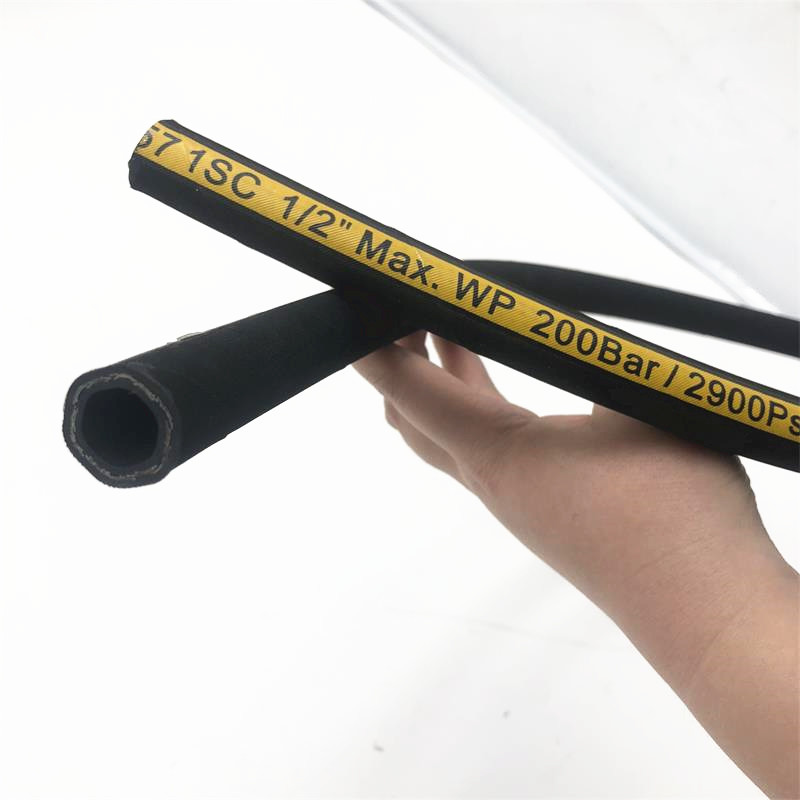
High pressure steel wire braided hydraulic hose represents a critical component in fluid power systems, facilitating the safe and efficient transmission of hydraulic fluid to actuators and other machinery. Positioned within the industrial chain as a final assembly item dependent on raw material suppliers (steel, rubber, coupling materials), these hoses are integral to sectors including construction, agriculture, manufacturing, and automotive. Their core performance characteristics revolve around burst pressure, working pressure, impulse pressure resistance, temperature range, and fluid compatibility. The demand for these hoses stems from increasing industrial automation and the necessity for robust, reliable fluid power solutions. Failure in these systems can result in significant downtime, safety hazards, and costly repairs, creating a high demand for quality and adherence to stringent industry standards. This guide provides a detailed technical overview of high-pressure steel wire braided hydraulic hose, covering material science, manufacturing processes, performance parameters, failure modes, and relevant industry standards.
Material Science & Manufacturing
The construction of a high-pressure steel wire braided hydraulic hose relies on a synergistic combination of materials and precise manufacturing techniques. The inner tube, typically composed of oil-resistant synthetic rubber (NBR, EPDM, or a blend thereof), provides fluid containment and flexibility. NBR exhibits excellent resistance to petroleum-based fluids, while EPDM is superior in resisting weathering, ozone, and heat. The reinforcement layer consists of high-tensile steel wire, precisely wound in a helical pattern. The steel wire’s material is typically drawn carbon steel meeting specific tensile strength requirements (typically 1770-2068 MPa). The wire’s surface treatment (zinc plating, epoxy coating) is critical for corrosion resistance. An outer cover, also typically a synthetic rubber compound, protects the reinforcement from abrasion, weathering, and chemical exposure. Manufacturing begins with extrusion of the inner tube, followed by the winding of the steel wire reinforcement. Precise tension control during winding is paramount, ensuring uniform stress distribution and preventing premature failure. The outer cover is then extruded over the reinforcement. Finally, the hose undergoes curing, a vulcanization process that crosslinks the rubber compounds, enhancing their strength, elasticity, and resistance to degradation. Critical parameters include cure time, temperature, and pressure. Post-curing, hoses are subject to rigorous testing including hydrostatic pressure testing, impulse testing, and dimensional inspection to verify conformance to specifications. The quality of the steel wire (chemical composition, surface finish) and rubber compounds (blend ratios, filler content) directly influence the final product performance.
Performance & Engineering
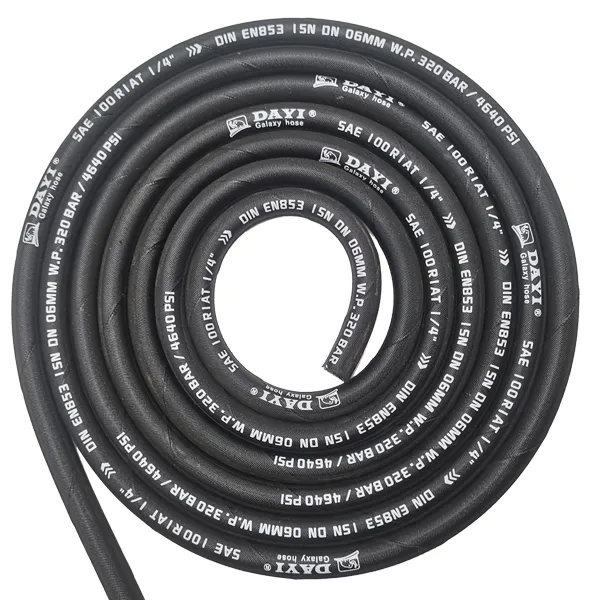
The performance of a steel wire braided hydraulic hose is dictated by several key engineering principles. Burst pressure, a critical safety parameter, is determined by the tensile strength of the steel wire and the efficiency of the braid angle. Generally, a tighter braid angle increases burst pressure but reduces flexibility. Working pressure is typically specified as a percentage of burst pressure (e.g., 50%, 70%), providing a safety margin for normal operation. Impulse pressure resistance is crucial in applications involving pressure pulsations. The hose must withstand these cycles without fatigue failure. This is assessed through repeated pressure cycling tests. Temperature range dictates the hose’s operational limits. Rubber compounds exhibit temperature-dependent properties; exceeding the specified temperature range can lead to degradation and reduced performance. Fluid compatibility is another essential consideration. The inner tube material must be chemically resistant to the hydraulic fluid being used. Incompatibility can lead to swelling, softening, and eventual hose failure. Force analysis during bending and flexing reveals stress concentrations within the hose structure. Minimizing these concentrations through optimized braid design and appropriate hose routing prolongs service life. Compliance requirements, such as those defined by SAE J517 and EN 856 standards, mandate specific performance characteristics and testing procedures, ensuring product safety and reliability. Finite Element Analysis (FEA) is often used during the design phase to predict stress distributions and optimize hose geometry.
Technical Specifications
| Parameter | Unit | Specification Range (Typical) | Test Standard |
|---|---|---|---|
| Working Pressure | MPa | 10 – 420 | SAE J517, EN 856 |
| Burst Pressure | MPa | 30 – 1260 | SAE J517, EN 856 |
| Temperature Range | °C | -40 to +100 | SAE J517, EN 856 |
| Inner Tube Material | - | NBR, EPDM, CR | ASTM D2000 |
| Reinforcement Material | - | High-Tensile Steel Wire | ASTM A931 |
| Outer Cover Material | - | Synthetic Rubber (EPDM, CR) | ASTM D2000 |
Failure Mode & Maintenance
High pressure steel wire braided hydraulic hoses are susceptible to several failure modes. Fatigue cracking, often initiated at braid crossover points, results from repeated pressure cycling and flexing. Corrosion, particularly in environments with moisture and contaminants, weakens the steel wire reinforcement, leading to reduced burst pressure. Delamination, the separation of rubber layers, can occur due to poor adhesion or exposure to incompatible fluids. Oxidation of the rubber compounds causes hardening and cracking, diminishing their flexibility and sealing ability. Abrasion damages the outer cover, exposing the reinforcement to corrosion. Improper installation, such as excessive bending or twisting, can induce stress concentrations and accelerate failure. Maintenance involves regular visual inspection for signs of wear, cracks, or leaks. Hose routing should be optimized to minimize bending and abrasion. Couplings should be inspected for tightness and corrosion. Fluid contamination can significantly reduce hose life; therefore, regular fluid filtering is essential. If a hose shows any signs of damage, it should be replaced immediately. Avoid kinking, crushing, or exposing the hose to extreme temperatures. Periodic pressure testing (hydrostatic testing) can help identify potential weaknesses before catastrophic failure occurs. Storage should be in a cool, dry, and dark environment to prevent rubber degradation.
Industry FAQ
Q: What is the significance of the braid angle in a steel wire braided hose?
A: The braid angle directly influences the hose’s pressure rating and flexibility. A smaller braid angle (steeper helix) provides higher burst pressure due to increased wire density, but it reduces the hose's ability to bend easily. A larger braid angle provides greater flexibility but lowers the pressure capacity. The optimal angle is a compromise tailored to the specific application.
Q: How does fluid compatibility affect hose lifespan?
A: Incompatibility between the hose’s inner tube material and the hydraulic fluid can cause swelling, softening, or degradation of the rubber. This compromises the hose’s sealing ability and structural integrity, leading to premature failure. Selecting the correct inner tube material based on the fluid type is critical.
Q: What are the key differences between NBR and EPDM inner tube materials?
A: NBR offers excellent resistance to petroleum-based hydraulic fluids, making it suitable for most common applications. EPDM exhibits superior resistance to weathering, ozone, and heat, making it ideal for outdoor or high-temperature environments. EPDM is generally less resistant to petroleum-based fluids than NBR.
Q: How can I prevent fatigue failure in hydraulic hoses?
A: Minimize pressure pulsations through the use of accumulators or pulsation dampeners. Optimize hose routing to avoid sharp bends and excessive flexing. Select a hose with a sufficient impulse pressure rating for the application. Ensure proper installation and avoid over-tightening couplings.
Q: What is the role of zinc plating or epoxy coating on the steel wire reinforcement?
A: Zinc plating and epoxy coating provide corrosion protection to the steel wire, preventing rust and maintaining its tensile strength. Corrosion weakens the wire and reduces the hose’s burst pressure. These coatings are essential for hoses used in harsh environments.
Conclusion
High pressure steel wire braided hydraulic hoses are complex engineered products vital for numerous industrial applications. Their performance is intricately linked to material selection, manufacturing precision, and adherence to stringent industry standards. Understanding the interplay between material properties, design parameters, and potential failure modes is crucial for ensuring safe and reliable operation. The correct specification, installation, and maintenance of these hoses are paramount for minimizing downtime and maximizing system efficiency.
Future developments in hydraulic hose technology will likely focus on lightweight materials, improved corrosion resistance, and enhanced fatigue life. The integration of sensor technology for real-time condition monitoring is also a growing trend, enabling predictive maintenance and further enhancing system reliability. Continuous research and development in rubber compounding and wire reinforcement materials will drive improvements in hose performance and durability.