
Apr . 01, 2024 17:55 Back to list
high pressure rubber hydraulic hose manufacturer Performance Analysis
Introduction
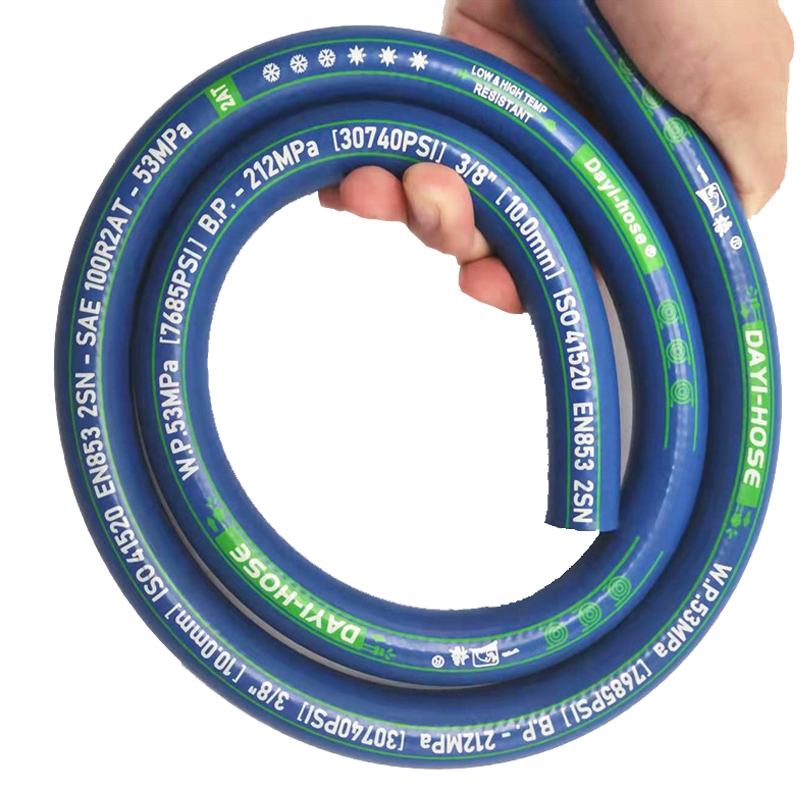
High pressure rubber hydraulic hose serves as a critical component in fluid power systems across diverse industries including construction, agriculture, manufacturing, and automotive. These hoses are engineered to safely and efficiently transmit hydraulic fluid under substantial pressure, enabling the operation of heavy machinery and critical control systems. Their technical position within the industrial chain is pivotal, directly impacting system reliability and operational safety. Core performance characteristics are defined by working pressure, burst pressure, temperature range, fluid compatibility, and hose construction (layers and reinforcement). The increasing demand for higher operating pressures in modern hydraulic systems, coupled with stringent safety regulations, drives ongoing innovation in materials science and manufacturing processes for these essential components. Understanding hose construction – including inner tube, reinforcement layers, and outer cover – is fundamental to selecting the appropriate hose for a specific application and preventing premature failure.
Material Science & Manufacturing
The construction of high-pressure hydraulic hoses involves several key materials, each contributing to specific performance attributes. The inner tube, which comes into direct contact with the hydraulic fluid, is typically composed of synthetic rubbers such as nitrile (NBR), ethylene propylene diene monomer (EPDM), or fluorocarbon (FKM, Viton). NBR offers good resistance to petroleum-based fluids, while EPDM is preferred for phosphate ester fluids. FKM provides exceptional resistance to high temperatures and aggressive chemicals, albeit at a higher cost. Reinforcement layers are crucial for withstanding high pressures and preventing hose rupture. These layers commonly consist of multiple plies of high-tensile steel wire, spiraled or braided, or aramid fiber (Kevlar). Steel wire offers superior pressure resistance, while aramid provides a lighter weight alternative with good flexibility. The outer cover, providing environmental protection and abrasion resistance, is generally made from synthetic rubbers like chloroprene (CR) or polyurethane (PU).
Manufacturing processes begin with the extrusion of the inner tube to the required dimensions. The reinforcement layers are then applied, using either a spiral winding or braiding technique. Precise tension control during reinforcement application is critical for ensuring uniform pressure distribution and preventing localized stress concentrations. The outer cover is then extruded over the reinforcement, followed by vulcanization – a chemical process using heat and pressure to cross-link the rubber polymers, enhancing their strength, elasticity, and resistance to degradation. Quality control throughout the process involves rigorous testing of material properties, dimensional accuracy, and bond strength between layers. Parameters like temperature, pressure, and curing time during vulcanization must be precisely controlled to optimize the hose’s overall performance and longevity. Post-vulcanization inspection includes burst pressure testing, impulse testing (simulating pulsating pressure), and leak testing to verify compliance with industry standards.
Performance & Engineering
The performance of a high-pressure hydraulic hose is governed by several engineering principles. Hose wall thickness directly correlates with burst pressure – the maximum pressure the hose can withstand before failure. However, working pressure, typically a fraction of burst pressure (e.g., 50-70%), is the rated operating pressure for continuous use. Fatigue life, or the number of pressure cycles the hose can endure before failure, is a critical consideration in applications involving pulsating pressures. This is influenced by the hose’s material properties, reinforcement construction, and the magnitude of pressure fluctuations. Environmental factors such as temperature, exposure to UV radiation, and contact with corrosive chemicals significantly impact hose performance. High temperatures can reduce rubber elasticity and accelerate degradation, while UV exposure can cause cracking and embrittlement.
Force analysis involves calculating the hoop stress (circumferential stress) within the hose wall due to internal pressure. This stress is proportional to the pressure and radius of the hose, and inversely proportional to the wall thickness. Engineers utilize these calculations to design hoses that can safely contain the operating pressure without exceeding the material’s tensile strength. Compliance requirements, dictated by standards like SAE J517 and EN 853, specify minimum performance criteria for burst pressure, impulse pressure, and temperature range. Proper hose routing and support are also crucial for preventing excessive bending, kinking, and abrasion, which can lead to premature failure. The selection of appropriate fittings and their proper attachment to the hose are equally important, as a faulty connection can compromise the entire system's integrity.
Technical Specifications
| Parameter | Unit | SAE 100R2 AT | SAE 100R6 |
|---|---|---|---|
| Working Pressure | MPa | 31.5 | 21.0 |
| Burst Pressure | MPa | 105 | 69 |
| Temperature Range | °C | -40 to +100 | -40 to +71 |
| Inner Tube Material | - | Synthetic Rubber (NBR) | Synthetic Rubber (NBR) |
| Reinforcement | - | Two Steel Wire Braids | Single Steel Wire Braid |
| Outer Cover | - | Synthetic Rubber (CRM) | Synthetic Rubber (CRM) |
Failure Mode & Maintenance
High-pressure hydraulic hoses are susceptible to several failure modes. Fatigue cracking, a common issue in pulsating pressure systems, occurs due to repeated stress cycles exceeding the material’s endurance limit. This typically initiates at imperfections within the reinforcement layers or at the hose-fitting interface. Delamination, the separation of reinforcement layers, can result from inadequate bonding during manufacturing or exposure to aggressive fluids. Degradation of the rubber materials, caused by exposure to heat, UV radiation, or incompatible fluids, leads to loss of elasticity and increased susceptibility to cracking. Oxidation, a chemical process involving reaction with oxygen, can also contribute to rubber degradation. Pinholes, small punctures in the inner tube, can cause fluid leakage and system failure. External abrasion, particularly near fittings or in confined spaces, can wear through the outer cover and expose the reinforcement layers.
Preventive maintenance is crucial for maximizing hose lifespan and preventing catastrophic failures. Regular visual inspections should be conducted to identify signs of wear, cracking, abrasion, or swelling. Hoses should be replaced immediately if any damage is detected. Proper hose routing and support are essential to minimize bending, kinking, and abrasion. Fluid compatibility should be verified to ensure the hose material is resistant to the hydraulic fluid being used. Hose connections should be regularly inspected for leaks and tightness. Implement a periodic replacement schedule based on operating conditions and manufacturer recommendations. Avoid over-bending the hose during installation or operation. Store hoses in a cool, dry place away from direct sunlight and ozone sources. Consider using hose guards to protect against abrasion in high-wear areas. Proper disposal of used hoses is also important to minimize environmental impact.
Industry FAQ
Q: What is the significance of impulse pressure rating in hydraulic hose selection?
A: Impulse pressure rating indicates the hose's ability to withstand repeated pressure surges or pulsations without failure. Hydraulic systems often generate pressure spikes during operation, and a hose with an inadequate impulse rating can experience fatigue cracking and premature failure. The impulse rating is particularly important in applications like hydraulic hammers and pumps where pulsating pressures are inherent.
Q: How does fluid compatibility affect the lifespan of a hydraulic hose?
A: Fluid compatibility is critical. Using a hose with an incompatible fluid can cause the inner tube to swell, soften, or degrade, leading to leaks, reduced pressure capacity, and ultimately, failure. Always consult the hose manufacturer's fluid compatibility chart to ensure the hose material is suitable for the specific hydraulic fluid being used.
Q: What are the common causes of hose twisting and how can it be prevented?
A: Hose twisting occurs when the hose is subjected to torsional stress, often during installation or operation. This can damage the reinforcement layers and reduce the hose’s pressure capacity. Prevention involves proper hose routing, avoiding sharp bends, and using swivel fittings to accommodate rotational movement. It is important to not untwist a hose while under pressure.
Q: What are the differences between braided and spiral-wound reinforcement?
A: Braided reinforcement offers good flexibility and is suitable for applications requiring frequent bending. Spiral-wound reinforcement provides higher pressure capacity and resistance to kinking, making it ideal for high-pressure, stationary applications. The choice depends on the specific application requirements.
Q: What are the key considerations when selecting hose fittings?
A: Fittings must be compatible with the hose material, pressure rating, and fluid being conveyed. Ensure the fitting crimp is properly sized and applied to prevent slippage or blow-off. Use fittings designed for hydraulic applications and avoid mixing different types of fittings. Properly torqued connections are critical to prevent leaks.
Conclusion
High-pressure rubber hydraulic hose technology is a complex field demanding a thorough understanding of material science, manufacturing processes, and engineering principles. Selecting the correct hose for a specific application requires careful consideration of operating pressure, temperature range, fluid compatibility, and environmental factors. Adhering to industry standards and implementing a robust preventive maintenance program are essential for maximizing hose lifespan, ensuring system reliability, and preventing costly downtime.
Future advancements in hydraulic hose technology are likely to focus on developing lighter-weight materials, improving pressure resistance, and enhancing resistance to harsh environments. Innovations in hose construction, such as the use of advanced composite materials and intelligent hose monitoring systems, will further enhance performance and reliability. Ultimately, a commitment to quality materials, precise manufacturing processes, and diligent maintenance will remain paramount for ensuring the safe and efficient operation of hydraulic systems.