
Apr . 01, 2024 17:55 Back to list
high pressure rubber hydraulic hose factories Performance Analysis
Introduction
High-pressure rubber hydraulic hoses are critical components in fluid power systems, transmitting hydraulic fluid to actuators and motors across a broad spectrum of industries including construction, agriculture, manufacturing, and oil & gas. Their function is to reliably convey pressurized fluids—typically hydraulic oil—under demanding conditions. This guide provides an in-depth technical overview of these hoses, covering materials, manufacturing processes, performance characteristics, potential failure modes, and relevant industry standards. A core industry pain point revolves around hose lifespan and unplanned downtime due to failure; optimizing material selection, manufacturing quality control, and implementing robust maintenance protocols are essential to mitigating these risks. Furthermore, consistently meeting stringent safety regulations and environmental compliance requirements presents a significant challenge for manufacturers and end-users alike. The performance of these hoses directly impacts the efficiency, reliability, and safety of the machinery they serve, highlighting the importance of comprehensive technical understanding.
Material Science & Manufacturing
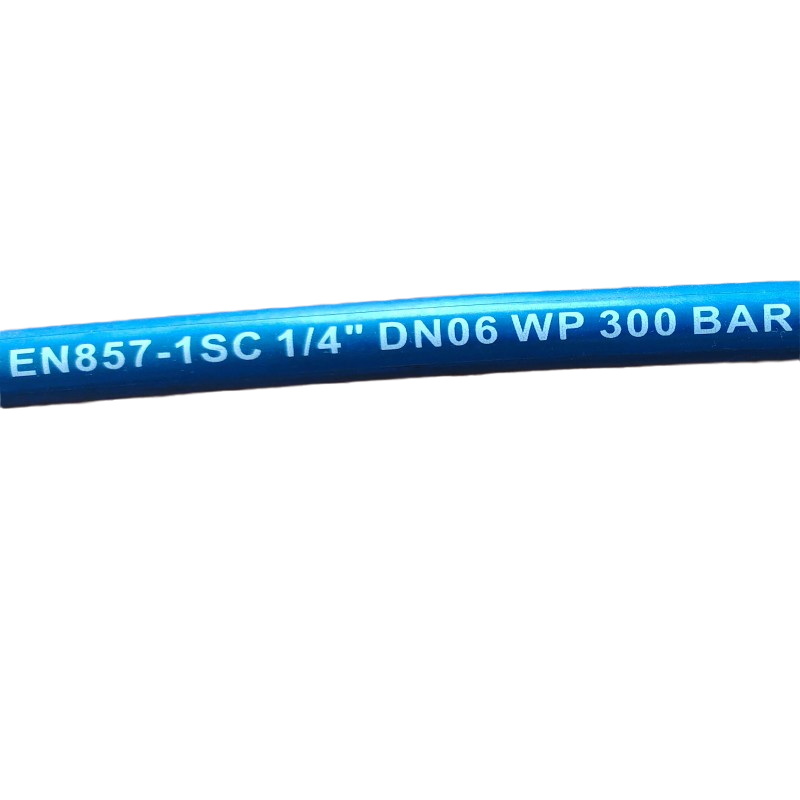
The construction of a high-pressure hydraulic hose typically involves four key layers: the inner tube, reinforcement layers, the outer cover, and occasionally, an intermediate layer. The inner tube, which comes into direct contact with the hydraulic fluid, is commonly composed of synthetic rubbers such as nitrile (NBR), ethylene propylene diene monomer (EPDM), or fluorocarbon (FKM – Viton). NBR offers good resistance to petroleum-based oils, while EPDM excels in phosphate ester fluid compatibility and high-temperature applications. FKM provides superior resistance to a broader range of aggressive fluids and elevated temperatures, albeit at a higher cost. Reinforcement layers are crucial for withstanding high pressure and preventing hose bursting. These layers typically consist of one or more braids or spirals of high-tensile steel wire. Single wire braid (1SP) offers moderate pressure capability, while multiple braids (2SP, 4SP, 6SP) significantly increase pressure rating. Spiral-wound reinforcement using steel wire (4SH, 6SH) provides even greater strength and flexibility. The outer cover protects the reinforcement layers from abrasion, weathering, and chemical attack and is generally made from synthetic rubbers like chloroprene (CR) or polyurethane (PU). The manufacturing process begins with the extrusion of the inner tube. The reinforcement layers are then applied through braiding or winding machines, with precise tension control being paramount to ensure consistent pressure ratings. Finally, the outer cover is extruded, and the hose undergoes curing (vulcanization) to crosslink the rubber compounds, imparting the final physical and chemical properties. Critical parameters during manufacturing include rubber compound mixing ratios, extrusion temperatures, braid/spiral tension, and curing time/temperature. Deviation from these parameters can lead to defects such as porosity, incomplete vulcanization, or reinforcement layer separation.
Performance & Engineering
The performance of high-pressure hydraulic hoses is dictated by several key engineering considerations, including burst pressure, working pressure, impulse pressure, and temperature range. Burst pressure represents the maximum pressure the hose can withstand before rupture; it is typically four times the working pressure. Working pressure is the continuous operating pressure recommended by the manufacturer. Impulse pressure, or pressure surge, is a critical factor in hydraulic systems, caused by rapid valve closures or pump pulsations. Hoses must be able to withstand these pressure spikes without failure. Finite element analysis (FEA) is frequently employed to model stress distribution within the hose under various loading conditions, optimizing reinforcement layer configuration and material selection. Another critical performance aspect is hose flexibility (bend radius). A smaller bend radius facilitates installation in tight spaces, but excessive bending can lead to fatigue failure. Material selection plays a crucial role in environmental resistance. Exposure to ozone, UV radiation, and extreme temperatures can degrade the rubber compounds, reducing hose lifespan. Compliance requirements, such as those outlined by SAE International (SAE J517), dictate minimum performance standards for hydraulic hoses, covering pressure ratings, dimensional accuracy, and test procedures. The hose end connections (fittings) also significantly influence performance. Fittings must be properly crimped onto the hose to create a secure, leak-proof seal. Incorrect crimping can lead to fitting blow-off or hose slippage.
Technical Specifications
| Parameter | Unit | SAE 100R2AT | SAE 100R6AT |
|---|---|---|---|
| Working Pressure | MPa | 31.5 | 21.0 |
| Burst Pressure | MPa | 126 | 84 |
| Temperature Range | °C | -40 to +100 | -40 to +65 |
| Reinforcement | - | Two Steel Wire Braids | Four Steel Wire Spirals |
| Inner Tube | - | NBR (Nitrile Rubber) | NBR (Nitrile Rubber) |
| Outer Cover | - | Synthetic Rubber (CR) | Synthetic Rubber (CR) |
Failure Mode & Maintenance
High-pressure hydraulic hoses are susceptible to several failure modes. Fatigue cracking, often initiated at the hose ends due to flexing, is a common cause of failure. This is exacerbated by excessive bending, improper routing, and exposure to vibration. Another frequent failure mode is abrasion, particularly in applications where the hose is exposed to rubbing against other components. Internal degradation of the rubber compounds can occur due to fluid contamination, oxidation, or exposure to incompatible fluids. This can lead to a loss of flexibility and eventual cracking. Fitting corrosion can also contribute to hose failure, weakening the connection and increasing the risk of leakage or blow-off. Pinholes, resulting from localized damage or material defects, can lead to slow leaks. To mitigate these failures, a robust preventative maintenance program is essential. Regular visual inspections should be conducted to identify signs of abrasion, cracking, bulging, or leakage. Hose routing should be optimized to minimize bending and contact with abrasive surfaces. Hydraulic fluid should be regularly analyzed for contamination, and filters should be replaced as needed. Hose assemblies should be replaced at predetermined intervals, based on operating conditions and manufacturer recommendations. Crimped fittings should be inspected for proper crimp height and integrity. When replacing hoses, ensure compatibility with the hydraulic fluid and operating pressure. Proper storage is also critical; hoses should be stored in a cool, dry, and dark environment to prevent degradation.
Industry FAQ
Q: What is the difference between a braided hose and a spiral hose in terms of application suitability?
A: Braided hoses (e.g., 2SP, 4SP) offer good flexibility and are suitable for applications with moderate pressure and frequent bending. Spiral hoses (e.g., 4SH, 6SH) provide higher pressure ratings and superior impulse performance, making them ideal for demanding applications with high flow rates and pressure surges, but they are generally less flexible than braided hoses.
Q: How does temperature affect the lifespan of a hydraulic hose?
A: Elevated temperatures accelerate the degradation of rubber compounds, reducing their elasticity and tensile strength. Exposure to extreme temperatures (both high and low) can cause cracking and hardening. Selecting a hose with a temperature range suitable for the application is crucial. Synthetic rubber compounds like FKM offer better high-temperature resistance compared to NBR.
Q: What are the key considerations when selecting a hose fitting?
A: The fitting must be compatible with the hose end and the hydraulic system. The material of the fitting should be resistant to corrosion from the hydraulic fluid. Proper crimping is essential to ensure a leak-proof seal. The fitting’s pressure rating must meet or exceed the hose’s working pressure.
Q: What role does hydraulic fluid contamination play in hose failure?
A: Contaminants such as dirt, metal particles, and water can act as abrasives, causing internal wear and damage to the hose lining. Contamination can also lead to corrosion and degradation of the rubber compounds. Regular fluid analysis and filtration are vital for preventing hose failure.
Q: How often should hydraulic hoses be inspected and replaced?
A: Hoses should be visually inspected before each use for signs of damage. A more thorough inspection should be conducted at least annually, or more frequently in demanding applications. Replacement intervals depend on operating conditions, fluid type, and manufacturer recommendations, but a general guideline is every 3-5 years, or sooner if any damage is detected.
Conclusion
High-pressure rubber hydraulic hoses are indispensable components in numerous industrial applications, demanding a thorough understanding of material science, manufacturing processes, and performance characteristics. Selecting the appropriate hose for a specific application requires careful consideration of factors such as pressure rating, temperature range, fluid compatibility, and environmental conditions. Implementing a proactive maintenance program, including regular inspections and fluid analysis, is crucial for preventing failures and maximizing hose lifespan.
Future advancements in hydraulic hose technology are likely to focus on developing more durable and chemically resistant materials, optimizing hose construction for improved flexibility and impulse performance, and integrating smart sensors for real-time condition monitoring. Adhering to stringent industry standards and best practices remains paramount for ensuring the safe and reliable operation of hydraulic systems.