
Apr . 01, 2024 17:55 Back to list
high pressure rubber hose suppliers Performance Analysis
Introduction
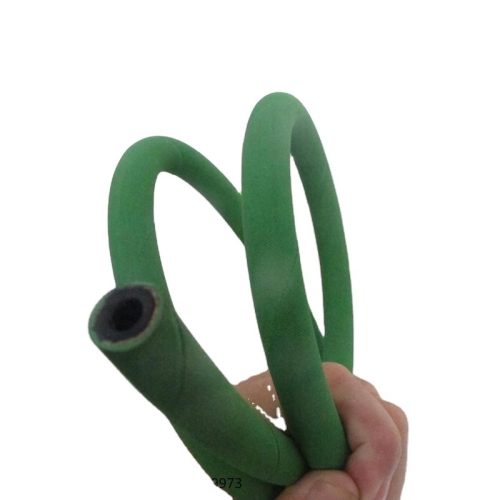
High-pressure rubber hoses are critical components in a diverse range of industrial applications, including hydraulic systems, oil and gas transfer, chemical processing, and automotive engineering. Their function is to safely convey fluids or gases under significant pressure, demanding robust construction and adherence to stringent safety standards. This guide provides a comprehensive technical overview of high-pressure rubber hoses, encompassing material science, manufacturing processes, performance characteristics, failure modes, and relevant industry regulations. The core performance metrics for these hoses revolve around burst pressure, working pressure, temperature resistance, chemical compatibility, and resistance to abrasion and kinking. A key pain point within the industry is ensuring consistent product quality across suppliers and maintaining traceability of material compositions to guarantee compliance and prevent catastrophic failures. Proper hose selection, installation, and maintenance are paramount to operational safety and efficiency.
Material Science & Manufacturing
High-pressure rubber hoses are typically constructed from multiple layers, each contributing to specific performance characteristics. The inner tube, often made of synthetic rubbers like nitrile (NBR), ethylene propylene diene monomer (EPDM), or fluorocarbon (FKM/Viton), provides compatibility with the conveyed fluid. NBR offers excellent resistance to petroleum-based fluids, EPDM is suitable for water, steam, and phosphate ester fluids, while FKM excels in harsh chemical environments and high temperatures. Reinforcement layers, commonly composed of high-tensile steel wire (single or multi-spiral), textile braiding (aramid or nylon), or a combination thereof, provide the necessary strength to withstand internal pressure. The outer cover, often employing synthetic rubbers like chloroprene (CR) or polyurethane (PU), offers protection against abrasion, weathering, ozone degradation, and chemical attack.
Manufacturing typically involves several stages. The inner tube is extruded through a die to achieve the desired dimensions and thickness. Reinforcement layers are then applied, typically through a spiral winding or braiding process, precisely controlling the angle and tension to optimize strength. These layers are then vulcanized – a chemical process involving heating with sulfur or other curing agents – to cross-link the rubber molecules, enhancing its elasticity, strength, and resistance to degradation. Quality control during vulcanization is critical, with parameters like temperature, pressure, and time closely monitored to achieve optimal cross-linking density. Following vulcanization, the outer cover is applied, again through extrusion, and the hose undergoes final inspection for defects and dimensional accuracy. Parameter control during extrusion includes maintaining consistent die temperature, screw speed, and material feed rate to ensure uniform wall thickness and avoid voids or imperfections.
Performance & Engineering
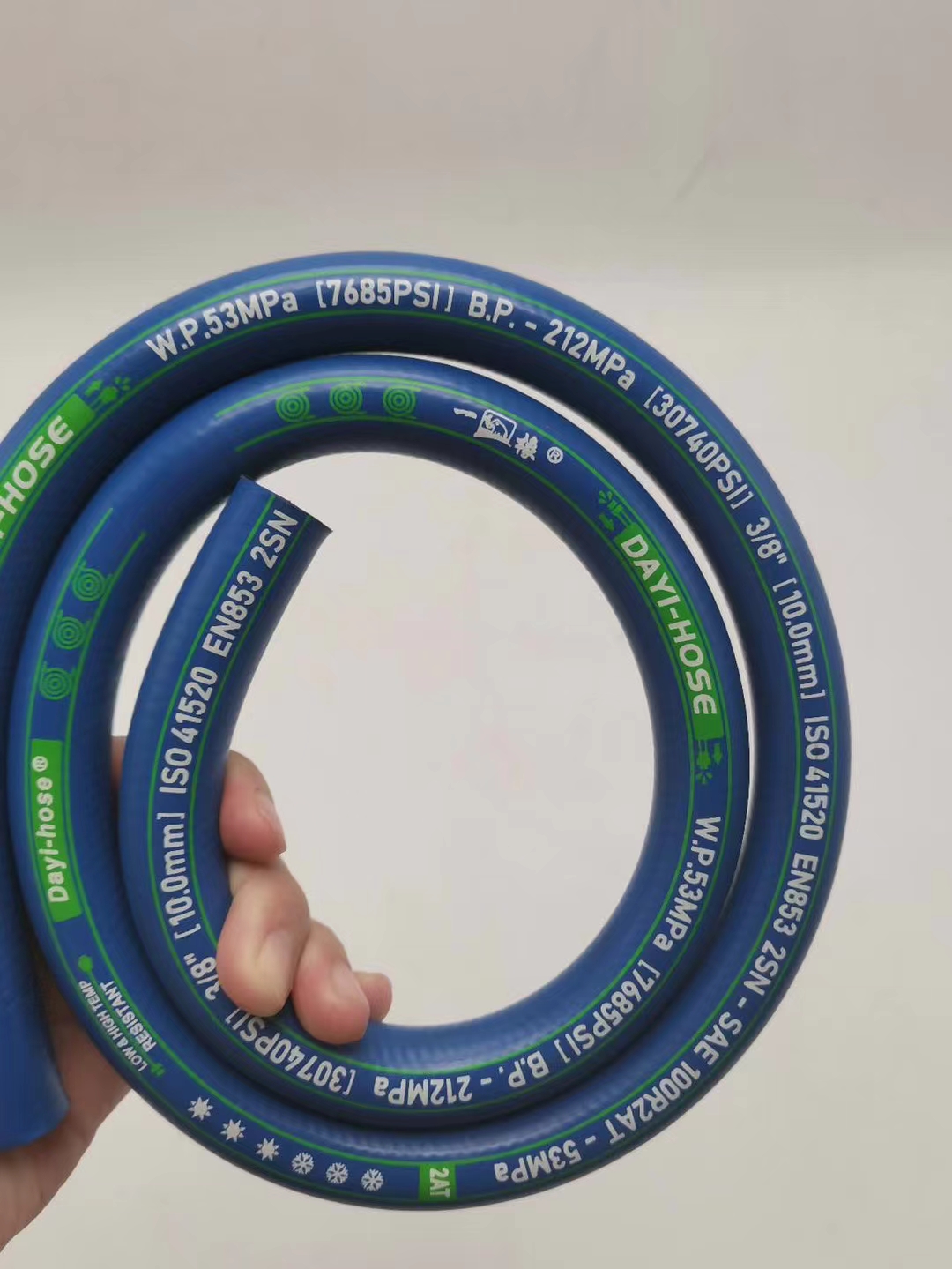
The performance of a high-pressure rubber hose is governed by several key engineering principles. Burst pressure, the maximum pressure the hose can withstand before failure, is primarily determined by the strength of the reinforcement layers and the adhesion between layers. Working pressure is a fraction of the burst pressure, typically defined by a safety factor (e.g., 4:1) to account for pressure surges and operational variability. Finite Element Analysis (FEA) is routinely employed to model stress distribution within the hose structure under various loading conditions, optimizing reinforcement configuration and material selection to maximize pressure resistance and minimize weight.
Environmental resistance is crucial, particularly in outdoor applications. Ozone cracking, caused by atmospheric ozone attacking unsaturated bonds in the rubber, can lead to premature failure. Antioxidants and UV stabilizers are incorporated into the rubber compounds to mitigate this effect. Temperature extremes also impact performance; high temperatures can reduce rubber elasticity and strength, while low temperatures can cause brittleness. Hose selection must consider the operating temperature range and the properties of the conveyed fluid. Furthermore, compliance with industry standards like SAE J517 (for hydraulic hoses) and ISO 6898 (for pneumatic hoses) is essential to ensure product safety and reliability. Kink radius is another critical parameter; exceeding the minimum bend radius can induce stress concentrations and lead to hose failure. Proper routing and support are essential to prevent kinking.
Technical Specifications
| Parameter | Unit | Typical Value (Hydraulic Hose) | Typical Value (Chemical Transfer Hose) |
|---|---|---|---|
| Working Pressure | MPa | 20-35 | 10-25 |
| Burst Pressure | MPa | 80-140 | 40-100 |
| Temperature Range | °C | -40 to +100 | -20 to +80 |
| Inner Tube Material | - | NBR | FKM/Viton |
| Reinforcement | - | Steel Wire Spiral | Stainless Steel Braiding |
| Outer Cover Material | - | CR (Chloroprene) | CSM (Hypalon) |
Failure Mode & Maintenance
High-pressure rubber hoses are susceptible to several failure modes. Fatigue cracking, caused by repeated pressure cycling, can initiate at stress concentration points, such as hose ends or areas of damage. Delamination, the separation of reinforcement layers, weakens the hose structure and reduces its burst pressure. Chemical attack can degrade the inner tube, leading to swelling, softening, and eventual failure. Oxidation and UV degradation can compromise the outer cover, causing cracking and loss of flexibility. Abrasion from external sources can also damage the cover, exposing the reinforcement layers.
Preventive maintenance is critical to extend hose lifespan and ensure safety. Regular visual inspections should be conducted to identify signs of damage, such as cracks, abrasions, swelling, or discoloration. Hose connections should be checked for tightness and corrosion. Proper hose routing and support are essential to prevent kinking and abrasion. Hoses should be replaced when they reach the end of their service life or exhibit any signs of damage. Avoid exceeding the working pressure or operating temperature limits. When handling chemicals, verify the compatibility of the hose material with the conveyed fluid. Periodic pressure testing can identify weaknesses before catastrophic failure occurs. Proper storage – protected from sunlight, ozone, and extreme temperatures – is also essential to maintain hose integrity.
Industry FAQ
Q: What is the impact of fluid velocity on the lifespan of a high-pressure rubber hose?
A: Higher fluid velocity increases internal friction, generating heat that can accelerate rubber degradation. Additionally, high velocity can cause erosion of the inner tube, particularly with abrasive fluids. Selecting a hose with a larger inner diameter and ensuring proper fluid viscosity can mitigate these effects.
Q: How does the type of reinforcement (steel wire vs. textile braiding) affect hose performance?
A: Steel wire reinforcement provides higher burst pressure and resistance to elongation, making it suitable for demanding hydraulic applications. Textile braiding offers greater flexibility and resistance to kinking but typically has lower burst pressure. The choice depends on the specific application requirements.
Q: What are the key considerations when selecting a hose for chemical transfer?
A: Chemical compatibility is paramount. The inner tube material must be resistant to the specific chemical being conveyed. Consider factors like concentration, temperature, and exposure duration. Consult chemical resistance charts and perform compatibility tests if necessary.
Q: How important is proper hose end termination and what are common failure points?
A: Proper hose end termination is critical for maintaining the hose’s rated pressure and preventing leakage. Common failure points include improper crimping, loose fittings, and corrosion. Using certified crimping equipment and selecting compatible fittings are essential.
Q: What is the role of static grounding in preventing hose failures, particularly with flammable fluids?
A: Static electricity can build up during fluid transfer, particularly with low-conductivity fluids. Static grounding – connecting the hose and receiving container to a common ground – dissipates static charge, preventing sparks that could ignite flammable vapors. This is a critical safety measure.
Conclusion
High-pressure rubber hoses represent a sophisticated engineering solution for fluid and gas conveyance under demanding conditions. Their performance is intricately linked to material selection, manufacturing precision, and adherence to industry standards. Understanding the interplay between pressure, temperature, chemical compatibility, and mechanical stress is crucial for selecting the appropriate hose for a given application. The potential for failure, stemming from fatigue, chemical attack, or improper maintenance, necessitates a proactive approach to inspection and preventative care.
Future advancements in high-pressure hose technology are likely to focus on developing novel materials with enhanced chemical resistance and temperature stability, as well as incorporating smart sensing capabilities for real-time monitoring of hose condition. Continued refinement of manufacturing processes and stricter quality control measures will further improve product reliability and safety. Furthermore, a greater emphasis on sustainability, through the use of bio-based materials and recyclable components, is expected to drive innovation in the coming years.