
Apr . 01, 2024 17:55 Back to list
high pressure rubber hose supplier Performance Analysis

Introduction
High pressure rubber hose is a critical component across numerous industrial applications, serving as a flexible conduit for fluids and gases under demanding conditions. Positioned within the broader fluid transfer systems supply chain, these hoses facilitate operations in sectors including oil and gas, construction, agriculture, and automotive. Their core performance characteristics – pressure capacity, temperature resistance, and chemical compatibility – directly impact system efficiency, safety, and longevity. Commonly constructed from synthetic rubbers reinforced with high-tensile materials, these hoses represent a significant engineering challenge requiring careful material selection and precise manufacturing processes to meet stringent industry standards. The ongoing drive for lighter, more durable, and environmentally resistant hoses presents continuous innovation opportunities for suppliers.
Material Science & Manufacturing
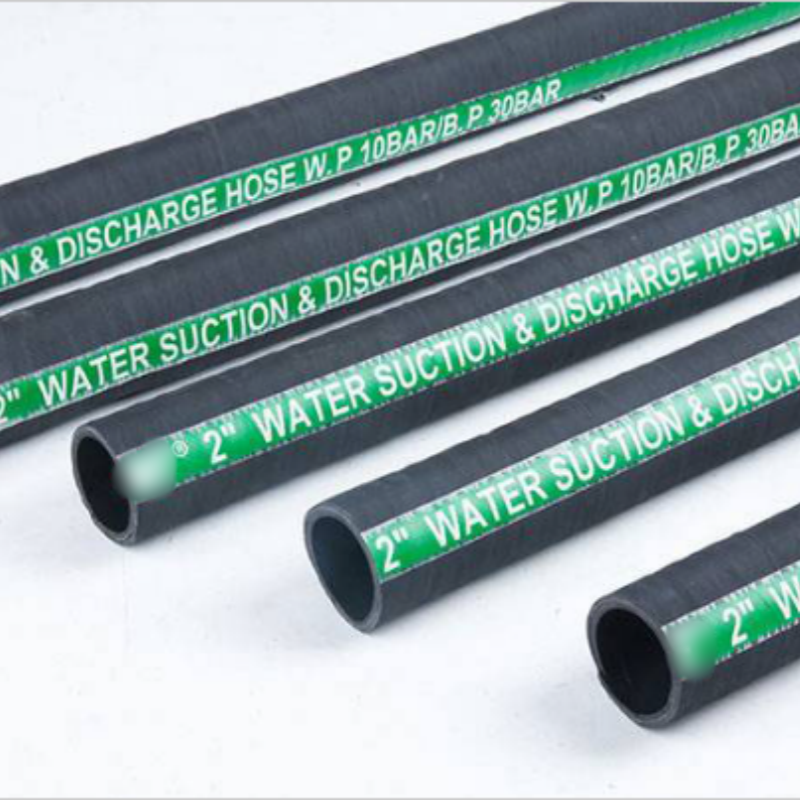
The foundation of high-pressure rubber hose performance lies in the interplay of its constituent materials. Typically, an inner tube composed of a rubber compound resistant to the conveyed fluid is used. Common rubber polymers include nitrile (NBR) for oil-based fluids, ethylene propylene diene monomer (EPDM) for water and steam applications, and chloroprene rubber (CR) for broader chemical resistance. The polymer’s inherent tensile strength and elongation properties are paramount. Between the inner tube and the outer cover lies the reinforcement layer, most frequently constructed from high-tensile steel wire, textile braiding (typically polyester or nylon), or a combination of both. Steel wire provides superior pressure resistance, while textile braiding offers flexibility and kink resistance. The outer cover, usually made of a weather-resistant rubber like CR or a thermoplastic polyurethane (TPU), provides abrasion and UV protection.
Manufacturing typically involves several key processes. The inner tube is extruded through a die to achieve the desired bore and wall thickness. Reinforcement layers are then applied via a winding or braiding process, carefully controlling the layer angle and tension to optimize hoop strength. The assembly is then vulcanized – a process involving heating the rubber compound with curing agents – to crosslink the polymer chains, imparting elasticity and structural integrity. Parameter control during vulcanization is critical; temperature, pressure, and time directly affect the final material properties. Post-vulcanization, the hose undergoes quality control checks, including pressure testing to verify burst strength and leak testing to ensure fluid integrity. Modern techniques incorporate automated extrusion and braiding, and real-time monitoring of vulcanization parameters to ensure consistent product quality. Precision is key in maintaining uniform wall thickness and proper reinforcement layer adhesion.
Performance & Engineering
Engineering a high-pressure rubber hose requires a thorough understanding of force analysis and environmental factors. Internal pressure exerts a hoop stress on the hose wall, which must be resisted by the reinforcement layers. The burst pressure – the pressure at which the hose fails – is a critical performance metric, determined by the tensile strength of the reinforcement and the adhesion between layers. External loads, such as bending and kinking, induce stresses that can lead to fatigue failure. Therefore, bend radius specifications are crucial, minimizing stress concentrations. Temperature extremes affect rubber elasticity; elevated temperatures reduce tensile strength and increase permeability, while low temperatures can cause brittleness. Chemical compatibility is also vital; exposure to incompatible fluids can cause swelling, degradation, or cracking.
Compliance with industry standards, such as SAE J517 and EN 853, dictates minimum performance requirements for specific applications. These standards specify test methods for pressure, temperature, and chemical resistance. Finite element analysis (FEA) is frequently employed to model hose behavior under various loading conditions, optimizing reinforcement configurations and identifying potential failure points. Furthermore, considerations for electrostatic discharge (ESD) are becoming increasingly important in certain applications, requiring the incorporation of conductive materials into the hose construction. The service life of a high-pressure hose is a function of the cumulative damage from cyclical loading, temperature variations, and chemical exposure, making accurate prediction and robust design essential.
Technical Specifications
| Parameter | Unit | Standard Specification (Hydraulic Hose R1AT/R2AT) | Premium Specification (Ultra-High Pressure) |
|---|---|---|---|
| Working Pressure | MPa | 20.7 | 70 |
| Burst Pressure | MPa | 82.7 | 280 |
| Temperature Range | °C | -40 to +100 | -55 to +150 |
| Reinforcement Material | - | Two Steel Wire Braids | Spiral Steel Wire |
| Inner Tube Material | - | NBR (Nitrile Rubber) | PTFE (Polytetrafluoroethylene) |
| Outer Cover Material | - | CR (Chloroprene Rubber) | UHMWPE (Ultra-High Molecular Weight Polyethylene) |
Failure Mode & Maintenance
High-pressure rubber hoses are susceptible to several failure modes. Fatigue cracking, initiated by cyclical bending and pressure fluctuations, is a common cause of failure, particularly near fittings. Delamination, the separation of reinforcement layers from the rubber matrix, weakens the hose and can lead to catastrophic rupture. Chemical degradation, caused by exposure to incompatible fluids, results in swelling, softening, and loss of tensile strength. Oxidation, driven by exposure to ozone and UV radiation, causes cracking and embrittlement of the rubber. Pinholes, often caused by minor damage during handling or installation, lead to leaks. Fitting failures, stemming from improper crimping or corrosion, represent another significant failure point.
Preventative maintenance is crucial for extending hose life and ensuring safety. Regular visual inspections should be conducted to identify signs of cracking, abrasion, or swelling. Hoses should be replaced if any defects are observed. Proper storage – away from direct sunlight, ozone sources, and extreme temperatures – minimizes degradation. Avoid sharp bends and kinking during installation and operation. Ensure fittings are correctly crimped and compatible with the hose and fluid. Regular pressure testing can detect leaks or weakening of the hose. Maintaining a detailed record of hose usage and inspection dates facilitates proactive replacement and minimizes downtime. Following manufacturer's recommendations for hose handling and maintenance is paramount.
Industry FAQ
Q: What is the significance of “wire braid” versus “spiral” reinforcement in a high-pressure hose?
A: Wire braid reinforcement (typically two braids) provides excellent flexibility and resistance to kinking, making it suitable for applications requiring frequent movement. However, spiral reinforcement offers significantly higher pressure capacity due to its continuous, tightly wound structure. Spiral hoses excel in applications demanding extreme pressures, albeit with reduced flexibility.
Q: How does temperature affect the working pressure of a rubber hose?
A: Increased temperature generally reduces the working pressure of a rubber hose. As temperature rises, the rubber compound softens, decreasing its tensile strength and resistance to deformation. Therefore, derating factors are often applied to the working pressure at elevated temperatures, as specified in industry standards.
Q: What are the common causes of premature hose failure related to fluid incompatibility?
A: Exposure to incompatible fluids can cause swelling, softening, or cracking of the inner tube material. For example, using a nitrile hose with chlorinated solvents can cause rapid degradation. Proper material selection, based on a comprehensive understanding of the conveyed fluid’s chemical properties, is essential.
Q: How important is proper crimping of hose fittings?
A: Proper crimping is paramount. Insufficient crimping can lead to leaks or fitting blow-off, while over-crimping can damage the hose reinforcement. Crimping specifications must be strictly adhered to, utilizing calibrated crimping machines and appropriately sized dies based on the hose and fitting combination.
Q: What is the role of standards like SAE J517 and EN 853 in hose selection and performance?
A: SAE J517 and EN 853 define standardized performance criteria for hydraulic hoses, including pressure ratings, temperature ranges, and chemical resistance. These standards provide a common framework for hose selection, ensuring compatibility and safety within specific applications. Adherence to these standards demonstrates a commitment to quality and reliability.
Conclusion
High-pressure rubber hose technology represents a complex intersection of material science, engineering design, and manufacturing precision. The selection of appropriate materials – rubber compounds and reinforcement structures – coupled with stringent quality control throughout the production process, are fundamental to achieving reliable performance in demanding applications. Understanding the potential failure modes and implementing proactive maintenance strategies are essential for maximizing hose lifespan and ensuring operational safety.
The future of high-pressure hose development is focused on materials innovation – exploring advanced polymers and reinforcement materials to achieve higher pressure ratings, improved temperature resistance, and reduced weight. Furthermore, advancements in predictive maintenance technologies, leveraging sensor data and machine learning, will enable more accurate assessment of hose condition and proactive replacement strategies, minimizing downtime and enhancing overall system efficiency. Continued adherence to and evolution of industry standards will remain critical in driving ongoing improvements in safety and reliability.