
Apr . 01, 2024 17:55 Back to list
high pressure rubber hose Performance Analysis

Introduction
High pressure rubber hose is a critical component in numerous industrial applications, serving as a flexible conduit for the safe and efficient transfer of fluids and gases under substantial pressure. Distinguished by its reinforced construction, typically incorporating multiple layers of rubber and high-tensile strength fibers (steel wire, aramid fiber, or synthetic yarns), it differs significantly from standard garden hose or low-pressure tubing. Its technical position within the industrial chain is central to sectors like hydraulic machinery, oil & gas, automotive, construction, and agriculture. Core performance characteristics are defined by its working pressure rating, burst pressure, temperature resistance, chemical compatibility, and flexibility. The selection of appropriate high-pressure hose is paramount to operational safety, longevity, and minimizing downtime – a key pain point for industries relying on fluid power and transfer systems. Improper hose selection or maintenance leads to catastrophic failure, resulting in costly repairs, production delays, and potential personnel injury. The industry continually seeks improvements in materials, manufacturing processes, and testing protocols to extend service life and enhance performance under increasingly demanding conditions.
Material Science & Manufacturing
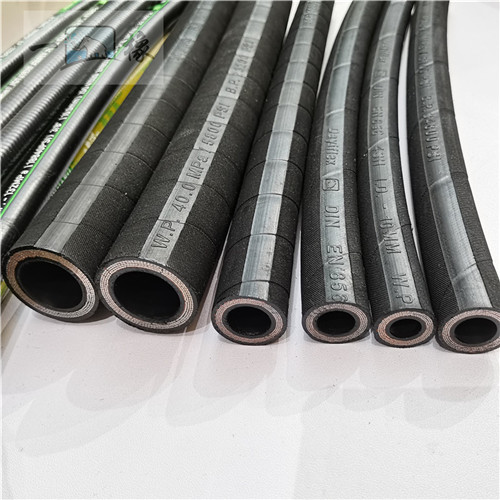
The construction of high-pressure rubber hose relies on a carefully selected suite of materials, each contributing to specific performance attributes. The inner tube, directly exposed to the conveyed fluid, is typically composed of synthetic rubbers like Nitrile (NBR) for oil resistance, Ethylene Propylene Diene Monomer (EPDM) for water and weather resistance, or Polytetrafluoroethylene (PTFE) for compatibility with aggressive chemicals. Nitrile rubber's acrylonitrile content dictates its oil resistance; higher content means better resistance but reduced flexibility at lower temperatures. The reinforcement layer is crucial for pressure containment. High-tensile steel wire, braided or spiraled, provides the highest pressure capacity but is heavier and less flexible. Aramid fiber reinforcement (e.g., Kevlar) offers a lighter weight alternative with excellent strength-to-weight ratio, though with slightly lower pressure ratings. Synthetic yarn reinforcement provides flexibility but is limited to lower pressure applications. The outer cover, providing environmental protection and abrasion resistance, commonly utilizes Chloroprene rubber (CR) due to its excellent ozone, weathering, and abrasion resistance. Manufacturing processes vary based on hose type. Braided hose involves helically winding reinforcement wires around a mandrel, followed by rubber extrusion and curing. Spiraled hose uses a single, continuously wound wire helix. Extrusion parameters – temperature, pressure, and screw speed – are critical to ensuring consistent rubber thickness and void-free construction. Curing is meticulously controlled to achieve optimal cross-linking density and mechanical properties. Quality control focuses on dimensional accuracy, reinforcement layer integrity, and adherence to pressure testing standards. Precise control of vulcanization time and temperature (typically between 140°C and 180°C) directly affects the final product’s tensile strength and elongation at break.
Performance & Engineering
The performance of high-pressure rubber hose is governed by complex engineering principles, primarily focused on stress analysis and fluid dynamics. Hose pressure ratings are determined using a Barlow’s formula-based approach, considering the material tensile strength, reinforcement configuration, and safety factor. Burst pressure is typically 3-4 times the working pressure, providing a critical margin of safety. Flexibility, quantified by bend radius, is crucial for installation and operation in confined spaces. Excessive bending induces stress concentrations in the hose wall, accelerating fatigue failure. Environmental resistance – particularly to temperature extremes, ozone exposure, and chemical attack – is paramount. High temperatures reduce rubber elasticity and tensile strength, while low temperatures can cause brittleness. Chemical compatibility must be carefully evaluated to prevent swelling, degradation, or leaching of plasticizers, compromising hose integrity. Finite Element Analysis (FEA) is frequently employed to model stress distribution under various loading conditions, optimizing hose design and predicting service life. Compliance requirements vary by industry and region, often mandating adherence to standards like SAE J517 (hydraulic hose), ISO 6898 (hydraulic hose), and specific industry regulations for oil & gas or automotive applications. For hydraulic systems, proper hose routing and support are essential to prevent vibration-induced fatigue. The selection of appropriate fittings (crimped, threaded, or flanged) is equally critical; improper fitting installation can lead to leaks or catastrophic failure. The hose's outer diameter and inner diameter play crucial roles in flow rate and pressure drop calculations.
Technical Specifications
| Parameter | Unit | SAE 100R2AT | SAE 100R1AT |
|---|---|---|---|
| Working Pressure | MPa | 20.7 | 17.2 |
| Burst Pressure | MPa | 82.7 | 68.9 |
| Temperature Range | °C | -40 to +100 | -40 to +71 |
| Inner Tube | Material | Nitrile Rubber | Nitrile Rubber |
| Reinforcement | Material | Two Steel Wire Braids | One Steel Wire Braid |
| Outer Cover | Material | Chloroprene Rubber | Chloroprene Rubber |
Failure Mode & Maintenance
High-pressure rubber hose is susceptible to several failure modes. Fatigue cracking, initiated by repeated pressure cycling and bending, is a common cause of failure, particularly in applications with high vibration. The crack propagates from stress concentration points (e.g., near fittings) until the hose ruptures. Delamination, the separation of reinforcement layers from the rubber matrix, weakens the hose structure and reduces its pressure capacity. Chemical degradation, caused by incompatibility between the hose material and the conveyed fluid, results in swelling, softening, or cracking. Oxidation, particularly at elevated temperatures, causes rubber hardening and loss of elasticity. Abrasion, due to contact with abrasive surfaces, wears away the outer cover, exposing the reinforcement layer to corrosion. Pinholes can also form from external damage. Preventative maintenance is critical. Regular visual inspections should identify signs of cracking, swelling, abrasion, or leakage. Hose should be replaced if any of these defects are observed. Proper hose routing and support minimize bending stress. Pressure testing, conducted periodically, verifies hose integrity. When storing hoses, they should be protected from direct sunlight, ozone, and extreme temperatures. Avoid sharp bends during installation. The fitting crimp should be checked to ensure secure attachment. Regularly check for fluid leaks around the fittings. A preventative maintenance schedule that includes torque checks on fittings can significantly extend service life and prevent unexpected failures.
Industry FAQ
Q: What is the impact of pulse pressure on high-pressure hose life?
A: Pulse pressure, the fluctuation in pressure during each cycle, significantly reduces hose life. Each pressure surge introduces additional stress, accelerating fatigue crack initiation and propagation. Hoses designed for pulsating systems typically incorporate thicker walls and more robust reinforcement to withstand these cyclic loads. Dampening devices or accumulators are also used upstream to mitigate pulse pressure.
Q: How does hose layline marking contribute to safety and traceability?
A: Layline markings provide critical information about the hose manufacturer, production date, working pressure, and relevant standards compliance. This information is essential for traceability in case of failure analysis and ensures proper hose selection for the intended application. Standardized markings are mandated by industry regulations to enhance safety and accountability.
Q: What are the key considerations when selecting a hose for hydraulic applications versus pneumatic applications?
A: Hydraulic applications require hoses capable of withstanding significantly higher pressures and often involve oil-based fluids. Therefore, hose selection prioritizes burst strength, oil resistance (NBR), and abrasion resistance. Pneumatic applications typically operate at lower pressures and often utilize air or inert gases. Hose selection emphasizes flexibility, temperature resistance, and resistance to ozone cracking.
Q: How does the choice of fitting affect the overall performance and reliability of a high-pressure hose assembly?
A: The fitting is a critical component of the hose assembly. Improperly sized or installed fittings can create stress concentrations, leading to leaks or catastrophic failure. Fittings must be compatible with both the hose material and the conveyed fluid. Crimped fittings provide the most secure connection, while threaded fittings require proper sealing and torque. Regular inspection and maintenance of fittings are essential for long-term reliability.
Q: What are the advantages and disadvantages of spiral-wound versus braided hose reinforcement?
A: Spiral-wound reinforcement provides higher pressure capacity and greater flexibility than braided reinforcement. However, it is generally more expensive and can be more susceptible to damage from external abrasion. Braided reinforcement is more cost-effective and offers good abrasion resistance, but its pressure capacity and flexibility are limited.
Conclusion
High-pressure rubber hose remains an indispensable component across a vast spectrum of industrial applications. Understanding the intricate interplay between material science, manufacturing processes, and engineering principles is paramount for ensuring operational safety and maximizing service life. The selection of appropriate hose materials and reinforcement configurations must be carefully tailored to the specific application requirements, considering factors like working pressure, temperature, chemical compatibility, and environmental conditions.
Future advancements in high-pressure hose technology will likely focus on the development of new materials with enhanced performance characteristics – such as improved temperature resistance, chemical compatibility, and abrasion resistance – alongside the implementation of more sophisticated manufacturing techniques and non-destructive testing methods. Continuous innovation in these areas will further enhance the reliability, durability, and safety of high-pressure hose systems, contributing to increased efficiency and reduced downtime across a wide range of industries.