
Apr . 01, 2024 17:55 Back to list
high pressure rubber hose manufacturers Performance Analysis
Introduction
High-pressure rubber hose is a critical component in numerous industrial applications, including hydraulic systems, oil and gas transfer, chemical processing, and automotive manufacturing. Its primary function is to safely convey fluids and gases under extreme pressure, temperature, and often corrosive conditions. Positioned downstream from rubber compound formulation and reinforcement material production (steel wire, textile braids), hose manufacturing represents a significant value-add in the industrial supply chain. Core performance characteristics defining these hoses include working pressure, burst pressure, temperature range, fluid compatibility, and abrasion resistance. The industry faces ongoing challenges relating to achieving longer service life, reducing weight, improving chemical resistance, and complying with increasingly stringent safety regulations. This guide provides an in-depth exploration of the material science, manufacturing processes, performance parameters, failure modes, and maintenance procedures associated with high-pressure rubber hose.
Material Science & Manufacturing
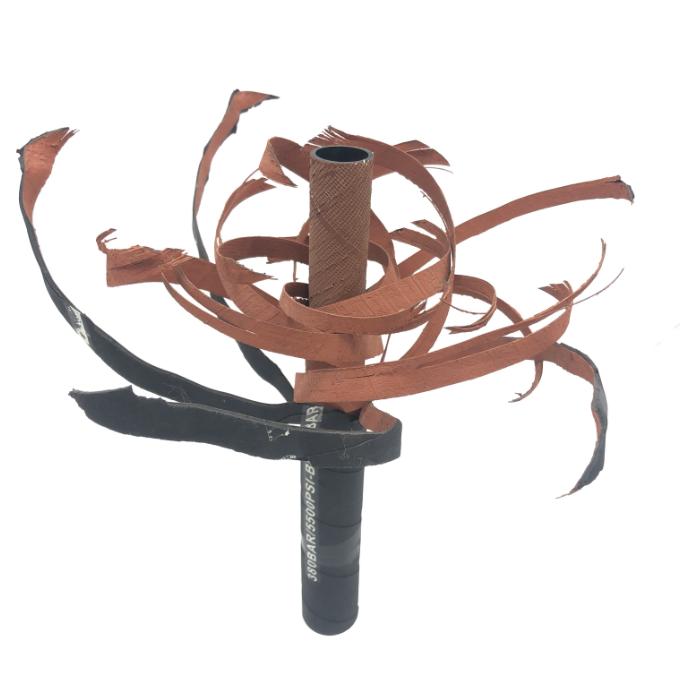
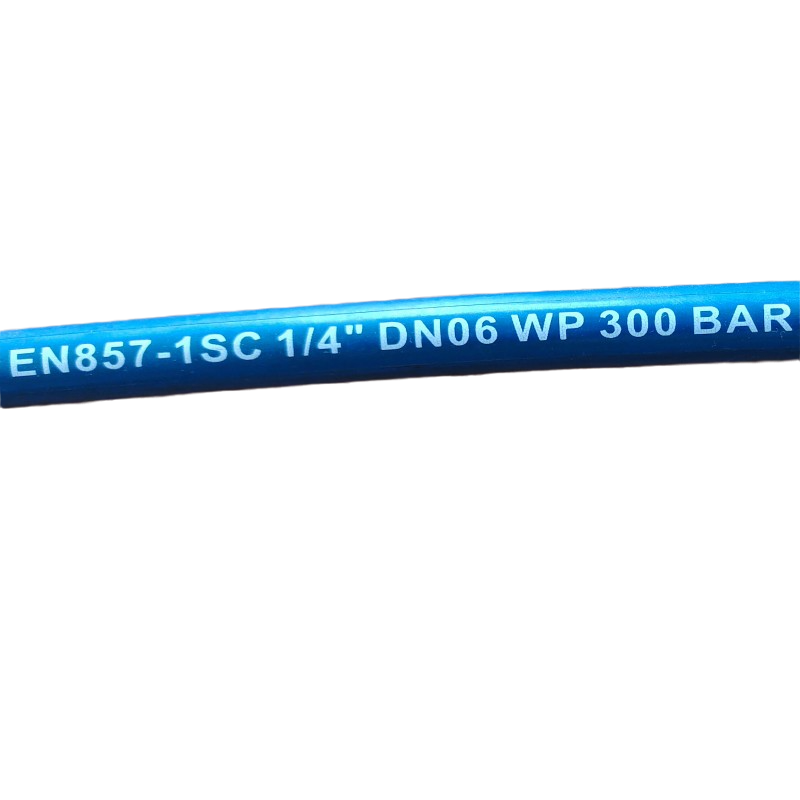
High-pressure rubber hose construction typically involves several layers: an inner tube providing fluid resistance, a reinforcement layer providing strength, and an outer cover offering environmental protection. The inner tube is commonly formulated using synthetic rubbers such as nitrile (NBR) for oil resistance, ethylene propylene diene monomer (EPDM) for water and heat resistance, or fluorocarbon (FKM/Viton) for aggressive chemicals. NBR offers tensile strength between 15-30 MPa and elongation at break of 300-700%, while FKM exhibits superior resistance to aromatic hydrocarbons but with lower elongation (150-300%). The reinforcement layer is typically high-tensile steel wire, spirally wound or braided, providing the majority of the hose’s pressure-withstanding capability. Steel wire grade (high carbon steel) and surface treatment (zinc coating) are crucial for corrosion prevention. Textile braids, composed of polyester or aramid fibers, are used for lower-pressure applications or as secondary reinforcement. Manufacturing processes vary depending on hose type. Spiraled hoses involve continuously winding pre-tensioned steel wire around a mandrel, followed by extrusion of the inner and outer rubber layers. Braided hoses utilize a specialized braiding machine to interweave multiple steel wires or textile strands around a central mandrel, again followed by rubber extrusion. Critical process parameters include rubber mixing ratios (polymer, plasticizer, filler, curing agent), extrusion temperature and pressure, and curing time and temperature – influencing crosslink density and thus mechanical properties. Post-curing is essential to achieve optimal material characteristics and dimensional stability.
Performance & Engineering
The performance of a high-pressure hose is fundamentally governed by its ability to withstand internal pressure without failure. Force analysis dictates that hoop stress (σh = PD/2t, where P is pressure, D is diameter, and t is wall thickness) is the primary stress component. Therefore, maintaining precise wall thickness and utilizing high-strength reinforcement materials are paramount. Environmental resistance is also crucial; prolonged exposure to ultraviolet radiation, ozone, and extreme temperatures can degrade rubber polymers, leading to cracking and reduced flexibility. Temperature cycling induces thermal stress, exacerbating these effects. Compliance requirements vary by industry and geographic location. Hydraulic hoses, for example, must meet standards set by the Society of Automotive Engineers (SAE) defining pressure ratings, bend radii, and fluid compatibility. Oil and gas hoses require adherence to American Petroleum Institute (API) specifications concerning burst pressure, safety factors, and non-corrosion properties. Finite element analysis (FEA) is increasingly employed to optimize hose design, predict stress distributions under various loading conditions, and validate performance against regulatory standards. Proper hose fitting selection and installation are critical; mismatched fittings or improper crimping can create stress concentrations, leading to premature failure.
Technical Specifications
| Parameter | Unit | Typical Value (Hydraulic Hose) | Typical Value (Oil & Gas Hose) |
|---|---|---|---|
| Working Pressure | MPa | 20-35 | 100-200 |
| Burst Pressure | MPa | 60-105 | 300-600 |
| Temperature Range | °C | -40 to +100 | -50 to +150 |
| Inner Tube Material | - | NBR | FKM/Viton |
| Reinforcement Material | - | Steel Wire (Spiral/Braid) | Steel Wire (Spiral/Braid) + Textile |
| Outer Cover Material | - | EPDM | CP (Chlorinated Polyethylene) |
Failure Mode & Maintenance
Common failure modes in high-pressure rubber hose include burst failure due to exceeding pressure limits, pinhole leaks caused by abrasion or corrosion, and separation of layers due to fatigue or improper bonding. Fatigue cracking is often initiated at stress concentrations near fittings or damage points. Hydrolytic degradation, particularly in EPDM hoses exposed to hot water, can lead to swelling and reduced strength. Oxidation, accelerated by UV exposure and ozone, causes surface cracking and embrittlement. Failure analysis typically involves visual inspection for cracks, bulges, or abrasions, followed by microscopic examination of fracture surfaces to determine the root cause. Maintenance practices should include regular visual inspections for signs of damage, pressure testing to verify integrity, and proper storage in a cool, dry environment away from direct sunlight and ozone sources. Avoid sharp bending or kinking of the hose, as this can create stress concentrations and accelerate fatigue. Hoses should be replaced if any signs of damage or degradation are observed, or if they have exceeded their recommended service life. Periodic fluid analysis can identify contaminants that may accelerate hose degradation.
Industry FAQ
Q: What is the impact of steel wire surface treatment on hose corrosion resistance?
A: Steel wire surface treatment, typically zinc plating or galvanization, significantly enhances corrosion resistance by providing a sacrificial barrier against corrosive agents. The zinc coating corrodes preferentially, protecting the underlying steel. The thickness and uniformity of the zinc coating are critical factors influencing its effectiveness. Insufficient coating thickness or localized defects can allow corrosion to penetrate and weaken the reinforcement layer.
Q: How does temperature affect the working pressure rating of a rubber hose?
A: Elevated temperatures generally reduce the working pressure rating of a rubber hose. As temperature increases, the rubber polymer softens, reducing its tensile strength and modulus of elasticity. This results in increased deformation under pressure and a greater risk of failure. Hose manufacturers provide derating charts specifying the allowable working pressure at various temperatures.
Q: What are the key considerations when selecting a hose for a specific chemical application?
A: Chemical compatibility is paramount. The inner tube material must be resistant to the specific fluid being conveyed, preventing swelling, degradation, or leaching. Consult chemical resistance charts provided by rubber manufacturers to ensure compatibility. Consider the concentration and temperature of the chemical, as these factors can influence the rate of degradation.
Q: What is the significance of the 'bend radius' specification for a high-pressure hose?
A: The bend radius is the minimum radius to which the hose can be bent without causing damage or reducing its pressure rating. Exceeding the specified bend radius creates stress concentrations, potentially leading to premature failure. Proper bend radius is critical for maintaining hose integrity and extending its service life.
Q: How often should high-pressure hoses be inspected and replaced?
A: Inspection frequency depends on the severity of the application and operating conditions. Regular visual inspections (weekly or monthly) should be conducted for signs of damage, such as cracks, abrasions, or leaks. Hoses should be pressure tested annually, or more frequently in critical applications. Replacement should occur if any damage is detected, or if the hose has exceeded its recommended service life (typically 5-7 years, depending on usage).
Conclusion
High-pressure rubber hose technology represents a complex interplay of material science, engineering design, and manufacturing precision. Achieving reliable performance requires careful consideration of fluid compatibility, operating temperature, pressure requirements, and environmental factors. Proper selection, installation, and maintenance are critical for ensuring safe and efficient operation and maximizing hose service life. Understanding the potential failure modes and implementing preventative maintenance programs can significantly reduce the risk of costly downtime and catastrophic failures.
Future advancements in high-pressure hose technology will likely focus on developing new rubber compounds with improved chemical resistance and temperature stability, utilizing lightweight reinforcement materials (e.g., carbon fiber), and incorporating smart sensors for real-time monitoring of hose condition. These innovations will contribute to enhanced safety, reduced operating costs, and increased efficiency in a wide range of industrial applications.