
Apr . 01, 2024 17:55 Back to list
high pressure oil hose suppliers Performance Analysis
Introduction
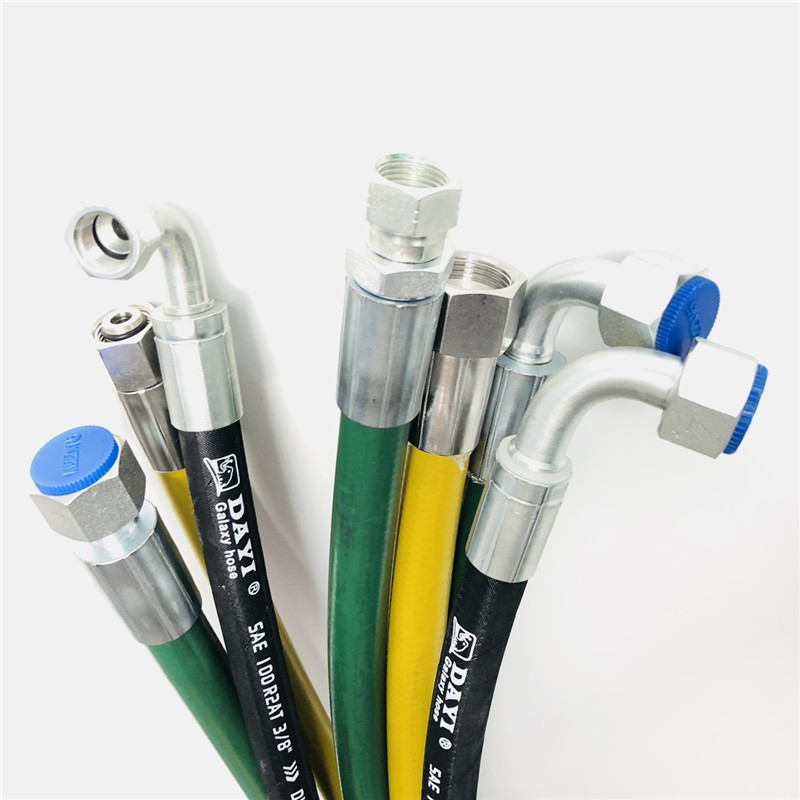
High-pressure oil hoses are critical components in fluid power systems, serving as flexible conduits for the transmission of hydraulic oil under extreme pressure and temperature conditions. These hoses are integral to a wide range of industries including construction, agriculture, manufacturing, oil & gas, and automotive. Their function is not merely conveyance; they are vital for system integrity, operational safety, and ultimately, process efficiency. The modern high-pressure oil hose represents a complex assembly of materials engineered to withstand demanding operational environments. Understanding the intricacies of their construction, performance characteristics, and failure modes is paramount for procurement professionals, engineers, and maintenance personnel alike. This guide provides an in-depth technical overview of high-pressure oil hoses, encompassing material science, manufacturing processes, performance metrics, common failure analysis techniques, and relevant industry standards. Core industry pain points center around hose longevity, compatibility with increasingly aggressive fluid formulations, and ensuring consistent performance across varying operational parameters.
Material Science & Manufacturing
The core of a high-pressure oil hose lies in its multi-layered construction. The inner tube, typically constructed from a synthetic rubber compound such as nitrile (NBR), chlorinated polyether (CPE), or fluorocarbon (FKM – Viton), provides the primary fluid barrier and must exhibit excellent resistance to the specific hydraulic fluid in use. NBR is cost-effective for petroleum-based fluids, CPE offers improved heat and oil resistance, while FKM provides exceptional resistance to a wide range of chemicals and high temperatures. The reinforcement layer is crucial for pressure containment, commonly utilizing multiple high-tensile steel wire braids or spirals. The number and configuration of these braids directly impact the hose's working pressure and burst pressure. A protective outer cover, typically composed of synthetic rubber (e.g., SBR, CR), shields the reinforcement layer from abrasion, ozone, UV radiation, and environmental degradation. Manufacturing involves a precise process. The inner tube is extruded, followed by the winding or spiraling of the reinforcement layer. The outer cover is then extruded over the reinforcement, and the hose undergoes vulcanization – a curing process involving heat and pressure to crosslink the rubber compounds, imparting elasticity and strength. Key parameter control during extrusion includes maintaining precise rubber compound temperature and pressure to ensure uniform thickness and prevent voids. Wire braid tension must be consistent to guarantee even pressure distribution. Vulcanization temperature and time are critical for achieving optimal material properties; under-curing results in lower strength, while over-curing can lead to brittleness.

Performance & Engineering
The performance of a high-pressure oil hose is governed by several key engineering principles. Burst pressure, working pressure, and safety factor are paramount. Working pressure is the maximum pressure the hose can safely handle in continuous operation, while burst pressure is the pressure at which the hose will fail. A standard safety factor of 4:1 is typically applied, meaning the burst pressure is four times the working pressure. Hose flexibility, bend radius, and torsional strength are also crucial, especially in applications with tight routing or dynamic movement. Force analysis involves assessing the tensile stress within the reinforcement layer under pressure. The stress is proportional to the pressure and the hose's internal diameter, necessitating robust reinforcement construction for higher pressures and larger diameters. Environmental resistance is another critical factor. Exposure to extreme temperatures (both high and low), UV radiation, ozone, and chemicals can degrade the rubber compounds, reducing the hose’s lifespan. Compliance requirements vary by industry and region. For example, the oil and gas industry often mandates compliance with API Q1 standards for critical components, while automotive applications may require adherence to SAE J517 standards. Understanding these requirements is essential for ensuring the hose is suitable for its intended application. Hydrostatic testing is a standard quality control measure, where hoses are subjected to pressures exceeding their working pressure to verify their integrity.
Technical Specifications
| Parameter | Unit | Typical Value (DN20, 2-Wire Braid) | Typical Value (DN50, 4-Wire Braid) |
|---|---|---|---|
| Working Pressure | MPa | 31.5 | 63.0 |
| Burst Pressure | MPa | 126 | 252 |
| Inner Diameter | mm | 13 | 38 |
| Outer Diameter | mm | 19 | 52 |
| Minimum Bend Radius | mm | 45 | 90 |
| Temperature Range | °C | -40 to +100 | -40 to +100 |
Failure Mode & Maintenance
High-pressure oil hoses are susceptible to several failure modes. Fatigue cracking, often initiated at the braid crossover points, is a common issue resulting from repeated flexing and pressure cycling. Delamination, the separation of layers, can occur due to improper vulcanization or exposure to incompatible fluids. Degradation of the rubber compounds, caused by exposure to heat, ozone, UV radiation, and chemicals, leads to loss of elasticity and eventual cracking. Oxidation of the steel wire reinforcement can reduce its tensile strength and contribute to corrosion. Internal abrasion, caused by fluid contaminants, can erode the inner tube. Failure analysis often involves visual inspection for cracks, blisters, and delamination, followed by microscopic examination of fracture surfaces to determine the root cause. Maintenance is crucial for extending hose life. Regular visual inspections should be conducted to identify any signs of damage. Hose routing should be carefully planned to avoid sharp bends and abrasion. Proper fluid filtration is essential to minimize internal abrasion. Hoses should be replaced at recommended intervals, even if no visible damage is present, to prevent catastrophic failure. When replacing hoses, ensure compatibility with the hydraulic fluid and operating conditions.
Industry FAQ
Q: What is the impact of different hydraulic fluid types on hose compatibility?
A: Different hydraulic fluids possess varying chemical properties. Petroleum-based fluids are generally compatible with NBR, but can degrade CPE and FKM over time. Synthetic fluids, such as phosphate esters, require FKM inner tubes due to their aggressive chemical nature. Incorrect fluid selection can lead to swelling, softening, or cracking of the inner tube, resulting in leakage and potential failure. Always consult a fluid compatibility chart before selecting a hose.
Q: How does temperature affect the performance and lifespan of a high-pressure hose?
A: Elevated temperatures accelerate the degradation of rubber compounds, reducing their elasticity and tensile strength. Exposure to temperatures exceeding the hose’s rated maximum can lead to premature failure. Low temperatures can cause the rubber to become brittle and more susceptible to cracking. Temperature cycling exacerbates these effects. Selecting a hose with a temperature rating appropriate for the application is critical.
Q: What is the significance of the hose reinforcement braid configuration (e.g., 2-wire vs. 4-wire)?
A: The number of braids directly correlates with the hose’s pressure-bearing capacity. A 4-wire braid hose offers significantly higher burst pressure and working pressure than a 2-wire braid hose. However, a 4-wire braid hose is typically less flexible. The choice depends on the specific pressure requirements and routing constraints of the application.
Q: What are the common causes of hose leakage, and how can they be prevented?
A: Common causes include pinholes in the inner tube (often due to internal abrasion), cracks in the outer cover (due to ozone or UV exposure), and leakage at the fittings. Prevention involves proper fluid filtration, UV protection, regular inspections, and the use of high-quality fittings and crimping procedures.
Q: What is the importance of proper hose crimping, and what potential issues can arise from improper crimping?
A: Proper crimping ensures a secure and leak-proof connection between the hose and the fitting. Under-crimping can lead to blow-off failures, while over-crimping can damage the hose reinforcement and reduce its pressure-bearing capacity. Using the correct crimping machine, die set, and procedure is essential.
Conclusion
High-pressure oil hoses represent a complex interplay of material science, engineering principles, and manufacturing processes. Selecting the appropriate hose requires careful consideration of operating pressure, fluid compatibility, temperature range, and environmental conditions. Understanding potential failure modes and implementing proactive maintenance strategies are crucial for maximizing hose lifespan and ensuring operational safety. The continued demand for more robust and reliable hydraulic systems drives ongoing innovation in hose technology, focusing on advanced materials, improved manufacturing techniques, and enhanced performance characteristics.
As hydraulic systems become increasingly sophisticated, the importance of understanding the nuances of high-pressure hose selection and maintenance will only grow. Procurement professionals and engineers must prioritize quality, compatibility, and adherence to industry standards to mitigate risk and optimize system performance. Further advancements in hose technology will likely focus on developing self-diagnosing hoses and hoses capable of withstanding even more extreme operating conditions, solidifying their role as critical components in a wide range of industrial applications.