
Apr . 01, 2024 17:55 Back to list
high pressure hydraulic rubber hose suppliers Performance Analysis
Introduction
High pressure hydraulic rubber hose is a critical component in fluid power systems, facilitating the transmission of hydraulic fluid to actuators and other components. These hoses are utilized across a diverse range of industries including construction, agriculture, manufacturing, oil and gas, and mining. Their function is to reliably convey pressurized fluids – typically hydraulic oil – under demanding conditions, often involving high temperatures, aggressive chemical exposure, and significant mechanical stress. The industry faces persistent challenges relating to hose longevity, burst pressure accuracy, and compatibility with increasingly complex hydraulic fluids. This guide provides a comprehensive technical overview of high-pressure hydraulic rubber hoses, covering material science, manufacturing processes, performance characteristics, failure modes, and relevant industry standards. We will focus on the critical specifications procurement managers and engineers need to evaluate when selecting a supplier and ensuring optimal system performance. The performance of these hoses directly impacts system efficiency, safety, and operational uptime, making informed selection paramount.
Material Science & Manufacturing
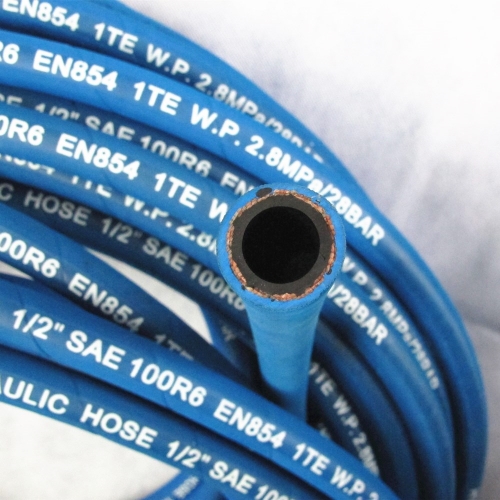
The core construction of a high-pressure hydraulic rubber hose consists of several key layers. The innermost layer, or tube, is typically composed of a synthetic rubber compound, most commonly nitrile rubber (NBR), ethylene propylene diene monomer (EPDM), or fluorocarbon (FKM/Viton). NBR provides excellent resistance to petroleum-based hydraulic fluids, while EPDM excels in applications requiring water and heat resistance. FKM offers superior resistance to extreme temperatures and aggressive chemicals, but at a higher cost. The reinforcement layer is crucial for withstanding high pressures. It’s generally constructed from multiple layers of high-tensile steel wire, spirally wound or braided. The number of layers and the wire diameter directly correlate to the hose’s working and burst pressures. Between the tube and reinforcement, an adhesive layer ensures strong bonding and prevents separation. The outer cover provides environmental protection and abrasion resistance, usually comprised of synthetic rubber like chloroprene (CR) or polyurethane (PU). Manufacturing processes vary depending on the hose type. Braided hoses involve precisely winding steel wire around a mandrel before extruding the inner tube and outer cover. Spiraled hoses utilize a continuous wire winding process. Key parameter control during manufacturing includes precise rubber compound mixing ratios, consistent wire tension during winding, and accurate vulcanization (curing) times and temperatures. Maintaining these parameters ensures uniform material properties and prevents defects such as voids, delamination, or insufficient cross-linking within the rubber compounds. Post-manufacturing, each hose undergoes rigorous pressure testing to verify its burst pressure and leak tightness. Quality control extends to dimensional accuracy and visual inspection for any surface flaws.

Performance & Engineering
The performance of a hydraulic hose is defined by several critical engineering parameters. Burst pressure, the maximum pressure the hose can withstand before rupture, is paramount. Working pressure, typically rated as a percentage of the burst pressure (often 70%), dictates the safe operating limit. Hose flex radius, the minimum permissible bend radius, is critical to prevent kinking and premature failure. Excessive bending introduces stress concentrations and can damage the reinforcement layer. Temperature range defines the operational limits; exceeding these limits can lead to rubber degradation and reduced pressure capacity. Fluid compatibility is another crucial factor; selecting a hose material incompatible with the hydraulic fluid can cause swelling, softening, or cracking. Furthermore, hose assemblies are subject to dynamic loading, including pressure pulsations and external vibrations. These forces induce fatigue stress, gradually weakening the hose over time. Force analysis requires consideration of both internal pressure and external mechanical loads. Finite element analysis (FEA) is frequently employed to model stress distribution and optimize hose design. Compliance requirements, such as those dictated by SAE J517 and EN 853, mandate specific testing protocols and performance criteria. Correct installation is equally vital. Improper fitting attachment or excessive bending can compromise the hose's integrity, creating leak paths or initiating fatigue cracks. The selection of appropriate fittings (e.g., crimped, field-attachable) also directly impacts the hose assembly's performance and reliability.
Technical Specifications
| Parameter | Unit | SAE J517 R1AT | EN 853 1SN |
|---|---|---|---|
| Working Pressure | MPa | 20.7 | 20 |
| Burst Pressure | MPa | 82.7 | 80 |
| Temperature Range | °C | -40 to +100 | -40 to +100 |
| Reinforcement | - | One Steel Wire Braid | One Steel Wire Spiral |
| Inner Tube | - | NBR (Nitrile Rubber) | NBR (Nitrile Rubber) |
| Outer Cover | - | CRM (Chloroprene Rubber) | CRM (Chloroprene Rubber) |
Failure Mode & Maintenance
High-pressure hydraulic hoses are susceptible to several failure modes. Fatigue cracking, initiated by repeated pressure cycling and mechanical stress, is a common cause of failure, often originating at the fitting interface or within the reinforcement layer. Delamination, the separation of layers within the hose wall, can result from insufficient bonding between the tube, reinforcement, and cover. This is exacerbated by thermal cycling and chemical attack. Extrusion failure occurs when the inner tube degrades due to incompatible fluids or excessive temperatures, leading to pinholes or cracks. Abrasion damage to the outer cover compromises the hose’s environmental protection, exposing the reinforcement layer to corrosion. Oxidation of the rubber compounds, accelerated by heat and ozone exposure, causes hardening and cracking. Internal corrosion of the steel reinforcement is another concern, particularly in systems utilizing fluids with inadequate corrosion inhibitors. Maintenance best practices include regular visual inspections for signs of wear, cracks, or bulges. Hose assemblies should be replaced based on a predetermined service life, even if no visible damage is present. Correct torque specifications for fitting attachment must be adhered to. Fluid contamination should be minimized through proper filtration. When replacing hoses, it is crucial to select compatible fittings and ensure proper installation techniques. Leak testing should be performed after installation to verify the integrity of the assembly. Record-keeping of hose replacement dates and failure modes can help identify systemic issues and improve preventative maintenance programs.
Industry FAQ
Q: What is the difference between braided and spiral hose, and which is better for high-pressure applications?
A: Braided hoses utilize multiple layers of wire helically woven around the inner tube, offering good flexibility and resistance to kinking. Spiral hoses use a single wire wound continuously at a shallow angle, providing higher pressure ratings and greater resistance to bending and twisting. For very high-pressure applications exceeding 3000 PSI, spiral hoses are generally preferred due to their superior strength and burst resistance. However, braided hoses are often more cost-effective for moderate pressure requirements.
Q: How does temperature affect the performance of a hydraulic hose?
A: Elevated temperatures accelerate the degradation of rubber compounds, reducing their elasticity and increasing the risk of cracking. High temperatures also decrease the hose’s pressure capacity. Conversely, low temperatures can cause the rubber to become brittle and less flexible. Always ensure the hose's temperature range is compatible with the operating environment and the hydraulic fluid temperature.
Q: What is the impact of fluid compatibility on hose life?
A: Using an incompatible hydraulic fluid can cause swelling, softening, or chemical attack of the inner tube, leading to leaks and premature failure. It's crucial to select a hose material specifically rated for the intended fluid type. For example, using phosphate ester fluids with a hose not rated for them will result in rapid degradation.
Q: What are the common causes of hose fitting failure?
A: Improper crimping of fittings is a major cause of failure. Insufficient crimp can lead to leaks, while over-crimping can damage the hose reinforcement. Corrosion of fittings, particularly in harsh environments, can also weaken the connection. Using incorrect fitting types or sizes is another common error. Regular inspection and replacement of fittings are essential.
Q: How important is proper hose routing and support?
A: Improper hose routing can expose the hose to excessive bending, abrasion, and mechanical damage. Hoses should be routed away from sharp edges, hot surfaces, and moving parts. Providing adequate support, using clamps or sleeves, prevents sagging and reduces stress on the hose. Failure to adhere to recommended routing guidelines significantly reduces hose life.
Conclusion
High-pressure hydraulic rubber hose selection and maintenance are critical aspects of fluid power system reliability. Understanding the interplay between material science, manufacturing processes, performance characteristics, and potential failure modes is essential for ensuring safe and efficient operation. The choice of hose construction (braided vs. spiral), material compatibility, and adherence to industry standards (SAE, EN) directly impact the lifespan and performance of the system.
Moving forward, advancements in hose technology are focusing on lighter-weight materials, improved chemical resistance, and enhanced durability. Implementing robust preventative maintenance programs, including regular inspections and adherence to recommended replacement schedules, will continue to be vital for minimizing downtime and maximizing the return on investment. Careful consideration of these technical factors will empower procurement managers and engineers to select the optimal hose solution for their specific application.