
Apr . 01, 2024 17:55 Back to list
high pressure hydraulic rubber hose manufacturers Performance Analysis
Introduction
High pressure hydraulic rubber hose is a critical component in fluid power systems, facilitating the transmission of hydraulic fluid to actuators and other components. Positioned within the industrial chain between raw material suppliers (rubber compounds, steel wire producers) and end-users (construction equipment manufacturers, agricultural machinery OEMs, industrial hydraulic systems integrators), these hoses are essential for efficient and reliable operation across diverse sectors. Core performance characteristics center around pressure rating, burst pressure, temperature resistance, and fluid compatibility. A primary industry pain point lies in achieving consistent performance under extreme operating conditions – fluctuating temperatures, aggressive fluids, and high pressures – while maintaining longevity and preventing catastrophic failure. Furthermore, meeting stringent industry standards and ensuring traceability of materials are major concerns for manufacturers and end-users alike. This guide provides an in-depth technical overview of high pressure hydraulic rubber hose, covering material science, manufacturing processes, performance parameters, failure modes, and relevant industry standards.
Material Science & Manufacturing
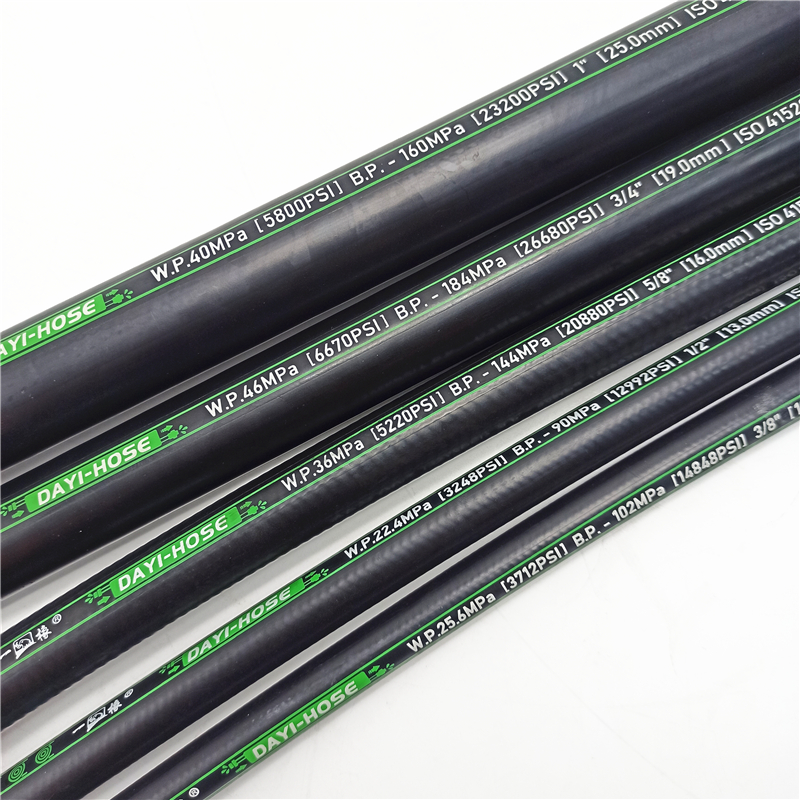
The construction of high pressure hydraulic rubber hose typically involves several layers, each contributing to its overall performance. The inner tube, in direct contact with the hydraulic fluid, is commonly composed of synthetic rubbers such as nitrile (NBR), ethylene propylene diene monomer (EPDM), or fluorocarbon (FKM – Viton). NBR offers good resistance to petroleum-based fluids, EPDM excels in phosphate ester fluid compatibility and high-temperature performance, and FKM provides superior resistance to a wider range of aggressive chemicals and extreme temperatures. The reinforcement layer, crucial for withstanding high pressures, consists of multiple plies of high-tensile steel wire, often spirally wound. The wire gauge and ply configuration directly influence the hose’s burst pressure. Between the inner tube and reinforcement, a bonding layer (typically a rubber compound) ensures adhesion. The outer cover, providing environmental protection and abrasion resistance, utilizes synthetic rubbers like chloroprene (CR) or polyurethane.
Manufacturing involves several key processes. The inner tube is extruded using a continuous vulcanization process, where the rubber compound is heated and shaped. The reinforcement wire is then helically wound onto the extruded tube. Applying a bonding adhesive and further vulcanization secures the reinforcement. Finally, the outer cover is extruded over the assembly. Critical parameters include extrusion temperature, vulcanization time and temperature, wire tension during winding, and adhesive application rate. Variations in these parameters directly impact the hose's strength, flexibility, and fluid resistance. Quality control measures include dimensional checks, pressure testing (hydrostatic and impulse testing), and material composition verification through techniques like Fourier-transform infrared spectroscopy (FTIR).
Performance & Engineering
The performance of high pressure hydraulic hose is heavily influenced by force analysis and environmental factors. Hoop stress, generated by internal fluid pressure, is the primary stress component. The reinforcement layer is engineered to withstand this stress without yielding or rupturing. Burst pressure, typically defined as the pressure at which the hose fails catastrophically, is a key performance metric, determined through hydrostatic testing. Impulse testing simulates cyclic pressure fluctuations, assessing the hose’s fatigue resistance. Tensile strength, measured according to ASTM D2235, dictates the hose’s resistance to stretching and tearing.
Environmental resistance is paramount. Exposure to ozone, UV radiation, and extreme temperatures can degrade the rubber compounds, reducing flexibility and increasing the risk of cracking. Fluid compatibility is equally critical; incompatible fluids can cause swelling, softening, or chemical attack of the inner tube. Compliance requirements, such as those outlined in SAE J517 and EN 853, dictate minimum performance standards for various hose types. Functional implementation requires careful consideration of hose bend radius (to avoid kinking and stress concentration), fitting compatibility (to ensure leak-free connections), and proper hose routing (to minimize abrasion and exposure to damaging environments).
Technical Specifications
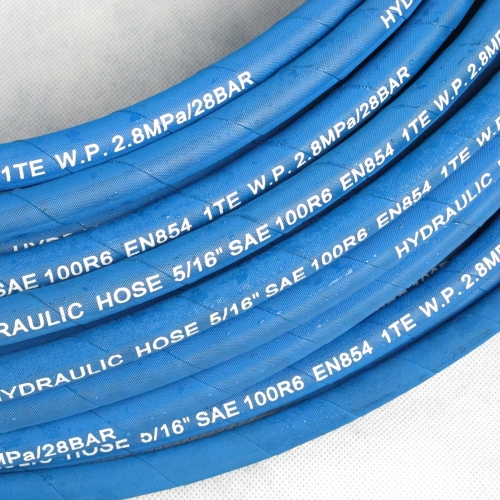
| Parameter | Unit | SAE 100R2AT | SAE 100R6 |
|---|---|---|---|
| Working Pressure | MPa | 31.5 | 20.7 |
| Burst Pressure | MPa | 105 | 69 |
| Temperature Range | °C | -40 to +100 | -40 to +70 |
| Inner Tube Material | - | Synthetic Rubber (NBR) | Oil Resistant Rubber |
| Reinforcement | - | Two Steel Wire Braids | Four Spiral Steel Wire |
| Outer Cover Material | - | Synthetic Rubber (CRM) | Synthetic Rubber (CRM) |
Failure Mode & Maintenance
Common failure modes in high pressure hydraulic rubber hose include fatigue cracking (due to repeated pressure cycling), pinhole leaks (caused by abrasion or chemical attack), and burst failure (resulting from exceeding the hose’s pressure rating). Delamination, the separation of layers, can occur due to improper bonding or exposure to incompatible fluids. Oxidation and ozone cracking can degrade the outer cover, reducing its protective capabilities. A critical failure analysis technique involves fractography, examining the fracture surface to determine the root cause of the failure.
Preventative maintenance is crucial for maximizing hose life. Regular visual inspections should identify signs of abrasion, cracking, or swelling. Pressure testing should be performed periodically to verify hose integrity. Proper hose routing and support are essential to minimize stress and abrasion. Fluid contamination should be controlled through filtration systems. When replacing hoses, ensure compatibility with the hydraulic fluid and operating conditions. Avoid sharp bends and twisting during installation. Proper fitting selection and tightening torque are also vital to prevent leaks and premature failure. Hoses should be stored in a cool, dry place, away from direct sunlight and ozone sources.
Industry FAQ
Q: What is the significance of the ‘dash size’ designation in hydraulic hose sizing?
A: The ‘dash size’ (e.g., -4, -6, -8) refers to the inside diameter of the hose in sixteenths of an inch. Therefore, a -8 hose has an inside diameter of 8/16 or 1/2 inch. This is a standardized convention used to identify hose compatibility with fittings and flow requirements.
Q: How does temperature affect the working pressure of a hydraulic hose?
A: Elevated temperatures generally reduce the working pressure capacity of a hydraulic hose. As temperature increases, the rubber compounds soften, decreasing their ability to withstand stress. Conversely, extremely low temperatures can make the hose brittle and more susceptible to cracking. Refer to the manufacturer’s specifications for derating factors at different temperatures.
Q: What are the key differences between braided and spiral reinforced hoses?
A: Braided hoses, typically with two or four wire braids, offer excellent flexibility and are suitable for moderate pressure applications. Spiral reinforced hoses, with a single helical wire winding, provide higher pressure ratings and superior kink resistance, but are less flexible. The choice depends on the system's pressure requirements and routing constraints.
Q: How important is fluid compatibility when selecting a hydraulic hose?
A: Fluid compatibility is extremely important. Using a hose with an incompatible fluid can lead to swelling, softening, degradation, and ultimately, hose failure. The inner tube material must be resistant to the specific hydraulic fluid used in the system. Consult compatibility charts provided by hose manufacturers.
Q: What is the role of the coupling in ensuring hose reliability?
A: The coupling (fitting) is a critical component. It must create a leak-free seal with both the hose and the hydraulic system. Improperly crimped or damaged couplings are a common cause of hose failure. Couplings should be selected to match the hose type and fluid compatibility requirements and be installed using calibrated crimping equipment.
Conclusion
High pressure hydraulic rubber hose remains an indispensable component in countless industrial applications, demanding a thorough understanding of material science, manufacturing nuances, and performance characteristics. Ensuring proper hose selection, installation, and maintenance are paramount for maximizing operational efficiency and preventing costly downtime. The complexity of these systems necessitates adherence to stringent industry standards and continuous monitoring of hose condition to guarantee safety and reliability.
Future advancements in hose technology are likely to focus on developing lighter-weight materials, improved chemical resistance, and enhanced durability. The integration of smart sensors within the hose construction could enable real-time monitoring of pressure, temperature, and potential failure points, facilitating predictive maintenance and extending service life. Continued research and development in rubber compounds and reinforcement materials will be key to meeting the evolving demands of increasingly sophisticated hydraulic systems.