
Apr . 01, 2024 17:55 Back to list
high pressure hydraulic rubber hose factory Performance Analysis
Introduction
High pressure hydraulic rubber hose serves as a critical component in fluid power systems across diverse industries, including construction, agriculture, manufacturing, and automotive. These hoses are engineered to safely and reliably transmit hydraulic fluid under substantial pressure, enabling the operation of heavy machinery and critical industrial processes. The manufacturing process requires meticulous attention to material selection, construction techniques, and quality control to ensure operational safety and longevity. Within the industrial chain, hydraulic hose manufacturers like high pressure hydraulic rubber hose factory typically procure raw materials (rubber compounds, reinforcement materials, fittings) and transform them into finished products adhering to stringent industry standards. Core performance characteristics are defined by working pressure, burst pressure, temperature range, fluid compatibility, and dimensional accuracy. A primary industry pain point revolves around hose failure due to exceeding pressure limits, improper installation, or material degradation, leading to costly downtime and potential safety hazards.
Material Science & Manufacturing
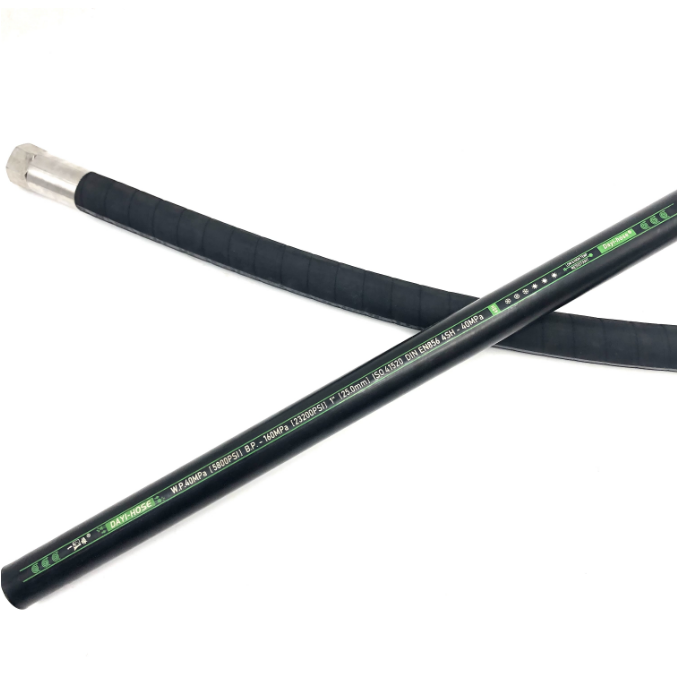
The core material of a high-pressure hydraulic hose is a synthetic rubber compound, most commonly nitrile rubber (NBR) due to its excellent resistance to petroleum-based hydraulic fluids. Other rubbers like chloroprene (CR) for heat resistance and EPDM for phosphate ester fluids are also utilized. Reinforcement layers are critical for withstanding high pressures, typically consisting of multiple plies of high-tensile steel wire braided in a helical pattern. The number and construction of these braids dictate the hose’s pressure rating. An inner tube provides fluid compatibility, a reinforcement layer offers strength, and an outer cover protects against abrasion, weathering, and chemical exposure. Manufacturing involves several key processes: rubber mixing (compounding), hose extrusion, reinforcement braiding, inner tube insertion, outer cover extrusion, and end fitting crimping/swaging. Precise control of extrusion temperatures, braid tension, and curing times (vulcanization) is crucial. Vulcanization, typically using sulfur-based systems, cross-links the rubber molecules, enhancing its strength, elasticity, and resistance to degradation. Quality control involves burst pressure testing, impulse testing, dimensional checks, and fluid compatibility assessments. Filler materials like carbon black and silica are added to the rubber compound to improve tensile strength and abrasion resistance, while plasticizers are added for flexibility. The chemical compatibility of the inner tube with the intended hydraulic fluid is paramount to prevent swelling, cracking, or leaching, all of which can lead to failure.
Performance & Engineering
The performance of a high-pressure hydraulic hose is governed by several engineering principles. Stress analysis is critical in determining the appropriate reinforcement structure (braid angle, wire diameter, ply count) to withstand internal pressure. Hoop stress, the circumferential tension in the hose wall, increases linearly with pressure and radius. Fatigue analysis is essential to predict hose life under cyclical pressure loading (impulse pressures). Impulse pressures, sudden pressure fluctuations, can cause fatigue cracking in the reinforcement layers. Environmental resistance is also key; exposure to extreme temperatures, UV radiation, and corrosive chemicals can degrade the rubber compound. Hose bend radius must adhere to minimum specifications to avoid kinking and excessive stress concentration, which can lead to failure. Compliance requirements vary by region and application. For example, the SAE J517 standard specifies performance requirements for hydraulic hose, including pressure ratings, temperature ranges, and fluid compatibility. Detailed engineering documentation, including material certifications, stress calculations, and test reports, is crucial for ensuring product safety and reliability. Furthermore, considerations around fluid velocity and potential for erosion within the hose lining require careful design and material selection.
Technical Specifications
| Parameter | Unit | Specification Range | Testing Standard |
|---|---|---|---|
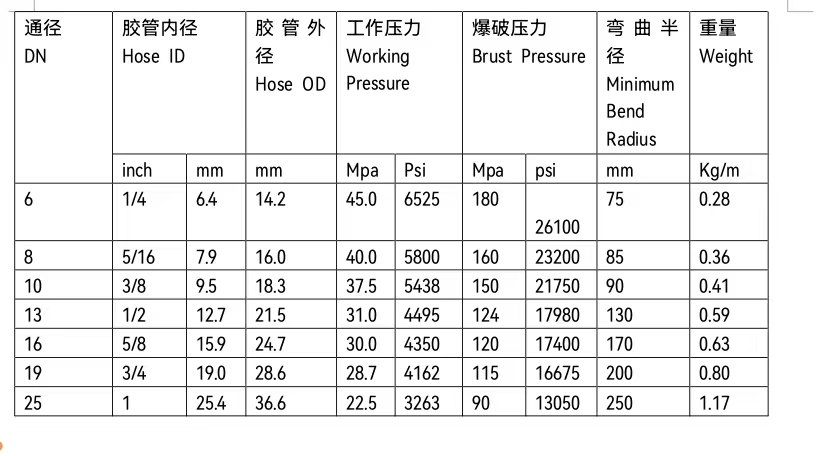
| Working Pressure | MPa | 10 – 420 | SAE J517, EN 853 |
| Burst Pressure | MPa | 30 – 1260 | SAE J517, EN 853 |
| Temperature Range | °C | -40 to +100 | SAE J517, EN 853 |
| Inner Tube Material | - | NBR, CR, EPDM | ASTM D2000 |
| Reinforcement Material | - | Steel Wire Braid (1SP, 2SP, 4SP, 6SP) | SAE J517 |
| Outer Cover Material | - | Synthetic Rubber (Abrasion & Weather Resistant) | ASTM D2000 |
Failure Mode & Maintenance
Common failure modes in high-pressure hydraulic hoses include burst failures due to exceeding pressure limits, fatigue cracking from cyclical loading, pinhole leaks from abrasion or corrosion, and hose kinking due to excessive bending. Burst failures are often catastrophic, resulting in fluid ejection and potential injury. Fatigue cracking typically initiates at areas of high stress concentration, such as at the fitting crimp or braid crossovers. Pinholes can develop from external abrasion or internal erosion caused by contaminated hydraulic fluid. Kinking weakens the hose wall and creates a preferential path for cracking. Failure analysis often involves microscopic examination of the fractured surface to determine the root cause. Maintenance practices are critical for extending hose life. These include regular visual inspections for abrasion, cracking, and leaks; proper routing to avoid sharp bends and contact with hot surfaces; ensuring correct fitting installation and torque; and periodically checking fluid cleanliness. Fluid contamination with particulate matter is a significant contributor to hose failure. Implementing filtration systems and regular fluid analysis is essential. Proper hose storage, away from direct sunlight and extreme temperatures, also prolongs service life. Replacing hoses on a preventative maintenance schedule, based on operating hours and environmental conditions, is a best practice.
Industry FAQ
Q: What is the significance of the ‘SP’ designation (e.g., 4SP, 6SP) in hydraulic hose specifications?
A: The ‘SP’ designation refers to the number of spiral plies of steel wire reinforcement within the hose. Higher SP numbers indicate more reinforcement layers and, consequently, a higher pressure rating. A 4SP hose has four spiral plies, offering greater strength than a 2SP hose, but potentially less flexibility. The selection of the appropriate SP rating depends on the system’s operating pressure and application requirements.
Q: How does temperature affect the performance of a hydraulic hose?
A: Temperature significantly impacts the properties of rubber compounds. High temperatures can cause rubber to soften and lose tensile strength, increasing the risk of failure. Low temperatures can make rubber brittle and prone to cracking. Hydraulic hose specifications define operating temperature ranges, and exceeding these limits can drastically reduce hose life. Furthermore, temperature fluctuations cause expansion and contraction, inducing stress on the hose and fittings.
Q: What are the common causes of hose twisting under pressure?
A: Hose twisting typically arises from incorrect installation or system design. If the hose is subjected to rotational forces while under pressure, it can twist. This twisting induces stress in the reinforcement layers, leading to premature failure. Proper hose routing and the use of swivel fittings are crucial to prevent twisting. It’s also essential to avoid using hoses as a means to transmit torque.
Q: What is the role of fitting crimping in ensuring hose integrity?
A: Fitting crimping is a critical step in hose assembly. The crimp creates a mechanical bond between the hose and the fitting, preventing leakage and maintaining the hose’s pressure rating. An improperly crimped fitting can result in fluid leaks, hose blow-off, or premature failure. Crimping machines must be calibrated and operated according to the fitting manufacturer’s specifications, using the correct die set for the hose and fitting combination.
Q: What are the considerations when selecting a hose for use with different hydraulic fluids?
A: Fluid compatibility is paramount. Different hydraulic fluids have varying chemical compositions, and some can cause the rubber compound to swell, soften, or degrade. The inner tube material must be compatible with the fluid being used. NBR is commonly used for petroleum-based fluids, while EPDM is preferred for phosphate ester fluids. Consulting a fluid compatibility chart is essential to ensure long-term hose performance.
Conclusion
High-pressure hydraulic rubber hose represents a sophisticated engineered product integral to the reliable operation of countless industrial systems. Its performance is dictated by a complex interplay of material science, manufacturing precision, and adherence to rigorous engineering standards. Understanding the potential failure modes and implementing proactive maintenance strategies are crucial for maximizing hose life, minimizing downtime, and ensuring operator safety. The careful consideration of working pressure, temperature range, fluid compatibility, and reinforcement construction are non-negotiable aspects of hose selection.
Future advancements in hydraulic hose technology will likely focus on developing more durable and lightweight materials, incorporating smart sensing capabilities for real-time condition monitoring, and enhancing fluid resistance to accommodate emerging hydraulic fluid formulations. Continued adherence to and refinement of international standards, combined with innovative manufacturing techniques, will be key to driving improvements in hose performance and reliability. The ongoing demand for increased efficiency and safety within hydraulic systems will continue to drive the evolution of this critical component.