
Apr . 01, 2024 17:55 Back to list
high pressure hydraulic rubber hose factories Performance Analysis
Introduction
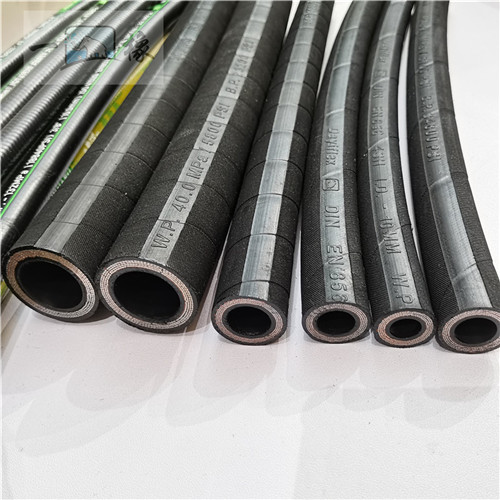
High pressure hydraulic rubber hose is a critical component in fluid power systems across numerous industries, including construction, agriculture, manufacturing, and oil & gas. These hoses are designed to safely and efficiently transmit hydraulic fluid to actuators and other components, enabling the operation of heavy machinery and critical industrial processes. Unlike general-purpose rubber hoses, high pressure variants are engineered to withstand extreme pressures, temperatures, and fluid compatibility demands. The industry is currently focused on improving hose lifespan through enhanced material science, reducing weight for increased efficiency, and meeting increasingly stringent safety and environmental regulations. Core performance metrics include burst pressure, working pressure, temperature range, and fluid resistance. The manufacturing of these hoses necessitates rigorous quality control throughout the entire process, from raw material selection to final inspection, to prevent catastrophic failures that can result in downtime, injury, and environmental damage. Proper hose assembly and maintenance are also paramount for ensuring operational reliability.
Material Science & Manufacturing
The foundation of a high-pressure hydraulic hose lies in its constituent materials. The inner tube, which comes into direct contact with the hydraulic fluid, is commonly constructed from synthetic rubbers like nitrile (NBR), ethylene propylene diene monomer (EPDM), or fluorocarbon (FKM/Viton). Nitrile provides excellent resistance to petroleum-based fluids, while EPDM excels in applications involving phosphate ester fluids. FKM is chosen for its superior resistance to high temperatures and aggressive chemicals. The reinforcement layer is crucial for withstanding high pressure. Historically, this layer consisted of multiple plies of high-tensile steel wire, spirally wound. Modern hoses increasingly utilize single or multi-wire spiral constructions with varying wire diameters and compositions (high-carbon steel is standard). An outer cover, typically made of chloroprene (CR) or polyurethane, provides abrasion, weather, and ozone resistance. The manufacturing process typically involves extrusion of the inner tube and outer cover, followed by spiral winding or braiding of the reinforcement layer. Critical parameters during extrusion include temperature control, screw speed, and die design to ensure consistent wall thickness and material properties. The reinforcement winding process requires precise tension control to avoid gaps or overlaps that could compromise the hose’s burst pressure. Post-processing includes vulcanization (curing) to crosslink the rubber compounds, improving their strength, elasticity, and resistance to degradation. Quality control measures at each stage, including dimensional checks, pressure testing, and material analysis, are essential to meet industry standards.

Performance & Engineering
The performance of a hydraulic hose is dictated by its ability to withstand internal pressure, external damage, and environmental factors. Burst pressure, typically four times the working pressure, is a primary engineering consideration. Force analysis involves calculating hoop stress within the hose wall under pressure, ensuring it remains below the material’s yield strength. Finite Element Analysis (FEA) is frequently employed to model stress distribution under various loading conditions, including bending, flexing, and pressure spikes. Environmental resistance is critical; hoses must maintain their integrity across a wide temperature range and resist degradation from ozone, UV exposure, and chemical attack. The selection of rubber compounds and cover materials directly impacts these properties. Compliance with industry standards, such as SAE J517, dictates minimum performance requirements for various hose types and working pressures. Hose assemblies, including fittings, must be engineered to match or exceed the hose’s performance capabilities. Improperly crimped fittings can create stress concentrations, leading to premature failure. Flexing fatigue is a common failure mode, especially in dynamic applications. The radius of bend significantly impacts fatigue life; tighter bends induce higher stress levels. Proper hose routing and support are therefore crucial to minimize stress and maximize service life. Consideration is also given to fluid compatibility. Incompatible fluids can cause swelling, softening, or cracking of the inner tube, leading to leakage and potential system failure.
Technical Specifications
| Parameter | Unit | SAE 100R2 AT | SAE 100R6 |
|---|---|---|---|
| Working Pressure | MPa | 31.5 | 21.0 |
| Burst Pressure | MPa | 126 | 84 |
| Temperature Range | °C | -40 to +100 | -40 to +100 |
| Inner Tube | Material | NBR | NBR |
| Reinforcement | Material | Multiple Steel Wire Braid | Single Steel Wire Spiral |
| Outer Cover | Material | CR | CR |
Failure Mode & Maintenance
High-pressure hydraulic hoses are susceptible to several failure modes. Fatigue cracking, particularly at the fitting crimp or hose bend, is a common occurrence due to repeated flexing and pressure cycling. This is often initiated by microscopic defects or stress concentrations. Another frequent failure mode is pinhole leakage in the inner tube, caused by abrasion from fluid contaminants or chemical degradation. Delamination of the reinforcement layers can occur due to inadequate bonding or corrosion, leading to a gradual loss of pressure capacity. External damage, such as cuts, abrasions, or crushing, can compromise the hose’s integrity. Oxidation and UV degradation can cause the outer cover to crack and lose its protective properties. Regular visual inspection is crucial for identifying early signs of damage, such as bulges, cracks, or abrasions. Hose assemblies should be inspected before each use and replaced if any damage is detected. Proper routing and support are essential to prevent excessive bending and abrasion. Fluid cleanliness is paramount; using appropriate filtration systems can minimize abrasive wear. Hoses should be stored in a cool, dry place, away from direct sunlight and ozone sources. Regular pressure testing can help identify hoses that are nearing the end of their service life. When replacing a hose, ensure that the new hose and fittings are compatible with the hydraulic fluid and operating conditions. Proper crimping procedures are essential for ensuring a secure and reliable connection.
Industry FAQ
Q: What is the difference between braided and spiral reinforced hoses, and which is better for high-pressure applications?
A: Braided hoses utilize multiple layers of interwoven wire for reinforcement, offering excellent flexibility. Spiral hoses, using a single continuous wire wound at an angle, generally provide higher pressure ratings and greater kink resistance. For consistently high-pressure applications exceeding 3000 PSI, spiral reinforced hoses are typically preferred due to their superior strength and durability. However, braided hoses are often selected where flexibility is paramount.
Q: How does temperature affect the performance of a hydraulic hose?
A: Temperature significantly impacts rubber properties. High temperatures can accelerate degradation and reduce the hose’s pressure capacity. Low temperatures can cause the rubber to become brittle and prone to cracking. Hydraulic hoses are rated for specific temperature ranges, and exceeding these limits can lead to premature failure. Fluid temperature also plays a role; hot fluid can exacerbate thermal degradation.
Q: What are the key considerations when selecting a hose fitting?
A: Compatibility with the hose type, pressure rating, and hydraulic fluid are critical. The fitting material must be compatible with both the hose and the fluid to prevent corrosion. Proper crimping is essential for a secure and leak-proof connection. The fitting’s style (e.g., flared, compression) should match the system requirements. Ensure the fitting’s thread type and size are correct for the intended application.
Q: What is the impact of fluid contamination on hose life?
A: Fluid contamination is a major contributor to hydraulic hose failure. Abrasive particles can cause wear on the inner tube, leading to leaks. Water contamination can cause corrosion of the reinforcement layers. Chemical contamination can degrade the rubber compounds. Implementing a robust filtration system is essential to maintain fluid cleanliness and extend hose life.
Q: How often should hydraulic hoses be replaced as preventative maintenance?
A: The replacement frequency depends on operating conditions and hose type. As a general guideline, hoses should be replaced every 5-7 years, even if they appear to be in good condition. However, hoses subjected to harsh environments or frequent flexing may require more frequent replacement. Regular inspections and pressure testing can help determine when replacement is necessary.
Conclusion
High-pressure hydraulic rubber hose technology is a complex interplay of material science, manufacturing precision, and rigorous engineering principles. The selection, installation, and maintenance of these hoses are critical for ensuring the safe and reliable operation of hydraulic systems across diverse industries. Understanding the factors influencing hose performance – pressure ratings, temperature limitations, fluid compatibility, and potential failure modes – is paramount for procurement professionals and engineers alike.
Continued advancements in rubber compound formulations, reinforcement materials, and manufacturing techniques promise to further enhance the durability, efficiency, and safety of hydraulic hoses. Focus areas include developing hoses with improved resistance to abrasion, corrosion, and extreme temperatures, as well as implementing predictive maintenance strategies based on sensor data and machine learning. This will lead to reduced downtime, lower operating costs, and a safer working environment.