
Apr . 01, 2024 17:55 Back to list
high pressure hydraulic hose ferrules Performance Analysis
Introduction
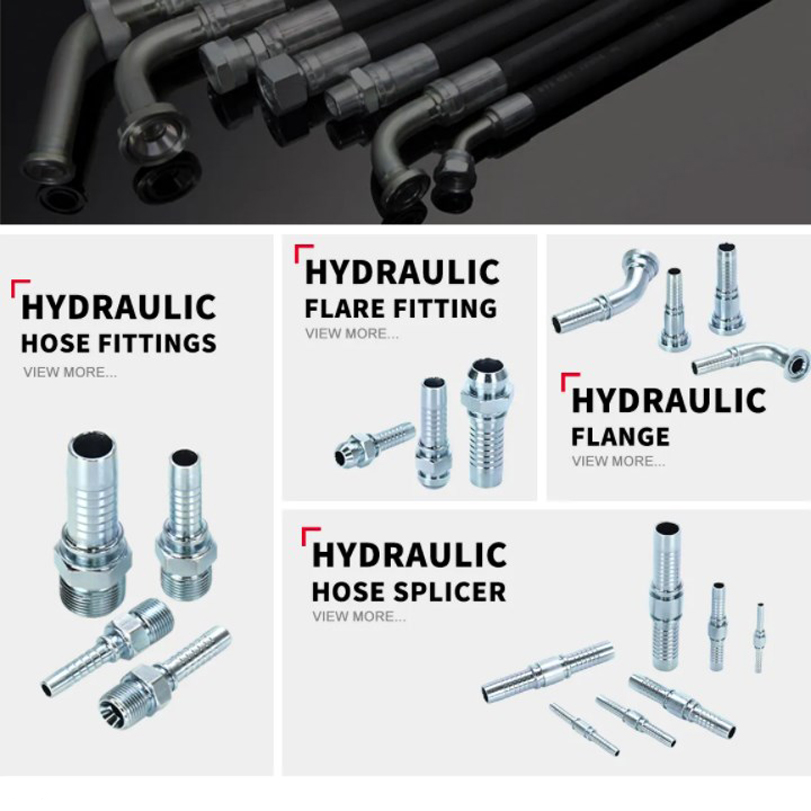
High pressure hydraulic hose ferrules are critical components in hydraulic systems, responsible for creating a secure and leak-proof connection between the hydraulic hose and the fitting. These components are not merely connectors; they represent a vital pressure boundary and contribute significantly to the overall system reliability and safety. Their technical position within the industry chain lies between hose manufacturing and final system assembly, demanding strict adherence to dimensional tolerances, material specifications, and installation procedures. Core performance characteristics include the ability to withstand extreme pressures, resist corrosion, maintain dimensional stability under fluctuating temperatures, and ensure long-term sealing integrity. The industry faces ongoing challenges related to material compatibility with increasingly aggressive hydraulic fluids, the need for lightweighting in mobile applications, and ensuring consistent performance across varying manufacturing processes. Ferrules are typically manufactured through cold forming, machining, or a combination of both, demanding precise control over material properties and process parameters.
Material Science & Manufacturing
Ferrules are predominantly constructed from carbon steel, alloy steel, stainless steel (304, 316), and occasionally brass or aluminum alloys, depending on the pressure rating, fluid compatibility, and environmental conditions. Carbon steel ferrules, often utilizing materials like AISI 1045, offer high strength and cost-effectiveness but require protective coatings to mitigate corrosion. Alloy steels, containing elements like chromium, molybdenum, and nickel, enhance strength, toughness, and corrosion resistance. Stainless steel provides superior corrosion resistance, crucial for applications involving corrosive fluids or harsh environments. The manufacturing process typically begins with bar stock which is then cold-formed, utilizing processes like forward extrusion or drawing, to achieve the desired geometry. Cold forming increases material density and enhances mechanical properties. Critical parameters in the cold forming process include die geometry, lubrication, and forming speed. Machining is often employed for final dimensional adjustments and achieving tight tolerances on critical features such as the bore diameter and chamfer angles. Surface treatments, including zinc plating, nickel plating, and powder coating, are commonly applied to enhance corrosion resistance and provide a protective barrier. Heat treatment processes, such as hardening and tempering, are used to optimize material hardness and ductility. Precise control of these parameters is vital to prevent cracking, distortion, and dimensional inaccuracies.
Performance & Engineering
The primary performance requirement of hydraulic hose ferrules is to withstand the operating pressure of the hydraulic system with a significant safety factor. Force analysis focuses on hoop stress within the ferrule body during pressurization, requiring materials with high yield strength and tensile strength. Finite Element Analysis (FEA) is routinely used to optimize ferrule geometry and minimize stress concentrations. Environmental resistance is another crucial aspect. Ferrules must resist corrosion from hydraulic fluids (mineral oils, synthetic fluids, water-glycol fluids) and ambient environmental factors (humidity, salt spray). Compliance requirements vary by region and industry. SAE J518 (Society of Automotive Engineers) defines dimensional requirements and performance specifications for hydraulic hose and fittings in North America. DIN EN 853 (European Standard) specifies similar requirements in Europe. ISO 3766 covers the dimensional and performance requirements for hose assemblies. Functional implementation relies on a tight interference fit between the ferrule, the hose reinforcement layer, and the fitting. This interference fit creates a mechanical lock, preventing hose pull-out and ensuring a leak-proof seal. The angle of the ferrule’s gripping surface and the precision of its bore diameter are critical parameters influencing the effectiveness of this mechanical lock. Fatigue life is a significant concern in dynamic applications, requiring ferrules to withstand repeated pressure cycles without failure. Material selection and surface finish play a vital role in maximizing fatigue resistance.
Technical Specifications
| Material | Pressure Rating (PSI) | Operating Temperature Range (°F) | Bore Diameter (inch) |
|---|---|---|---|
| Carbon Steel (AISI 1045, Zinc Plated) | Up to 5,000 | -40 to 212 | 0.25 - 2.0 |
| Alloy Steel (4140) | Up to 7,500 | -40 to 250 | 0.5 - 3.0 |
| Stainless Steel (304) | Up to 6,000 | -65 to 450 | 0.375 - 2.5 |
| Stainless Steel (316) | Up to 6,000 | -65 to 500 | 0.375 - 2.5 |
| Brass (C36000) | Up to 3,000 | -20 to 175 | 0.25 – 1.5 |
| Aluminum Alloy (6061-T6) | Up to 2,000 | -40 to 200 | 0.5 – 1.0 |
Failure Mode & Maintenance
Common failure modes for hydraulic hose ferrules include fatigue cracking, particularly in applications with high-frequency pressure cycling. This is often initiated at stress concentrations, such as the bore diameter or gripping surface. Corrosion is another significant failure mode, especially in environments with corrosive fluids or lack of protective coatings. Crevice corrosion can occur between the ferrule and the hose fitting, leading to localized material degradation. Galling, caused by friction between the ferrule and the fitting during installation or operation, can damage the surface finish and compromise the seal. Improper installation, such as over-tightening or using incorrect tooling, can lead to deformation of the ferrule and premature failure. Differential thermal expansion between the ferrule and the hose fitting can induce stresses, contributing to fatigue cracking. Maintenance involves regular visual inspection for signs of corrosion, cracking, or deformation. Proper cleaning and lubrication of the fitting threads can prevent galling. Periodic pressure testing of the hydraulic system can identify leaks or weaknesses in the connections. If a ferrule shows signs of damage, it should be replaced immediately. Employing proper installation procedures and using calibrated torque wrenches are essential for preventative maintenance. Using compatible hydraulic fluids and ensuring adequate filtration are also crucial for maximizing ferrule lifespan.
Industry FAQ
Q: What is the impact of hydraulic fluid type on ferrule material selection?
A: Hydraulic fluid compatibility is paramount. Mineral oils generally have minimal impact, but synthetic fluids (e.g., phosphate ester, silicone) and water-glycol fluids can be corrosive to certain materials. Stainless steel (316) is often recommended for these fluids. Carbon steel ferrules should be avoided with fluids lacking appropriate corrosion inhibitors.
Q: How does ferrule surface finish affect performance?
A: A smoother surface finish reduces friction during hose insertion and minimizes the risk of galling. It also improves fatigue resistance by reducing stress concentrations. A micro-polished or electroplated finish is often preferred.
Q: What torque value should be used when tightening a ferrule fitting?
A: Torque values are specified by the fitting manufacturer and depend on the size, material, and thread type. Over-tightening can deform the ferrule and lead to leaks. Always use a calibrated torque wrench and follow the manufacturer's recommendations.
Q: What are the key considerations for ferrules used in high-vibration applications?
A: High-vibration environments can lead to fretting corrosion and loosening of the connection. Ferrules with a tight interference fit and a locking mechanism (e.g., crimped sleeve) are recommended. Consider using thread locking compounds to prevent loosening.
Q: How important is dimensional tolerance in ferrule manufacturing?
A: Dimensional tolerances are critical, particularly for the bore diameter and gripping surface. Tight tolerances ensure a secure and leak-proof connection. Deviations from specified tolerances can lead to hose pull-out or premature failure.
Conclusion
High pressure hydraulic hose ferrules are integral components whose performance dictates the reliability and safety of hydraulic systems. Material selection, manufacturing precision, and proper installation are all crucial factors determining their lifespan and effectiveness. Understanding the nuances of material science – specifically the impact of corrosion resistance, yield strength, and fatigue properties – is essential for selecting the correct ferrule for a given application.
Future development in ferrule technology will likely focus on lightweight materials, improved corrosion resistance coatings, and advanced manufacturing techniques such as additive manufacturing to create complex geometries and customized solutions. Adherence to industry standards (SAE, DIN, ISO) and rigorous quality control procedures remain paramount to ensuring consistent performance and mitigating the risk of catastrophic failure. Proactive maintenance and regular inspection are crucial elements in maximizing the service life and operational safety of hydraulic hose assemblies.