
Apr . 01, 2024 17:55 Back to list
high pressure hydraulic hose factory Performance Analysis
Introduction
High-pressure hydraulic hose constitutes a critical component in fluid power systems, transmitting pressurized fluid to actuate hydraulic machinery. Positioned within the industrial supply chain between raw material providers (rubber, steel, synthetic polymers) and end-users across sectors like construction, agriculture, manufacturing, and aerospace, its performance directly dictates system efficiency, reliability, and safety. Core performance characteristics revolve around pressure capacity, burst strength, impulse resistance, temperature tolerance, and fluid compatibility. The industry faces persistent challenges around hose longevity in demanding environments, maintaining consistent manufacturing quality, and adherence to increasingly stringent safety regulations. This guide provides an in-depth technical examination of high-pressure hydraulic hoses, covering materials, manufacturing, performance, failure modes, and industry standards.
Material Science & Manufacturing
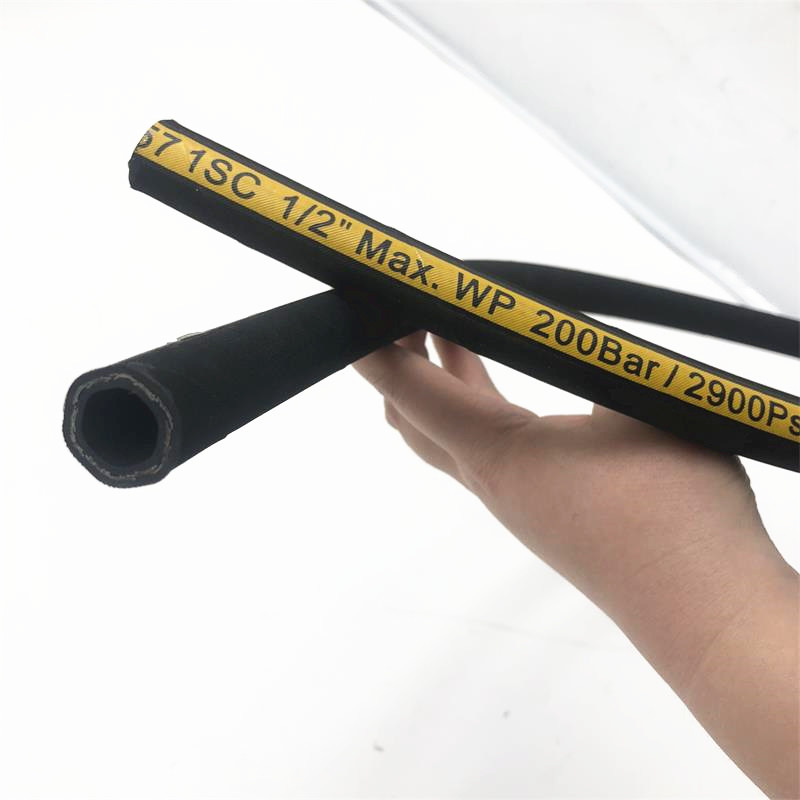
The construction of a high-pressure hydraulic hose typically involves four key layers: inner tube, reinforcement, outer cover, and in some cases, an intermediary layer. The inner tube, responsible for fluid containment, commonly utilizes synthetic rubbers like Nitrile (NBR) for oil-based hydraulic fluids, EPDM for phosphate ester fluids, and PTFE for aggressive chemical environments. NBR exhibits excellent abrasion resistance and oil compatibility, but limited temperature range (-40°C to +120°C). EPDM demonstrates superior heat and ozone resistance (-50°C to +150°C), but has limited oil resistance. PTFE provides exceptional chemical inertness and temperature resistance (-200°C to +260°C), but is expensive and has lower flexibility. Reinforcement layers provide the strength to withstand high pressures. These are commonly constructed from high-tensile steel wire (single or multiple spiral layers), or synthetic fiber braids (aramid, polyester). Steel wire offers the highest pressure ratings but is heavier and less flexible. Synthetic braids provide good flexibility and corrosion resistance, but lower pressure capacity. The outer cover protects the reinforcement from environmental damage and abrasion, typically using a blend of synthetic rubbers like Chloroprene (CR) for oil, ozone and weathering resistance, or polyurethane (PU) for superior abrasion resistance. Manufacturing processes vary based on hose type. Braided hoses are created by interlacing reinforcement fibers around a mandrel, followed by extrusion of the inner and outer layers. Spiral-wound hoses involve continuously winding pre-formed steel wire around a central mandrel, followed by extrusion. Key process controls include precise temperature regulation during extrusion to ensure proper rubber vulcanization (crosslinking), accurate wire tensioning in braided hoses to achieve consistent reinforcement density, and rigorous quality checks for defects like voids, inclusions, and uneven thickness.

Performance & Engineering
The performance of a hydraulic hose is governed by a complex interplay of internal pressure, external loads, and environmental factors. Force analysis dictates that the reinforcement layer must withstand the hoop stress generated by internal pressure. The burst pressure, typically four times the working pressure, is a critical safety parameter determined by tensile strength of the reinforcement and adhesion between layers. Impulse resistance, the ability to withstand pressure fluctuations, is paramount in applications like hydraulic hammers. Hose design incorporates anti-collapse properties to prevent kinking under vacuum or negative pressure conditions. Environmental resistance encompasses considerations for temperature, UV exposure, ozone degradation, and chemical compatibility. Compliance requirements are defined by standards like SAE J517 (hydraulic hose construction), ISO 6899 (hydraulic hose testing), and EN 856 (hydraulic hose dimensions and characteristics). Finite element analysis (FEA) is routinely employed to optimize hose geometry and material selection for specific applications, predicting stress distribution under various loading scenarios. Flex fatigue testing simulates the cyclical bending and unbending experienced during operation, assessing the hose's resistance to cracking and failure. Proper hose assembly, including correct fitting selection and crimping procedures, is crucial to ensure a leak-free and reliable connection.
Technical Specifications
| Parameter | Unit | Typical Value (SAE 100 R2AT) | Typical Value (DIN EN 856 4SH) |
|---|---|---|---|
| Working Pressure | MPa | 20.7 | 21 |
| Burst Pressure | MPa | 82.7 | 84 |
| Temperature Range | °C | -40 to +100 | -40 to +100 |
| Reinforcement | - | Two Steel Wire Braids | Four Steel Wire Spirals |
| Inner Tube | - | NBR (Nitrile Rubber) | NBR (Nitrile Rubber) |
| Outer Cover | - | Synthetic Rubber (CRM) | Synthetic Rubber (CRM) |
Failure Mode & Maintenance
High-pressure hydraulic hoses are susceptible to several failure modes. Fatigue cracking, originating from repeated flexing and pressure cycling, is a common cause of failure, particularly in areas of high stress concentration near fittings. Delamination, the separation of layers, can occur due to poor bonding between materials or exposure to harsh chemicals. Abrasion and erosion, caused by external contact with abrasive surfaces, can degrade the outer cover and expose the reinforcement. Oxidation and ozone cracking, particularly in synthetic rubber components, result from exposure to oxygen and ozone in the atmosphere. Internal degradation can occur due to fluid contamination (water, particulates) or incompatibility between the fluid and hose materials. Maintenance practices are crucial for extending hose life. Regular visual inspections should identify signs of wear, cracking, or swelling. Proper hose routing and support minimizes bending and abrasion. Fluid filtration maintains fluid cleanliness, preventing internal degradation. Avoid over-bending or twisting the hose during installation. Replace hoses at recommended intervals, or sooner if damage is detected. Crimping fittings should be inspected for proper compression and sealing. Hose assemblies should be pressure tested after installation and periodically thereafter. A thorough failure analysis should be conducted whenever a hose fails to identify the root cause and prevent recurrence.
Industry FAQ
Q: What is the impact of fluid velocity on hose lifespan?
A: Higher fluid velocities increase the rate of erosion on the inner tube, particularly with abrasive fluids or particulate contamination. This accelerates wear and reduces hose lifespan. Maintaining appropriate fluid velocity within the hose’s recommended limits, and implementing effective filtration systems, are crucial for mitigating this effect.
Q: How does hose layline affect performance and longevity?
A: The layline (spiral angle of the reinforcement) impacts the hose's flexibility, bend radius, and resistance to twisting. A tighter layline generally provides higher pressure ratings but reduced flexibility. Incorrect layline can lead to hose kinking or twisting under pressure, causing premature failure.
Q: What are the critical considerations when selecting fittings for hydraulic hoses?
A: Fittings must be compatible with the hose material, pressure rating, and fluid type. Incorrect fitting selection can lead to leaks, hose blowouts, or premature failure. Proper crimping procedures are equally important to ensure a secure and leak-free connection. Always refer to the hose manufacturer's specifications for recommended fitting types and crimp dimensions.
Q: How do different reinforcement materials compare in terms of pressure capacity and corrosion resistance?
A: Steel wire reinforcement offers the highest pressure capacity but is susceptible to corrosion, especially in harsh environments. Synthetic fiber reinforcement (aramid, polyester) provides good corrosion resistance but lower pressure ratings. Protective coatings can mitigate corrosion in steel wire hoses.
Q: What is the role of impulse testing in evaluating hydraulic hose performance?
A: Impulse testing simulates the pressure pulsations and shocks experienced during operation. It assesses the hose's resistance to fatigue failure caused by repeated pressure fluctuations. A higher impulse rating indicates greater durability and reliability in applications with significant pressure surges.
Conclusion
High-pressure hydraulic hoses are engineered components demanding precise material selection, manufacturing control, and application knowledge. Their performance is a direct function of the interplay between internal pressure, external stresses, and environmental conditions. Understanding the underlying material science, potential failure modes, and relevant industry standards is paramount for ensuring safe and reliable operation of hydraulic systems.
Future developments in hydraulic hose technology are focused on enhancing durability, reducing weight, and improving environmental compatibility. Advancements in materials, such as thermoplastic composites and specialized rubber formulations, promise to deliver higher pressure ratings, improved chemical resistance, and extended service life. Continued refinement of manufacturing processes and quality control measures will be essential to meet the evolving demands of increasingly sophisticated hydraulic applications.