
Apr . 01, 2024 17:55 Back to list
High Pressure Hose Performance Analysis
Introduction
High pressure hose is a critical component in numerous industrial applications, facilitating the safe and efficient transfer of fluids and gases under extreme pressure. Positioned as a key element within fluid power systems – encompassing hydraulic and pneumatic technologies – its performance directly influences the reliability and safety of complex machinery and processes. These hoses are distinct from standard low-pressure counterparts by virtue of their reinforced construction, specifically designed to withstand significantly higher operating pressures and prevent catastrophic failure. Core performance characteristics include burst pressure, working pressure, temperature resistance, and fluid compatibility. The selection of the appropriate high-pressure hose is paramount, considering factors like application-specific pressure demands, chemical exposure, and operational environment. Failure to adequately specify a hose can lead to equipment downtime, safety hazards, and substantial financial losses.
Material Science & Manufacturing
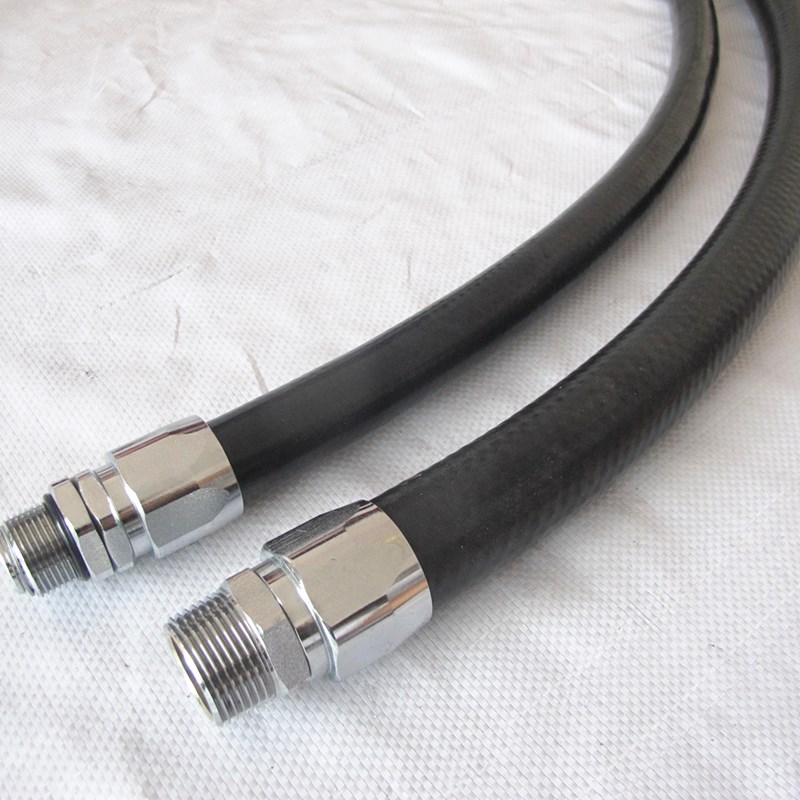
The construction of high-pressure hose relies heavily on a carefully selected combination of materials. The inner tube, in direct contact with the conveyed fluid, commonly utilizes materials like nitrile rubber (NBR), chlorinated polyethylene (CPE), polytetrafluoroethylene (PTFE), or fluoroelastomers (FKM, e.g., Viton) depending on the chemical compatibility requirements. NBR offers good resistance to petroleum-based fluids, while CPE provides improved weather resistance. PTFE and FKM excel in applications involving aggressive chemicals and high temperatures. The reinforcement layer is the core of the hose’s pressure-withstanding capability. Traditionally, this consists of multiple layers of high-tensile steel wire, spirally wound to provide axial strength. Synthetic fiber braiding (e.g., aramid or polyester) is also employed, particularly in applications requiring flexibility and a lighter weight. The outer cover, providing protection against abrasion, weathering, and chemical attack, typically utilizes a blend of synthetic rubbers like EPDM or polyurethane.
Manufacturing processes vary based on hose type and materials. For rubber hoses, the inner tube is extruded, followed by the winding or braiding of the reinforcement layers. The outer cover is then extruded over the reinforcement. Curing, a critical step, involves vulcanization of the rubber components to achieve the desired elasticity, strength, and temperature resistance. Precise temperature and pressure control are essential during curing to ensure optimal material properties. PTFE hoses are manufactured via extrusion and sintering, a process involving heating the PTFE powder to fuse it into a solid form. Quality control measures throughout the manufacturing process include dimensional checks, pressure testing (to hydrostatic or pneumatic standards), and material analysis to verify compliance with specifications. Key parameter control includes wire tension during braiding, rubber compound mixing ratios, and extrusion die temperature gradients.
Performance & Engineering
The performance of a high-pressure hose is governed by fundamental engineering principles relating to stress, strain, and material properties. Burst pressure, defined as the pressure at which the hose fails catastrophically, is a critical performance parameter. Working pressure, typically specified as a fraction (e.g., 50%, 75%) of the burst pressure, represents the maximum pressure the hose can safely handle during continuous operation. Hose design involves meticulous force analysis to ensure the reinforcement layer can withstand the internal pressure without yielding or experiencing fatigue failure. Finite element analysis (FEA) is frequently used to model stress distributions within the hose structure under various loading conditions. Environmental resistance is also crucial. Temperature fluctuations can significantly impact the hose’s flexibility and strength. Exposure to ozone, UV radiation, and various chemicals can lead to degradation of the rubber components, reducing their lifespan and compromising their integrity.
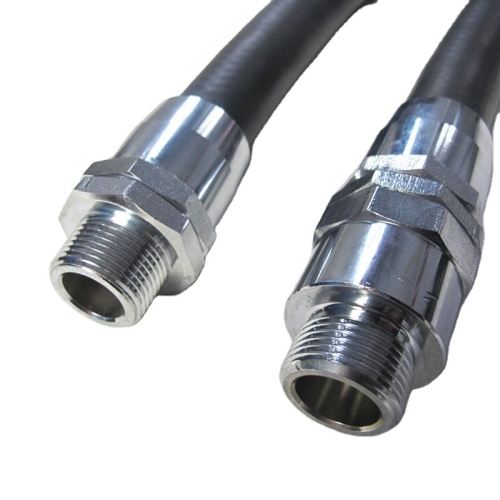
Compliance requirements are stringent, particularly in industries such as oil and gas, aerospace, and automotive. Hoses used in these applications must meet specific standards related to flammability, chemical resistance, and mechanical strength. For example, hydraulic hoses used in aircraft landing gear must comply with SAE Aerospace Standard AS1072. The selection of fittings is equally important. Fittings must be compatible with the hose material and capable of withstanding the same pressures and temperatures. Proper crimping of the fitting to the hose is essential to ensure a leak-proof and reliable connection. Incorrect crimping can lead to premature failure.
Technical Specifications
| Parameter | Unit | Typical Value (Hydraulic Hose - Steel Wire Reinforced) | Typical Value (PTFE Hose - Stainless Steel Braid) |
|---|---|---|---|
| Working Pressure | MPa | 20 | 35 |
| Burst Pressure | MPa | 80 | 140 |
| Temperature Range | °C | -40 to +100 | -60 to +260 |
| Inner Tube Material | - | NBR | PTFE |
| Reinforcement Material | - | Steel Wire Braid (Multiple Layers) | Stainless Steel Braid |
| Outer Cover Material | - | EPDM | Stainless Steel Braid |
Failure Mode & Maintenance
High-pressure hoses are susceptible to several failure modes. Fatigue cracking, caused by repeated flexing and pressure cycling, is a common issue, particularly in applications involving dynamic loads. This often initiates at the fitting interface or at points of stress concentration in the reinforcement layer. Delamination, the separation of the reinforcement layers from the inner tube or outer cover, can occur due to inadequate bonding or exposure to harsh environments. Degradation of the rubber components due to chemical attack, ozone cracking, or UV exposure can also lead to failure. Oxidation, especially at elevated temperatures, can cause the rubber to become brittle and lose its elasticity. Improper installation, such as incorrect crimping of fittings or excessive bending radius, significantly accelerates these failure mechanisms.
Preventive maintenance is crucial for extending hose lifespan and ensuring safe operation. Regular visual inspections should be conducted to identify signs of damage, such as cracks, abrasions, or swelling. Pressure testing should be performed periodically to verify the hose’s integrity. Hoses should be replaced if they exhibit any signs of degradation or damage. Proper storage is also essential; hoses should be stored in a cool, dry, and dark environment to minimize exposure to ozone, UV radiation, and extreme temperatures. Lubrication of fittings can help prevent corrosion and facilitate disassembly. When replacing a hose, it is vital to use a fitting that is specifically designed for the hose material and pressure rating. Keep detailed records of hose installations and maintenance activities.
Industry FAQ
Q: What is the primary difference between a single-wire and multi-wire reinforced high-pressure hose, and how does this affect its application?
A: Single-wire reinforcement provides a balance of flexibility and pressure capacity, making it suitable for general hydraulic applications with moderate bending requirements. Multi-wire reinforcement, offering significantly higher tensile strength and pressure resistance, is essential for demanding applications like heavy equipment, construction machinery, and high-pressure testing where minimal expansion under pressure is critical.
Q: How does temperature affect the working pressure of a high-pressure hose?
A: Elevated temperatures generally reduce the working pressure capacity of a high-pressure hose. This is due to the reduction in the tensile strength of the rubber materials and potential for thermal expansion. Manufacturers typically provide derating factors for working pressure based on operating temperature. Exceeding the specified temperature limits can lead to premature failure.
Q: What are the key considerations when selecting a hose for conveying corrosive fluids?
A: The inner tube material must be chemically compatible with the fluid being conveyed. Materials like PTFE, FKM, and specialized elastomers offer excellent resistance to a wide range of corrosive chemicals. The reinforcement layer and outer cover should also be resistant to external contamination from spills or leaks. Compatibility charts provided by hose manufacturers should be consulted.
Q: What is the significance of the hose bend radius, and what are the risks associated with exceeding it?
A: The bend radius is the minimum recommended radius for bending the hose without causing damage to the reinforcement layers. Exceeding the bend radius can induce excessive stress on the hose, leading to fatigue cracking, delamination, and eventual failure. A tighter bend radius increases the stress concentration on the inner radius of the hose.
Q: What are the common causes of leaks at hose-fitting connections, and how can they be prevented?
A: Leaks are often caused by improper crimping of the fitting, damaged or incompatible fittings, or contamination between the hose and fitting surfaces. Prevention involves using properly sized and rated fittings, ensuring correct crimping procedures are followed, thoroughly cleaning the hose end before fitting installation, and inspecting the fittings for damage or corrosion.
Conclusion
High-pressure hose technology represents a critical intersection of material science, manufacturing precision, and robust engineering principles. Selecting the correct hose for a specific application requires a comprehensive understanding of pressure ratings, fluid compatibility, environmental conditions, and relevant industry standards. A nuanced approach to material selection, informed by detailed knowledge of rubber compounds, reinforcement materials, and fitting technologies, is essential for ensuring both operational efficiency and safety.
Looking forward, advancements in hose technology will likely focus on developing lighter-weight materials, improving chemical resistance, and enhancing durability. The integration of sensor technology for real-time pressure and temperature monitoring will also become increasingly prevalent, enabling predictive maintenance and enhancing system reliability. Continued adherence to rigorous testing protocols and compliance with evolving international standards will remain paramount to guarantee the safe and reliable performance of high-pressure hose systems across a wide range of industrial applications.