
Apr . 01, 2024 17:55 Back to list
high pressure hose factory Performance Analysis
Introduction
High-pressure hoses are critical components in a vast array of industrial applications, ranging from hydraulic systems in heavy machinery and oil & gas exploration to automotive braking and fluid transfer. These hoses are engineered to reliably convey fluids – hydraulic oil, water, chemicals, gases – at extremely high pressures, often exceeding 5000 psi and reaching up to 10,000 psi or more in specialized applications. Their performance directly impacts system efficiency, operational safety, and overall equipment reliability. The industry chain positions high-pressure hose manufacturers as vital suppliers to OEMs (Original Equipment Manufacturers) and aftermarket distributors serving industries like construction, agriculture, mining, manufacturing, and transportation. Core performance characteristics include pressure rating, burst pressure, temperature range, chemical compatibility, and resistance to abrasion and kinking. A primary industry pain point revolves around ensuring consistent product quality, traceability of materials, and adherence to stringent safety standards given the potential for catastrophic failure and associated risks.
Material Science & Manufacturing
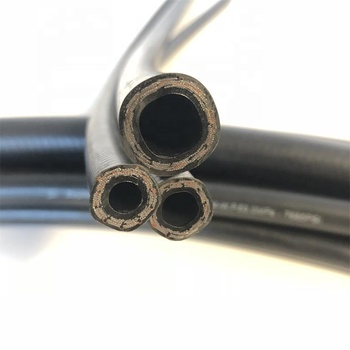
High-pressure hoses are typically constructed from multiple layers, each contributing to specific performance attributes. The inner tube, which contacts the fluid, is commonly made from synthetic rubbers like Nitrile (NBR), Chloroprene (CR), or Fluorocarbon (FKM/Viton) depending on the chemical compatibility requirements of the conveyed medium. NBR offers excellent oil resistance and cost-effectiveness, CR provides good weather resistance and flexibility, while FKM exhibits superior resistance to high temperatures and aggressive chemicals. Reinforcement layers, providing the tensile strength to withstand high pressures, are typically constructed from high-tensile steel wire, aramid fiber (Kevlar), or a combination of both. Steel wire offers the highest strength but is heavier and less flexible, whereas aramid fibers are lightweight and flexible but have lower tensile strength and are susceptible to degradation from UV exposure and moisture. The outer cover, designed to protect the reinforcement layers from abrasion, weathering, and chemical attack, is usually composed of synthetic rubbers like EPDM, SBR, or polyurethane. The manufacturing process commonly involves several stages: inner tube extrusion, reinforcement layer winding or braiding, outer cover extrusion, and end fitting crimping or swaging. Critical parameter control includes precise temperature and pressure regulation during extrusion, consistent winding tension of reinforcement layers, and accurate crimping force application to ensure a leak-proof seal between the hose and its fittings. Material batch traceability is crucial to identify and address potential quality issues. Vulcanization is a key process for rubber components, requiring precise time, temperature, and pressure to achieve optimal crosslinking and mechanical properties.

Performance & Engineering
The performance of a high-pressure hose is governed by several engineering principles. Force analysis dictates the required reinforcement strength to withstand the internal pressure without bursting or experiencing permanent deformation. The hoop stress within the hose wall increases linearly with pressure and radius, necessitating careful selection of reinforcement materials and layer configuration. Environmental resistance is paramount, particularly in outdoor applications. UV exposure can degrade rubber compounds, reducing their elasticity and tensile strength. Temperature fluctuations can affect material properties and lead to expansion and contraction, potentially compromising seal integrity. Chemical compatibility must be thoroughly assessed to prevent swelling, cracking, or dissolution of the inner tube. Compliance requirements vary depending on the application and geographic region. Hydraulic hoses used in mobile machinery are often subject to ISO 14307 standards, which specify performance criteria and testing procedures. Automotive brake hoses must meet FMVSS 106 standards in the US, while EN 489 is prevalent in Europe. Finite Element Analysis (FEA) is widely employed to model hose behavior under various loading conditions, optimizing reinforcement design and predicting potential failure points. Fatigue life assessment is crucial for applications involving cyclic pressure loading, ensuring the hose can withstand repeated stress cycles without cracking or rupturing. The burst pressure is a critical safety parameter, typically specified as a multiple (e.g., 4:1) of the working pressure.
Technical Specifications
| Parameter | Unit | Typical Value (Hydraulic Hose) | Typical Value (Automotive Brake Hose) |
|---|---|---|---|
| Working Pressure | psi | 4000 – 6000 | 2500 – 3000 |
| Burst Pressure | psi | 16000 – 24000 | 10000 – 12000 |
| Temperature Range | °F | -40 to +250 | -40 to +275 |
| Inner Tube Material | - | NBR, CR | SAE J1753 Specified Compounds |
| Reinforcement Material | - | Steel Wire Braid | Braided Polyester/Aramid |
| Outer Cover Material | - | EPDM | EPDM |
Failure Mode & Maintenance
High-pressure hose failures can stem from various mechanisms. Fatigue cracking, induced by repeated pressure cycling, is a common mode of failure, particularly in hydraulic systems. Delamination, the separation of reinforcement layers from the inner tube or outer cover, can occur due to inadequate bonding or exposure to harsh chemicals. Abrasion, caused by contact with abrasive surfaces, can wear through the outer cover, exposing the reinforcement layers to corrosion. Kinking, resulting from excessive bending, can restrict fluid flow and damage the inner tube. Oxidation, driven by exposure to oxygen and elevated temperatures, can degrade rubber compounds, reducing their elasticity and strength. Improper installation, such as over-tightening or incorrect fitting selection, can induce stress concentrations and accelerate failure. Maintenance practices are crucial for extending hose life. Regular visual inspections should be conducted to identify signs of wear, cracking, or leakage. Hoses should be replaced if they exhibit any damage or exceed their service life. Proper hose routing and support are essential to prevent kinking and abrasion. Fluid contamination should be minimized to prevent corrosion and clogging. Crimping procedures must be validated and controlled to ensure secure fitting attachment. Record-keeping of hose replacement dates and operating conditions aids in preventative maintenance programs.
Industry FAQ
Q: What is the difference between braided and spiral-wound reinforcement, and which is preferred for ultra-high pressure applications?
A: Braided reinforcement, typically constructed from steel wire, provides excellent flexibility and resistance to bending but has a lower pressure capacity for a given weight. Spiral-wound reinforcement, also using steel wire but in a helical pattern, offers significantly higher pressure capacity due to its more efficient load distribution. For ultra-high pressure applications (above 8000 psi), spiral-wound reinforcement is generally preferred, although it’s less flexible than braided hoses.
Q: How does temperature affect the performance of a high-pressure hose?
A: Temperature affects both the material properties of the hose components and the fluid being conveyed. High temperatures can reduce the tensile strength and elasticity of rubber compounds, decreasing the hose’s pressure rating and increasing its susceptibility to failure. Low temperatures can cause the rubber to become brittle and less flexible. Furthermore, fluid viscosity changes with temperature, impacting flow rate and system efficiency.
Q: What is the significance of the "dash size" designation for hydraulic hoses (e.g., -6, -8, -10)?
A: The dash size refers to the inner diameter of the hose in sixteenths of an inch. For example, a -6 hose has a 6/16 inch (3/8 inch) inner diameter. It’s a crucial parameter for ensuring proper flow rate and minimizing pressure drop within a hydraulic system. Correct dash size selection is paramount to avoid system inefficiencies or component damage.
Q: What steps can be taken to prevent hose twisting during installation and operation?
A: Hose twisting can significantly reduce its service life and create stress concentrations. Use swivel fittings at hose ends to allow for rotational movement. Ensure proper hose routing to avoid sharp bends or obstructions. Avoid dragging hoses across abrasive surfaces. Regularly inspect hoses for twisting and correct any issues immediately.
Q: What is the role of fitting selection in ensuring the integrity of a high-pressure hose assembly?
A: Fittings are critical components of any high-pressure hose assembly. They must be compatible with the hose material, pressure rating, and fluid being conveyed. Incorrectly sized or improperly crimped fittings can lead to leaks, blowouts, and catastrophic failures. Fittings should be selected based on the application and meet relevant industry standards like SAE J560.
Conclusion
High-pressure hose technology is a complex interplay of material science, engineering design, and manufacturing precision. Ensuring reliable performance requires a thorough understanding of the operating environment, fluid compatibility, and applicable industry standards. Proper material selection, meticulous manufacturing controls, and diligent maintenance are essential for maximizing hose lifespan and mitigating the risk of failure. The continued development of advanced materials, such as thermoplastic composites and high-strength polymers, promises to further enhance the performance and durability of high-pressure hoses.
Future trends in this field will focus on developing lighter-weight hoses with improved chemical resistance and higher pressure ratings. Smart hoses, incorporating sensors to monitor pressure, temperature, and internal leakage, are also emerging as a potential solution for predictive maintenance and improved safety. Increased emphasis on sustainability will drive demand for hoses manufactured from environmentally friendly materials and designed for recyclability.