
Apr . 01, 2024 17:55 Back to list
high pressure hose factories Performance Analysis
Introduction
High-pressure hoses are critical components in a vast array of industrial applications, including hydraulic systems, oil and gas exploration, construction machinery, and automotive manufacturing. These hoses are designed to safely convey fluids – hydraulic oil, water, chemicals, and gases – at extreme pressures, often exceeding 5,000 PSI and reaching upwards of 10,000 PSI or more in specialized applications. Their performance and reliability are paramount, directly influencing the safety, efficiency, and uptime of the systems they serve. This technical guide provides an in-depth analysis of high-pressure hose technology, covering material science, manufacturing processes, performance characteristics, failure modes, and relevant industry standards. A key industry pain point is balancing cost-effectiveness with the demanding performance and safety requirements, coupled with the increasing complexity of fluid compatibility demands.
Material Science & Manufacturing
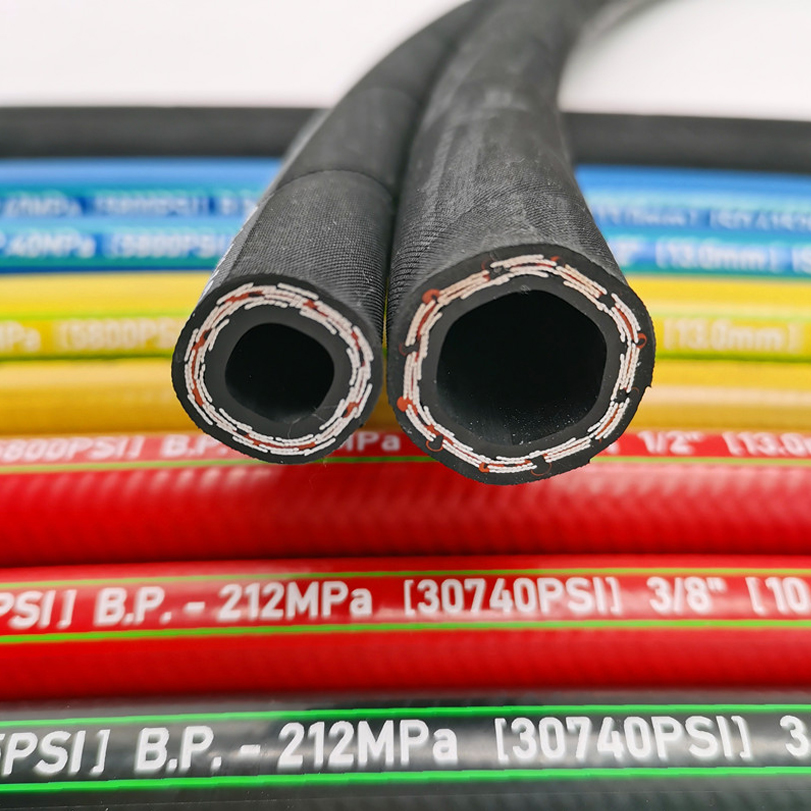
The core materials for high-pressure hose construction typically include a rubber inner tube, reinforcing layers, and an outer cover. The inner tube, responsible for fluid containment, is commonly composed of synthetic rubbers such as nitrile (NBR), chloroprene (CR, Neoprene), ethylene propylene diene monomer (EPDM), or fluorocarbon (FKM, Viton) depending on fluid compatibility requirements. NBR offers excellent resistance to petroleum-based oils, while EPDM excels in water and weathering applications. FKM provides superior resistance to high temperatures and aggressive chemicals. Reinforcement layers, crucial for pressure containment, are typically braided or spiraled high-tensile steel wire, or synthetic fiber aramid (Kevlar). Steel provides superior strength and durability, while aramid offers a higher strength-to-weight ratio and increased flexibility. The outer cover, providing abrasion and environmental protection, is generally made of synthetic rubber compounds like CR or polyurethane.
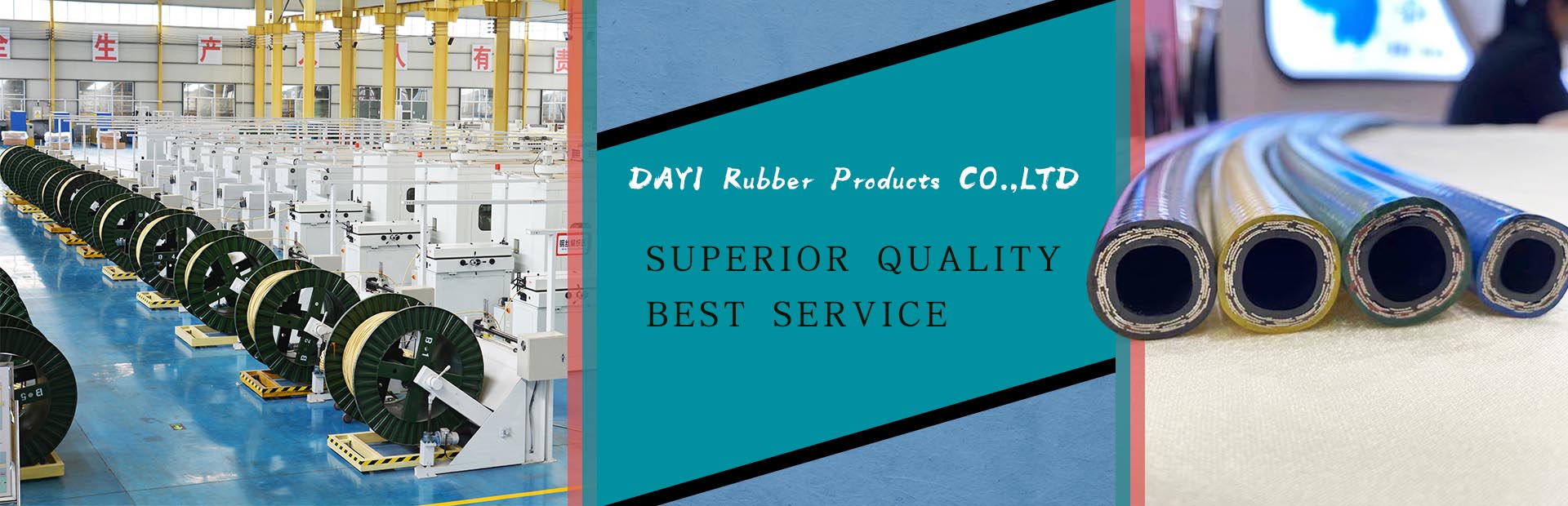
Manufacturing processes begin with the extrusion of the inner tube to precise dimensions. Reinforcement layers are then applied using automated braiding or spiraling machines. Precise tension control during reinforcement application is critical; insufficient tension compromises burst pressure, while excessive tension can lead to premature fatigue failure. Following reinforcement, the hose assembly undergoes vulcanization, a chemical process involving heat and pressure, to crosslink the rubber compounds, enhancing their strength, elasticity, and chemical resistance. Process parameters like temperature, pressure, and curing time are tightly controlled to ensure optimal vulcanization. Quality control measures at each stage, including dimensional checks, pressure testing, and visual inspection, are essential to guarantee product integrity. Specialized hose types, like those for offshore applications, require additional processes like skiving (removing rubber to accept fittings) and fitting attachment using crimping or swaging techniques.
Performance & Engineering
High-pressure hose performance is fundamentally dictated by its ability to withstand internal pressure without failure. This necessitates rigorous engineering analysis, including burst pressure calculations based on reinforcement layer strength, rubber compound tensile properties, and geometric parameters. Burst pressure is typically four times the working pressure, providing a safety factor. Beyond pressure resistance, hoses must exhibit flexibility to accommodate bending and routing constraints. Bend radius, the minimum allowable radius for bending, is a critical parameter. Excessive bending can induce stress concentrations, leading to premature fatigue failure. Environmental resistance is another key consideration. Exposure to ozone, UV radiation, extreme temperatures, and corrosive fluids can degrade rubber compounds, reducing hose lifespan. Dynamic performance, encompassing pulsation resistance and vibration damping, is crucial in hydraulic systems. Pulsations can cause hose fatigue, while vibrations can loosen fittings. Hose assemblies must also comply with relevant industry regulations and standards, such as those established by the Society of Automotive Engineers (SAE) and the International Organization for Standardization (ISO).
Force analysis plays a crucial role in designing hose assemblies. Tensile forces, induced by internal pressure, act on the reinforcement layers. Shear forces arise during bending. These forces are calculated using principles of mechanics of materials and finite element analysis (FEA) to optimize hose construction and ensure structural integrity. Compatibility between the hose, fittings, and fluid is also essential. Incompatible fluids can cause swelling, softening, or degradation of the rubber compounds, leading to leaks or failure. Selection of appropriate fitting materials (steel, stainless steel, brass) is crucial to prevent galvanic corrosion when exposed to dissimilar metals in the fluid stream.
Technical Specifications
| Parameter | Unit | Typical Value (Hydraulic Hose) | Typical Value (Chemical Transfer Hose) |
|---|---|---|---|
| Working Pressure | PSI | 3000-6000 | 150-500 |
| Burst Pressure | PSI | 12000-24000 | 600-2000 |
| Temperature Range | °F | -40 to +212 | -20 to +180 |
| Inner Tube Material | - | NBR | FKM/PFA |
| Reinforcement | - | Steel Wire Braid | Synthetic Fiber Spiral |
| Outer Cover Material | - | CR | CSM |
Failure Mode & Maintenance
High-pressure hoses are susceptible to several failure modes. Fatigue cracking, caused by repeated pressure cycles and bending, is a common failure mechanism, particularly in dynamic applications. Delamination, the separation of reinforcement layers from the rubber matrix, can occur due to poor adhesion or environmental degradation. Rubber degradation, resulting from exposure to ozone, UV radiation, or aggressive chemicals, leads to loss of elasticity and strength. Oxidation, caused by reaction with oxygen, can harden and crack the rubber compounds. Abrasion, due to contact with abrasive surfaces, can wear away the outer cover, exposing the reinforcement layers to corrosion. Pinholes, small punctures in the inner tube, can lead to leaks. Fittings are also a common point of failure, due to corrosion, loosening, or improper crimping.
Preventative maintenance is crucial for maximizing hose lifespan and ensuring safety. Regular visual inspections should be conducted to identify signs of damage, such as cracks, abrasions, bulges, or leaks. Hose assemblies should be routed to avoid sharp bends, abrasion, and direct exposure to heat sources. Fittings should be inspected for corrosion and tightness. Pressure testing, using appropriate test equipment, can help detect leaks or weaknesses. Proper hose storage, away from sunlight, ozone sources, and extreme temperatures, is essential. Replacement of hoses should be performed based on manufacturer recommendations or when signs of damage are detected. Following proper handling procedures, avoiding kinking and twisting, will extend hose life. Maintaining detailed records of hose installations, inspections, and replacements is vital for a comprehensive maintenance program.
Industry FAQ
Q: What is the impact of fluid velocity on hose lifespan?
A: Higher fluid velocity increases the risk of erosion and cavitation, both of which can damage the inner tube and reduce hose lifespan. Increased velocity also leads to higher pressure drop across the hose, potentially requiring larger hose diameters or more powerful pumps. Maintaining appropriate fluid velocity within recommended limits is crucial.
Q: How do different reinforcement materials (steel vs. aramid) affect hose performance?
A: Steel reinforcement provides higher burst pressure and greater resistance to kinking. Aramid reinforcement offers a higher strength-to-weight ratio, increased flexibility, and improved resistance to corrosion, but typically has a lower burst pressure than steel. The choice depends on the specific application requirements.
Q: What are the common causes of fitting failure in high-pressure hose assemblies?
A: Common causes include improper crimping, corrosion (especially galvanic corrosion), thread damage, and material incompatibility. Regular inspection and proper fitting selection are essential. Using compatible thread sealants can also prevent leaks.
Q: How does temperature affect the performance of high-pressure hoses?
A: Extreme temperatures can degrade rubber compounds, reducing their elasticity and strength. High temperatures can also cause swelling or softening of the inner tube. Low temperatures can make the rubber brittle and prone to cracking. Selecting a hose with a temperature rating appropriate for the application is critical.
Q: What is the significance of the hose layline marking?
A: The layline marking provides crucial information about the hose’s manufacturer, manufacturing date, working pressure, and hose type. This information is essential for traceability, identification, and proper maintenance. It also assists in verifying compliance with relevant standards.
Conclusion
High-pressure hoses are sophisticated engineered products requiring careful consideration of material selection, manufacturing processes, and performance characteristics. Ensuring reliability and safety demands a thorough understanding of potential failure modes and the implementation of robust preventative maintenance programs. The selection of appropriate hose materials and reinforcement types depends heavily on the specific application, fluid compatibility, and operating conditions.
Ongoing advancements in rubber technology, reinforcement materials, and manufacturing techniques are continually improving the performance and lifespan of high-pressure hoses. Future developments will likely focus on creating lighter-weight, more durable, and more environmentally friendly hose assemblies, as well as incorporating smart sensors for real-time monitoring of hose condition and performance. The ability to accurately predict hose lifespan and proactively address potential failures will be paramount in optimizing operational efficiency and minimizing downtime.