
Apr . 01, 2024 17:55 Back to list
Gasoline Hose Performance Analysis
Introduction
Gasoline hose is a specialized flexible conduit designed for the safe and efficient transfer of gasoline and related fuel products. Positioned within the downstream petroleum industry, it serves as a critical link between storage tanks, dispensing pumps, and vehicle fuel inlets. Its core performance characteristics revolve around maintaining fluid compatibility, preventing permeation, resisting environmental degradation, and ensuring structural integrity under pressure and dynamic bending. Unlike general-purpose hoses, gasoline hose is engineered to mitigate the risks associated with flammable fuels, primarily through the selection of specialized elastomer materials and robust construction techniques. The industry faces persistent challenges regarding regulatory compliance with evolving fuel formulations (e.g., increased ethanol content), maintaining consistent fuel delivery pressures, and preventing static electricity buildup during transfer operations. Selecting the correct gasoline hose, therefore, is paramount for safety, environmental protection, and operational efficiency.
Material Science & Manufacturing
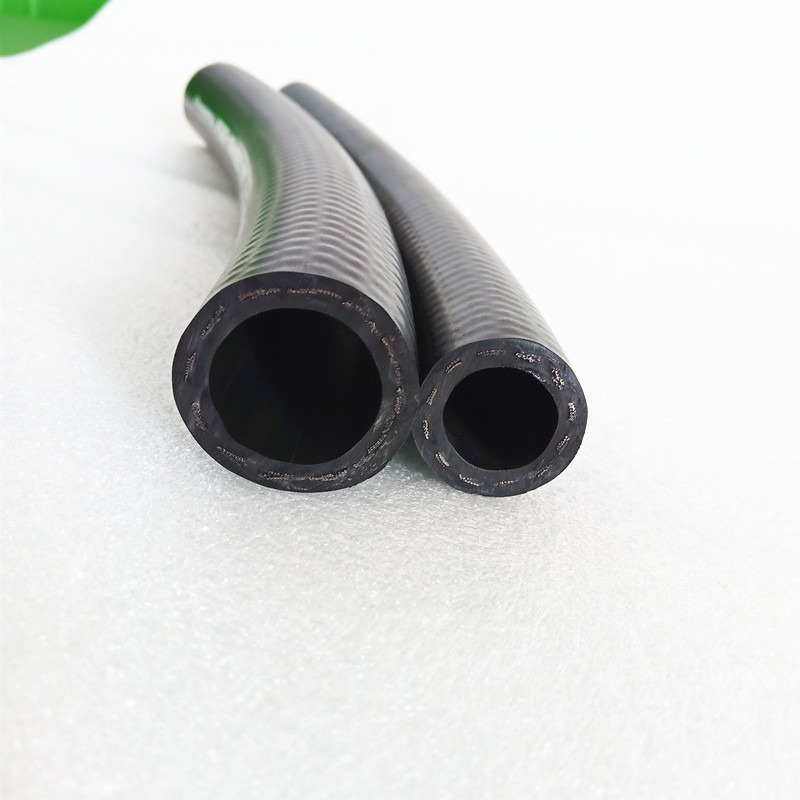
The construction of gasoline hose heavily relies on specific material properties. The inner tube is typically composed of a specialized elastomer resistant to gasoline, ethanol, and other fuel additives. Common materials include nitrile rubber (NBR) offering good hydrocarbon resistance, chloroprene rubber (CR) providing enhanced weathering resistance, and fluoroelastomers (FKM) for superior chemical compatibility, particularly with fuels containing high aromatic content. These elastomers are compounded with reinforcing fillers like carbon black to enhance tensile strength and abrasion resistance. The reinforcement layer provides structural support to withstand internal pressure and external loads. Braided textiles, typically polyester or aramid fibers, are frequently employed, with higher braid densities equating to increased burst pressure ratings. The cover layer protects the reinforcement and inner tube from environmental factors such as UV radiation, ozone, and abrasion. Commonly used cover materials include ethylene propylene diene monomer (EPDM) rubber due to its excellent weathering properties and resistance to cracking.
Manufacturing processes commence with elastomer mixing and calendaring to form the inner tube. Precise control of mixing parameters – temperature, shear rate, and ingredient ratios – is crucial for achieving homogeneous compound properties. Extrusion is then employed to create a seamless tube. The reinforcement braid is simultaneously applied during the extrusion process, ensuring intimate contact between layers. Following braiding, the outer cover is extruded over the assembly. Post-extrusion processes include vulcanization (curing) using heat and pressure, which crosslinks the elastomer chains, imparting the desired mechanical and chemical properties. Quality control measures throughout the process include dimensional checks, pressure testing (hydrostatic and pneumatic), permeation testing, and material composition analysis. Modern manufacturing facilities increasingly utilize automated process control systems to minimize variation and ensure consistent product quality. The curing process, specifically, requires meticulous temperature and time control to optimize crosslinking without causing degradation.

Performance & Engineering
The performance of gasoline hose is dictated by several key engineering considerations. Burst pressure, determined through hydrostatic testing, is a critical safety parameter, and must exceed the maximum anticipated operating pressure with a significant safety factor. Tensile strength and elongation at break govern the hose’s ability to withstand mechanical stress during handling and use. Flexibility, measured by bend radius, affects ease of installation and operation. Permeation resistance, quantified by measuring the rate of fuel vapor transmission through the hose wall, is vital for minimizing evaporative emissions and complying with environmental regulations. Electrical conductivity is also a crucial factor; the hose must effectively dissipate static electricity to prevent ignition of flammable vapors. This is often achieved by incorporating conductive fillers into the elastomer compounds.
Force analysis under operational conditions involves considering internal pressure, external bending moments, and axial tension. Finite element analysis (FEA) is commonly employed to optimize hose design and predict stress distribution. Environmental resistance is assessed through accelerated aging tests, exposing hoses to elevated temperatures, UV radiation, ozone, and exposure to various fuel blends. Compliance with industry standards (discussed in the conclusion) is paramount. These standards dictate specific performance requirements, testing methodologies, and material specifications. Hose assemblies often incorporate specialized fittings—typically metal or polymer—designed to provide a leak-proof connection. The integrity of these fittings and their compatibility with the hose material are critical for long-term performance and safety.
Technical Specifications
| Parameter | Unit | Typical Value (Standard Grade) | Typical Value (Premium Grade - Ethanol Enhanced) |
|---|---|---|---|
| Inner Diameter | inch | 3/8 | 3/8 |
| Working Pressure | psi | 150 | 200 |
| Burst Pressure | psi | 600 | 800 |
| Tensile Strength | psi | 800 | 1000 |
| Elongation at Break | % | 300 | 350 |
| Permeation Rate (Gasoline) | g/m²/day | 5 | 3 |
| Electrical Conductivity | Ω/m | <10 | <5 |
Failure Mode & Maintenance
Gasoline hose is susceptible to several failure modes. Fatigue cracking, induced by repeated bending and flexing, can lead to leaks. This is often exacerbated by localized stress concentrations near fittings. Delamination, the separation of layers within the hose wall, typically occurs due to inadequate bonding between materials or exposure to harsh chemicals. Degradation of the elastomer due to prolonged exposure to UV radiation, ozone, or fuel additives causes loss of flexibility and increased susceptibility to cracking. Oxidation of the elastomer leads to embrittlement and reduced mechanical properties. Kinking, caused by excessive bending, can restrict fuel flow and potentially damage the hose. Impact damage from accidental strikes can also compromise the hose's integrity. Internal pressure spikes can cause ruptures.
Preventive maintenance is crucial for maximizing hose lifespan and ensuring safe operation. Regular visual inspections should be conducted to identify signs of cracking, swelling, or delamination. Hoses should be replaced if any signs of damage are detected. Avoid sharp bends and kinking during handling and storage. Protect hoses from direct sunlight and exposure to extreme temperatures. Ensure proper fitting installation and tighten connections to prevent leaks. Avoid over-pressurization of the fuel system. Periodically check for fuel odors, which may indicate a leak. When decommissioning a hose, ensure it is properly drained and disposed of according to environmental regulations. In some industrial settings, implementing a hose management program with scheduled inspections and replacement protocols is beneficial.
Industry FAQ
Q: What is the impact of increased ethanol content in gasoline on hose compatibility?
A: Increased ethanol content poses a significant challenge to gasoline hose materials. Ethanol is a more aggressive solvent than gasoline and can cause swelling, softening, and degradation of incompatible elastomers. Hoses specifically formulated for ethanol-enhanced fuels utilize materials like fluoroelastomers or specially compounded nitrile rubbers that exhibit superior resistance to ethanol permeation and chemical attack. Regular inspection and proactive replacement of older hoses are crucial when transitioning to higher ethanol blends.
Q: How important is electrical conductivity in gasoline hoses, and what methods are used to achieve it?
A: Electrical conductivity is critically important to prevent static electricity buildup during fuel transfer. Static discharge can ignite flammable vapors, creating a hazardous situation. Conductivity is typically achieved by incorporating conductive fillers—such as carbon black—into the elastomer compound. These fillers create a conductive pathway through the hose wall, allowing static charges to dissipate safely to ground.
Q: What are the key differences between braided and spiral-wound hose reinforcement?
A: Braided reinforcement, using woven textile fibers, provides uniform strength and flexibility in all directions. It is suitable for moderate pressure applications and offers good resistance to kinking. Spiral-wound reinforcement, using a helical coil of metal or polymer, provides higher pressure ratings and enhanced rigidity. It is often used in applications requiring greater structural support. The choice depends on the specific pressure, temperature, and flexibility requirements of the application.
Q: What testing standards are used to evaluate the performance of gasoline hoses?
A: Gasoline hoses are evaluated against a range of testing standards including SAE J30R9 (for gasoline fuel lines), UL 21 (for fuel hoses and fittings), and EN 12115 (European standard for fuels hoses with steel wire reinforcement). These standards specify requirements for burst pressure, tensile strength, permeation resistance, and other critical performance parameters. Compliance with these standards ensures the hose meets minimum safety and performance requirements.
Q: What is the recommended service life for a gasoline hose, and what factors can affect it?
A: The recommended service life for a gasoline hose typically ranges from 5 to 7 years, but can vary depending on operating conditions and usage frequency. Factors that can shorten service life include exposure to extreme temperatures, UV radiation, harsh chemicals, abrasion, and repeated bending. Regular inspection and proactive replacement based on condition rather than solely on time are essential for maintaining safety and reliability.
Conclusion
Gasoline hose represents a critical component in fuel handling systems, demanding a nuanced understanding of material science, manufacturing processes, and performance engineering. Its integrity directly impacts safety, environmental compliance, and operational efficiency. The selection process must consider the specific fuel composition, operating pressure, temperature range, and exposure conditions. Failure to account for these factors can lead to premature failure, leaks, and potentially hazardous situations.
Continued innovation in elastomer technology and hose construction techniques are focused on enhancing permeation resistance, improving durability, and extending service life. Adherence to recognized industry standards, such as those defined by SAE, UL, and EN, is paramount for ensuring product quality and safety. Implementing comprehensive hose management programs, including regular inspections and preventative maintenance, is essential for maximizing performance and mitigating risks within the petroleum and automotive industries.