
Apr . 01, 2024 17:55 Back to list
four wire spiral hydraulic hose suppliers Performance Analysis
Introduction
Four wire spiral hydraulic hose represents a critical component in fluid power systems across diverse industries, including construction, agriculture, mining, and manufacturing. These hoses are engineered to transmit hydraulic fluid at high pressures and temperatures, enabling the operation of heavy machinery and critical industrial processes. Unlike two or three wire braided hoses, the four-wire spiral construction significantly enhances pressure capability and burst strength. This guide provides a comprehensive technical overview of these hoses, encompassing material science, manufacturing processes, performance characteristics, failure modes, and relevant industry standards. Understanding these factors is paramount for procurement managers, engineers, and maintenance personnel to ensure safe, reliable, and efficient operation of hydraulic systems. Core industry pain points revolve around hose failure leading to downtime, safety hazards, and fluid leakage resulting in environmental concerns. Selecting the appropriate hose for the application and implementing a robust maintenance program are crucial to mitigating these risks.
Material Science & Manufacturing
The composition of a four-wire spiral hydraulic hose is multi-layered, each component contributing to its overall performance. The innermost layer, or tube, is typically constructed from synthetic rubbers such as Nitrile (NBR), Chloroprene (CR), or Ethylene Propylene Diene Monomer (EPDM). NBR exhibits excellent resistance to petroleum-based hydraulic fluids, while CR offers superior resistance to ozone and weathering. EPDM is frequently chosen for phosphate ester fluids. Reinforcement is the defining characteristic; four high-tensile steel wire spirals are helically wound around the inner tube, providing the pressure resistance. The wire used is typically high-carbon steel, treated to prevent corrosion. An intermediate cover layer, often a synthetic rubber blend, provides bonding between the reinforcement and the outer cover. Finally, the outer cover is commonly made from synthetic rubbers like CR or Polyurethane (PU), offering abrasion, ozone, and weathering resistance. Manufacturing begins with extrusion of the inner tube. The steel wire is simultaneously spiraled around the tube during the extrusion process, ensuring consistent wire pitch and coverage. Subsequent layers are extruded, and the hose is then vulcanized – a heat-curing process that cross-links the rubber compounds, enhancing their mechanical properties. Critical parameters during manufacturing include precise wire tension control, uniform rubber thickness, and consistent vulcanization temperature and time. Variations in these parameters directly impact hose performance and longevity. Post-production testing includes pressure testing to verify burst strength and impulse testing to assess fatigue resistance.

Performance & Engineering
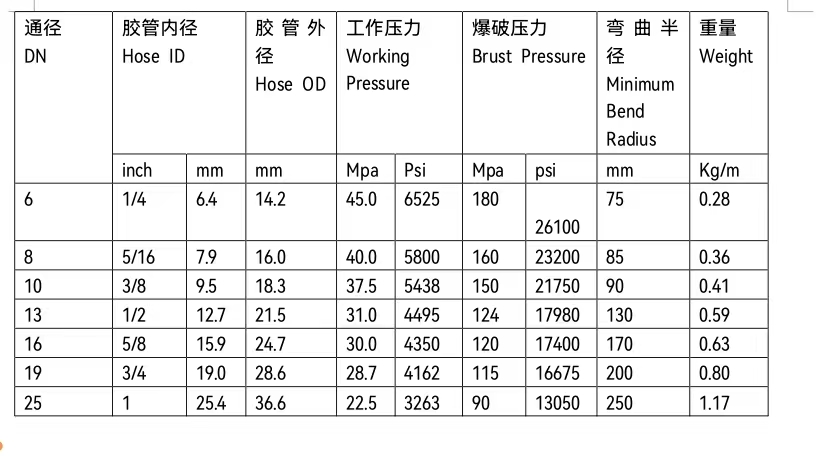
The performance of a four-wire spiral hydraulic hose is dictated by its ability to withstand internal pressure, external damage, and environmental factors. Internal pressure rating, measured in PSI (pounds per square inch) or Bar, is determined by the wire spiral’s tensile strength, pitch, and the rubber compound’s bonding characteristics. Burst pressure, typically four times the working pressure, represents the hose’s ultimate failure point. Impulse pressure, reflecting cyclic pressure fluctuations common in hydraulic systems, is a critical parameter assessed through repeated pressure cycling. Hose bend radius is also vital; exceeding the minimum bend radius can cause kinking and premature failure. Temperature range is another crucial consideration; exceeding the specified temperature limits degrades the rubber compounds, reducing their flexibility and pressure resistance. Chemical compatibility is paramount; the hose material must be resistant to the hydraulic fluid being used. Failure to do so can result in swelling, softening, or degradation of the rubber, leading to leaks and failure. Force analysis involves calculating hoop stress within the hose wall under pressure, and shear stress within the wire spirals. This analysis informs the selection of appropriate materials and dimensions for specific applications. Compliance requirements vary by region and industry; for instance, the automotive industry demands adherence to SAE J517 standards, while general industrial applications may refer to ISO 1816. Environmental resistance includes protection against UV radiation, ozone exposure, and abrasion from external sources.
Technical Specifications
| Parameter | Unit | Specification Range | Typical Application |
|---|---|---|---|
| Working Pressure | PSI | Up to 6,000 | Heavy-duty hydraulic machinery |
| Burst Pressure | PSI | 24,000 (4:1 Safety Factor) | Emergency shutdown systems |
| Temperature Range | °F | -40 to +212 | Outdoor construction equipment |
| Inner Tube Material | - | NBR, CR, EPDM | Dependent on fluid compatibility |
| Reinforcement | - | Four High-Tensile Steel Wire Spirals | High-pressure applications |
| Outer Cover Material | - | CR, PU | Abrasion and weather resistance |
Failure Mode & Maintenance
Failure modes in four-wire spiral hydraulic hoses typically stem from fatigue, abrasion, chemical attack, and improper installation. Fatigue cracking occurs due to repeated pressure cycling and flexing, initiating at stress concentration points, often around fittings. Abrasion arises from external contact with abrasive surfaces, wearing away the outer cover and eventually exposing the reinforcement. Chemical attack results from incompatibility between the hose material and the hydraulic fluid, causing swelling, softening, or degradation. Improper installation, such as excessive bending or twisting, can induce stress and lead to premature failure. Leakage at the fitting connection is also common, often caused by improper crimping or damaged seals. Failure analysis involves examining the fractured hose to identify the root cause. Common techniques include visual inspection, microscopic analysis, and chemical testing. Maintenance strategies include regular visual inspections for signs of wear, abrasion, or leaks. Pressure testing should be performed periodically to verify hose integrity. Hose routing should be optimized to minimize bending and abrasion. Fittings should be inspected and re-crimped as necessary. When replacing a hose, it's critical to use compatible fittings and follow the manufacturer’s installation instructions. A preventative maintenance schedule, documenting inspection dates and replacement intervals, is crucial for maximizing hose life and preventing costly downtime. Proper storage, away from direct sunlight and extreme temperatures, also extends hose lifespan.
Industry FAQ
Q: What is the significance of the steel wire spiral pitch in a four-wire hose?
A: The steel wire spiral pitch directly influences the hose's flexibility and pressure capacity. A tighter pitch generally increases pressure capability but reduces flexibility, making the hose more difficult to route. Conversely, a wider pitch enhances flexibility but lowers pressure rating. The optimal pitch is determined by the application's requirements, balancing pressure needs with routing constraints.
Q: How do different rubber compounds in the inner tube affect fluid compatibility?
A: Different rubber compounds offer varying levels of resistance to specific hydraulic fluids. NBR is excellent for petroleum-based fluids, but less suitable for phosphate esters. CR provides good resistance to ozone and weathering but may not be ideal for some synthetic fluids. EPDM is specifically designed for phosphate ester fluids and offers good overall compatibility. Selecting the correct inner tube compound is critical to prevent swelling, degradation, and leaks.
Q: What are the primary causes of hose kinking, and how can it be prevented?
A: Kinking occurs when the hose is bent beyond its minimum bend radius, causing the inner tube to collapse and restrict flow. This can be caused by improper routing, inadequate support, or excessive bending forces. Prevention involves ensuring sufficient bend radius during installation, providing adequate support along the hose length, and avoiding sharp turns.
Q: What is the role of the outer cover in protecting the hose, and what materials are commonly used?
A: The outer cover protects the reinforcement from corrosion, abrasion, and environmental degradation. It also provides a barrier against oil leakage. Common materials include CR (Chloroprene) for general-purpose applications and PU (Polyurethane) for enhanced abrasion resistance. The choice of material depends on the operating environment and potential exposure to abrasive substances.
Q: How does temperature affect the performance and lifespan of a four-wire spiral hose?
A: Temperature extremes can significantly impact hose performance. High temperatures can degrade the rubber compounds, reducing their flexibility and pressure resistance. Low temperatures can make the rubber brittle and more susceptible to cracking. Operating the hose within its specified temperature range is crucial to maintain its integrity and maximize its lifespan.
Conclusion
Four-wire spiral hydraulic hoses are engineered for demanding applications requiring high pressure and durability. Their performance is intrinsically linked to material selection, manufacturing precision, and adherence to industry standards. Understanding the interplay between these factors is essential for selecting the appropriate hose for a specific application and implementing a proactive maintenance program.
Ongoing advancements in rubber compounds and manufacturing techniques are continuously enhancing the performance and lifespan of these critical components. Proper installation, regular inspection, and timely replacement are crucial to ensure safe, reliable, and efficient operation of hydraulic systems, minimizing downtime and maximizing return on investment.