
Apr . 01, 2024 17:55 Back to list
four wire spiral hydraulic hose supplier Performance Analysis

Introduction
Four wire spiral hydraulic hose represents a critical component within fluid power systems, serving as the conduit for transmitting hydraulic fluid to actuators and other components. Its construction, utilizing multiple layers of high-tensile wire reinforcement spiraled within a synthetic rubber inner tube and outer cover, differentiates it from simpler hose designs. Positioned within the industrial chain between hydraulic pump/valve manufacturers and end-user equipment (construction machinery, agricultural equipment, industrial presses, etc.), the hose’s performance directly impacts system efficiency, reliability, and safety. Core performance metrics include working pressure, burst pressure, impulse resistance, and temperature range. This guide provides an in-depth technical overview of four wire spiral hydraulic hose, covering material science, manufacturing processes, performance characteristics, failure modes, and relevant industry standards, targeting engineers, procurement professionals, and maintenance personnel.
Material Science & Manufacturing
The construction of four wire spiral hydraulic hose relies on a specific combination of materials engineered for compatibility and durability. The inner tube is typically composed of a synthetic rubber compound, commonly nitrile rubber (NBR) due to its excellent resistance to petroleum-based hydraulic fluids. Alternatives include chloroprene rubber (CR) for improved ozone and weathering resistance and ethylene propylene diene monomer (EPDM) for phosphate ester fluids. The reinforcement layers consist of high-tensile steel wire, typically drawn from carbon steel and treated with zinc plating for corrosion protection. The wire diameter and spiral angle are critical parameters influencing the hose's pressure rating and flexibility. The outer cover is also typically a synthetic rubber, often CR or a blend of CR and NBR, designed for abrasion resistance, weathering protection, and oil resistance.
Manufacturing involves several key processes. The inner tube is extruded through a die to achieve the desired bore size and wall thickness. The steel wire is then spirally wound around the inner tube with precise tension and pitch control, using automated winding machines. Multiple layers of wire (typically four, hence the name) are applied to achieve the desired pressure rating. Following wire winding, the outer cover is extruded over the reinforcement, bonding to the inner layers through heat and pressure. Curing is a crucial step, involving vulcanization of the rubber compounds to achieve the desired elasticity, strength, and chemical resistance. Quality control includes hydrostatic pressure testing to verify burst pressure and impulse testing to assess fatigue life. Parameter control during extrusion (temperature, screw speed, die pressure) is essential for consistent rubber properties. Wire tension and spiral angle during winding directly affect the hose's flexibility and pressure capacity.
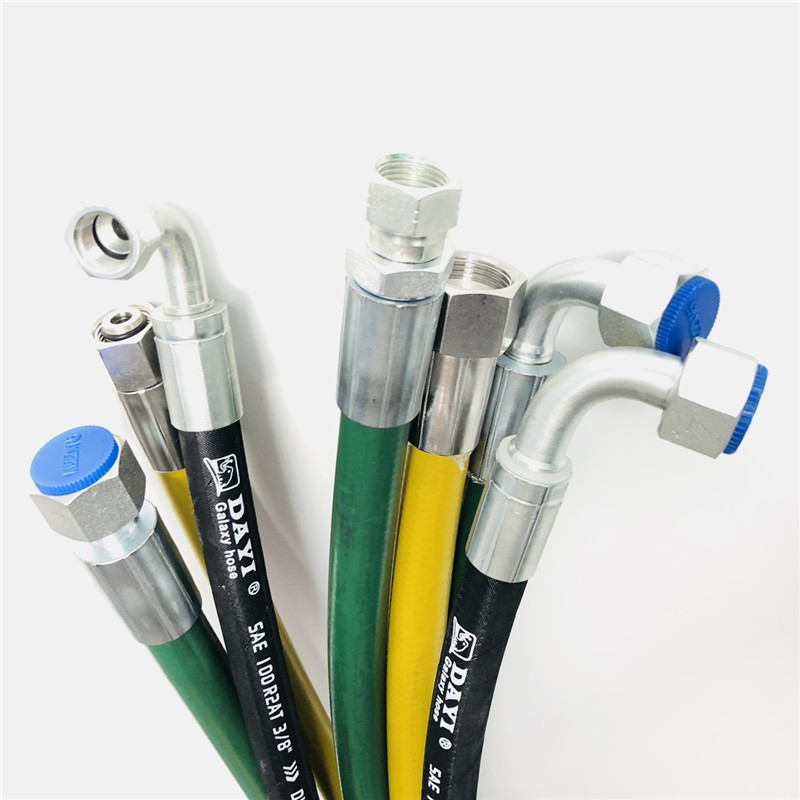
Performance & Engineering
The performance of four wire spiral hydraulic hose is governed by several engineering principles. The reinforcement layers bear the majority of the pressure load, resisting hoop stress induced by internal fluid pressure. The steel wire provides tensile strength, preventing hose expansion and failure. Hose flexibility is determined by the wire spiral angle and the rubber compound's elasticity. A smaller spiral angle increases pressure capacity but reduces flexibility, while a larger angle offers greater flexibility but lowers the pressure rating. Impulse resistance is a critical performance parameter, particularly in systems with pulsating flow. The hose must withstand repeated pressure surges without fatigue cracking. This is achieved through the damping effect of the rubber compounds and the resilience of the wire reinforcement.
Environmental resistance is also paramount. Exposure to extreme temperatures, ozone, UV radiation, and corrosive fluids can degrade the rubber compounds, reducing hose life. Proper material selection and the inclusion of protective additives are essential. Compliance with industry standards (SAE J517, EN 853, DIN EN 853) dictates minimum performance requirements for pressure rating, impulse resistance, and temperature range. Force analysis during installation and operation must consider bending radii to avoid kinking or excessive stress concentration. Properly sized end fittings are crucial to prevent blow-off failures, and fitting attachment methods (crimping, swaging) must adhere to manufacturer specifications.
Technical Specifications
| Parameter | Unit | SAE 100R4 | EN 853 1SN |
|---|---|---|---|
| Working Pressure | MPa | 31.5 | 25 |
| Burst Pressure | MPa | 105 | 75 |
| Temperature Range | °C | -40 to +100 | -40 to +100 |
| Inner Tube | Material | NBR | NBR |
| Reinforcement | Layers | 4 Steel Wire Spiral | 4 Steel Wire Spiral |
| Outer Cover | Material | CR | CR |
Failure Mode & Maintenance
Four wire spiral hydraulic hose is susceptible to several failure modes. Fatigue cracking, initiated by repeated pressure cycles and bending stresses, is a common cause of failure. This often begins at points of stress concentration, such as near end fittings or at locations where the hose is sharply bent. Abrasion damage to the outer cover can expose the reinforcement layers to corrosion, leading to wire corrosion and eventual hose failure. Oil permeation through the rubber compounds can cause swelling and softening, reducing the hose's strength and flexibility. Improper installation, such as excessive bending radius or incorrect fitting crimping, can induce premature failure. Hose twisting can also lead to internal damage and reduced lifespan.
Preventative maintenance is critical. Regular visual inspections should be performed to identify signs of abrasion, cracking, or swelling. Hose should be replaced if any damage is detected. Proper routing and support are essential to minimize bending stress. Using the correct fittings and ensuring proper crimping are vital. Fluid contamination can accelerate hose degradation; therefore, maintaining clean hydraulic fluid is crucial. Periodic pressure testing can help identify hoses nearing the end of their service life. When replacing hoses, always match or exceed the original specifications in terms of pressure rating, temperature range, and fluid compatibility. Proper storage of hoses (cool, dry, away from direct sunlight) can also extend their lifespan.
Industry FAQ
Q: What is the impact of hydraulic fluid type on hose selection?
A: Different hydraulic fluids have varying chemical compositions and compatibility with rubber compounds. Using an incompatible fluid can cause swelling, softening, or degradation of the inner tube, leading to premature failure. Nitrile rubber (NBR) is generally suitable for petroleum-based fluids, while EPDM is preferred for phosphate ester fluids. Always verify fluid compatibility with the hose manufacturer's specifications.
Q: How does hose layline marking contribute to safety and traceability?
A: The layline marking, a continuous spiral or stripe on the hose outer cover, indicates the hose's manufacturing date, pressure rating, and manufacturer identification. This information is critical for traceability in case of failures and for ensuring compliance with safety regulations. It also serves as a visual reminder of the hose’s specifications during maintenance and replacement.
Q: What is the recommended minimum bending radius for four wire spiral hose?
A: Exceeding the recommended minimum bending radius can cause kinking, internal damage, and premature failure. The minimum bending radius varies depending on the hose size and construction, but is typically specified by the manufacturer. Generally, larger diameter hoses require larger bending radii. Consult the hose datasheet for specific recommendations.
Q: How do I identify signs of wire corrosion within the hose?
A: Signs of wire corrosion may include rust-colored residue around the end fittings or visible corrosion on the exposed wire ends during inspection. Internal corrosion can be difficult to detect, but may manifest as reduced hose flexibility or increased susceptibility to bursting. If wire corrosion is suspected, the hose should be replaced immediately.
Q: What are the consequences of using undersized or oversized end fittings?
A: Using undersized fittings can create excessive stress at the connection point, leading to blow-off failures. Oversized fittings may not provide a secure seal, resulting in fluid leakage. Always use fittings that are specifically designed for the hose size and pressure rating, and ensure proper crimping or swaging according to the manufacturer’s instructions.
Conclusion
Four wire spiral hydraulic hose serves as a critical, yet often overlooked, component in fluid power systems. Its robust construction, utilizing specifically engineered materials and meticulous manufacturing processes, allows it to withstand high pressures, extreme temperatures, and harsh operating environments. Understanding the material science behind its construction, the engineering principles governing its performance, and the potential failure modes is crucial for ensuring system reliability and safety.
Proper selection, installation, and maintenance practices are paramount to maximizing hose lifespan and minimizing the risk of catastrophic failures. Adherence to industry standards, regular inspections, and timely replacement of damaged hoses are essential elements of a comprehensive hydraulic system maintenance program. Continued advancements in rubber compounding and wire reinforcement technologies will undoubtedly lead to further improvements in hose performance and durability, enhancing the efficiency and reliability of hydraulic systems across a wide range of industrial applications.