
Apr . 01, 2024 17:55 Back to list
four wire spiral hydraulic hose manufacturer Performance Analysis
Introduction
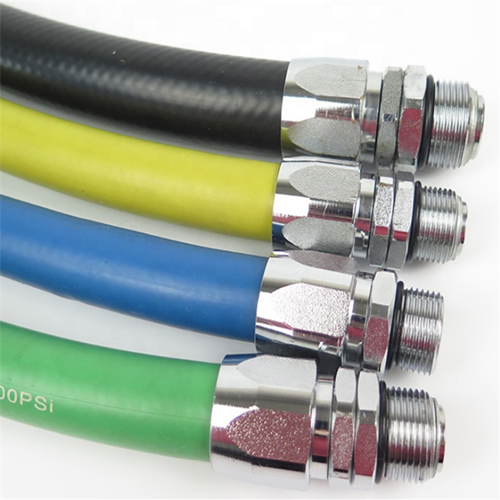
Four wire spiral hydraulic hose represents a critical component within fluid power systems, utilized across a diverse range of industrial and mobile applications. Positioned within the hydraulic system as the conduit for pressurized fluid, its primary function is to transmit power efficiently and reliably. Unlike two or three-wire braided hose, the four-wire spiral construction significantly enhances pressure capability, flexibility, and resistance to bending and fatigue. This construction utilizes four layers of high-tensile steel wire spirally wound around a resilient inner tube, encapsulated by a durable outer cover. Core performance characteristics include burst pressure, working pressure, bend radius, temperature resistance, and fluid compatibility, all of which are paramount in ensuring system safety and operational longevity. Industry pain points revolve around hose failure due to exceeding pressure limits, improper installation, fluid incompatibility, and inadequate abrasion resistance, leading to costly downtime and potential safety hazards. Selecting the correct hose for a specific application necessitates a thorough understanding of these parameters and applicable industry standards.
Material Science & Manufacturing
The construction of a four-wire spiral hydraulic hose begins with the selection of appropriate raw materials. The inner tube is typically formulated from a blend of synthetic rubbers, including Nitrile (NBR) for oil resistance, Ethylene Propylene Diene Monomer (EPDM) for water and heat resistance, and Fluorocarbon (FKM/Viton) for compatibility with aggressive fluids and high temperatures. The reinforcement layers consist of high-tensile steel wire, typically drawn from carbon steel and surface treated to enhance corrosion resistance and bonding with the rubber compound. The outer cover is generally composed of Chloroprene (CR) rubber for abrasion resistance, weathering, and ozone protection, or Polyurethane (PU) for superior abrasion and oil resistance.
Manufacturing involves a multi-step process. First, the inner tube is extruded through a die to achieve the desired bore and wall thickness. The steel wire is then spirally wound around the inner tube using specialized winding machines, ensuring precise helix angles and consistent layer coverage. This winding process is critical, as it determines the hose's pressure rating and flexibility. Following wire winding, a bonding agent is applied to promote adhesion between the wire and the rubber. The assembly is then vulcanized within an autoclave, applying heat and pressure to cure the rubber compounds and create a permanent bond. Finally, the outer cover is extruded over the reinforced core, and the hose is subjected to quality control testing, including pressure testing, impulse testing, and dimensional inspection. Key parameter control during manufacturing involves maintaining consistent rubber compound viscosity, accurate wire tension during winding, precise temperature and pressure control during vulcanization, and rigorous adherence to dimensional tolerances.
Performance & Engineering
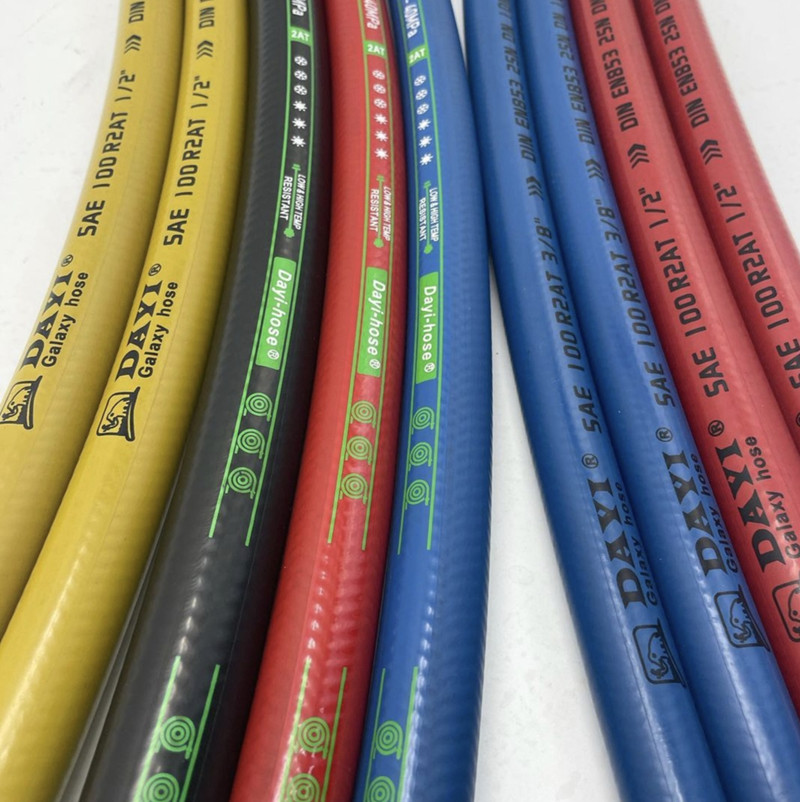
The performance of a four-wire spiral hydraulic hose is dictated by several engineering principles. Burst pressure, a critical safety parameter, is determined by the tensile strength of the steel wire and the adhesion between the wire and the rubber. Working pressure is typically specified as a fraction of the burst pressure (e.g., 1/4), providing a safety factor. Flexibility and bend radius are governed by the helix angle of the steel wire and the durometer (hardness) of the rubber compounds. A tighter helix angle generally results in greater flexibility but may reduce pressure capability.
Environmental resistance is paramount. Exposure to extreme temperatures, ozone, ultraviolet radiation, and corrosive fluids can degrade the rubber compounds, leading to reduced performance and eventual failure. Therefore, careful selection of rubber materials is crucial. Impulse testing, simulating pressure pulsations common in hydraulic systems, is essential to evaluate the hose's resistance to fatigue cracking. Force analysis involves calculating the stresses imposed on the hose during operation, considering pressure, bending, and axial loading. Compliance requirements, such as those outlined by SAE, EN, and DIN standards, mandate specific testing procedures and performance criteria. Furthermore, proper fitting selection and installation are vital to ensure leak-free operation and prevent premature failure. Incorrectly sized or installed fittings can create stress concentrations, leading to fatigue cracking and potential hose rupture.
Technical Specifications
| Parameter | Unit | SAE 100R4 | DIN EN 856 4SH |
|---|---|---|---|
| Working Pressure | MPa | Up to 35 | Up to 31.5 |
| Burst Pressure | MPa | 140 | 126 |
| Temperature Range | °C | -40 to +100 | -40 to +100 |
| Inner Tube | Material | NBR, EPDM, FKM | NBR, EPDM, FKM |
| Reinforcement | Layers | 4 Spiral Steel Wire | 4 Spiral Steel Wire |
| Outer Cover | Material | CR, PU | CR, PU |
Failure Mode & Maintenance
Common failure modes in four-wire spiral hydraulic hoses include fatigue cracking, particularly at the fitting connection points, caused by repeated pressure pulsations and bending. Another frequent failure is abrasion of the outer cover, leading to exposure of the reinforcement wires and subsequent corrosion. Internal degradation of the inner tube can occur due to fluid incompatibility, causing swelling, softening, and eventual cracking. Pinholes in the inner tube can develop due to manufacturing defects or contamination. Delamination, the separation of the rubber layers from the steel wire, is often a result of inadequate bonding during vulcanization. Oxidation of the steel wire, particularly in humid environments, can reduce its tensile strength.
Preventative maintenance is crucial. Regular visual inspections should be conducted to identify any signs of abrasion, cracking, or swelling. Hoses should be replaced immediately if any damage is detected. Fluid compatibility should be verified to ensure that the hose material is compatible with the hydraulic fluid being used. Proper hose routing is essential to avoid excessive bending and abrasion. Fittings should be securely tightened, but not over-tightened, to prevent damage to the hose ends. Hoses should be stored in a cool, dry place, away from direct sunlight and ozone sources. Periodic pressure testing can help identify potential leaks or weaknesses before they lead to catastrophic failure. Records of hose installation, inspection, and replacement should be maintained for traceability and performance analysis.
Industry FAQ
Q: What is the primary advantage of a four-wire spiral hose over a two-wire braided hose?
A: The four-wire spiral construction provides significantly higher pressure capability and improved flexibility compared to a two-wire braided hose. The spiraled wire layers distribute stress more evenly, allowing for higher working pressures and a tighter bend radius without kinking. This makes it ideal for demanding applications with high pressure and dynamic movement.
Q: How does temperature affect the performance of a hydraulic hose?
A: Extreme temperatures can significantly degrade the rubber compounds. High temperatures accelerate oxidation and cause the rubber to lose its elasticity, leading to cracking and leakage. Low temperatures can cause the rubber to become brittle and susceptible to cracking under stress. Proper material selection, based on the operating temperature range, is crucial.
Q: What is the significance of impulse testing?
A: Impulse testing simulates the pressure pulsations commonly found in hydraulic systems, such as those generated by pumps and valves. This testing evaluates the hose's resistance to fatigue cracking caused by these repeated pressure surges. A hose that fails impulse testing is likely to fail prematurely in service.
Q: What are the potential consequences of using an incompatible hydraulic fluid?
A: Using an incompatible hydraulic fluid can cause the inner tube to swell, soften, or degrade, leading to leaks and reduced performance. Certain fluids can also attack the steel wire reinforcement, reducing its tensile strength. Always verify fluid compatibility with the hose manufacturer's specifications.
Q: How often should hydraulic hoses be inspected and replaced?
A: Regular visual inspections should be conducted at least monthly, or more frequently in demanding applications. Hoses should be replaced immediately if any signs of damage, such as abrasion, cracking, swelling, or leaks, are detected. A preventative replacement schedule based on operating hours or calendar time is also recommended, typically every 3-5 years, even if no visible damage is present.
Conclusion
Four wire spiral hydraulic hose technology represents a sophisticated engineering solution for reliable fluid power transmission. The careful selection of materials, precise manufacturing processes, and rigorous testing procedures are critical to ensuring optimal performance and safety. Understanding the potential failure modes and implementing a proactive maintenance program are paramount to maximizing hose life and minimizing downtime.
The future of hydraulic hose development will likely focus on advanced materials, such as thermoplastic composites, to further enhance pressure capability, reduce weight, and improve corrosion resistance. Smart hoses, incorporating sensors to monitor pressure, temperature, and internal degradation, will provide real-time data for predictive maintenance and enhanced system reliability. Continued adherence to international standards and a commitment to quality control will remain essential for ensuring the safe and efficient operation of hydraulic systems worldwide.