
Apr . 01, 2024 17:55 Back to list
four wire spiral hydraulic hose factory Performance Analysis
Introduction
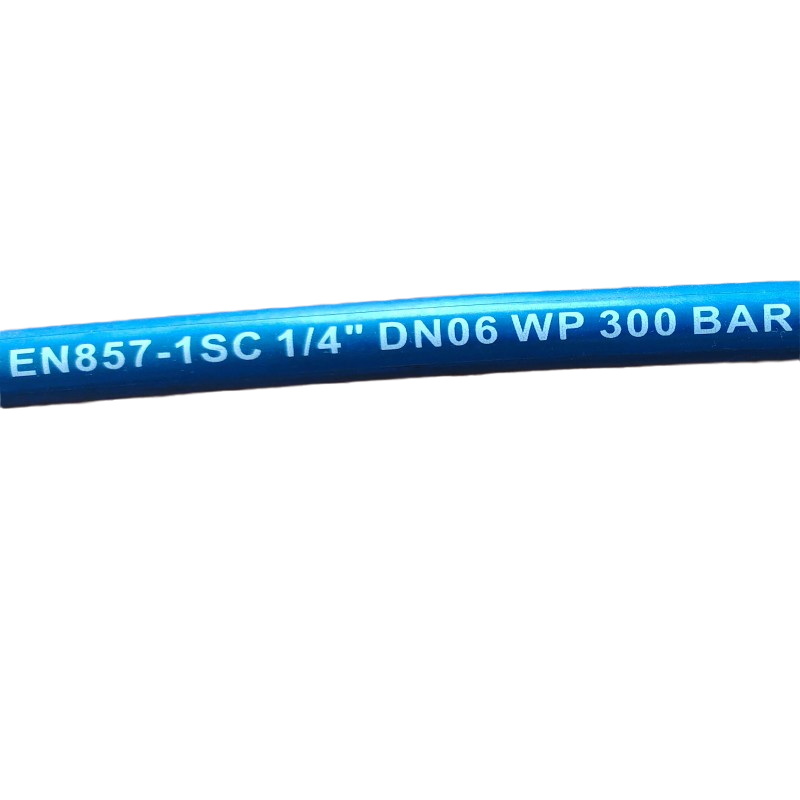
Four-wire spiral hydraulic hose represents a critical component in fluid power systems across a vast spectrum of industries, including construction, agriculture, mining, and manufacturing. Its primary function is the reliable and efficient transmission of hydraulic fluid under high pressure to operate hydraulic machinery. Unlike two or three-wire hoses, the four-wire construction provides significantly enhanced pressure capacity, flexibility, and durability, making it suitable for demanding applications. The industry chain positions these hoses as downstream products of rubber compounding, steel wire drawing, and specialized braiding processes. Core performance characteristics revolve around burst pressure, working pressure, temperature resistance, and resistance to fluid compatibility – factors directly influencing system reliability and operational safety. The escalating demands for heavier machinery and higher operating pressures are driving continued innovation in four-wire spiral hose design and materials.
Material Science & Manufacturing
The construction of a four-wire spiral hydraulic hose fundamentally depends on a synergistic blend of material properties and precision manufacturing techniques. The inner tube is typically composed of oil-resistant synthetic rubber compounds, most commonly nitrile rubber (NBR), chloroprene rubber (CR – Neoprene), or ethylene propylene diene monomer (EPDM) rubber. NBR provides excellent resistance to petroleum-based fluids, CR excels in weather resistance and moderate oil compatibility, and EPDM offers superior heat and ozone resistance, alongside compatibility with phosphate ester fluids. Steel wire, generally high-carbon steel conforming to standards like SAE J841, provides the reinforcement layers. The steel wire is spirally wound around the inner tube, and the number of layers (in this case, four) dictates the hose's pressure rating. Between the wire layers and the outer cover, a rubber binder compound ensures adhesion and prevents corrosion. The outer cover is also a synthetic rubber, often CR or a blend of CR and NBR, formulated for abrasion resistance, oil resistance, and weather protection.
Manufacturing begins with extrusion of the inner tube to precise dimensions. Simultaneously, steel wire is drawn to specific diameters and treated with adhesion promoters to ensure bonding with the rubber compounds. The wire spiral winding process is critical – maintaining consistent pitch and tension is paramount to achieve uniform pressure distribution. Following wire winding, the rubber binder is applied, and then the outer cover is extruded. Curing (vulcanization) is performed under controlled temperature and pressure, chemically crosslinking the rubber compounds to impart elasticity and strength. Key parameter controls include rubber compound viscosity, extrusion temperature, wire tension, curing time, and temperature uniformity. Post-curing, hoses undergo rigorous testing – including burst pressure, impulse testing, and dimensional verification – to ensure conformance to industry standards.

Performance & Engineering
The performance of a four-wire spiral hydraulic hose is governed by complex engineering principles. Force analysis focuses on hoop stress within the hose wall, determined by internal fluid pressure and hose diameter. The four-wire spiral construction significantly enhances the hose's ability to withstand these stresses, preventing rupture. Environmental resistance is crucial; prolonged exposure to extreme temperatures, UV radiation, and corrosive chemicals can degrade the rubber compounds, leading to reduced flexibility and eventual failure. Temperature ratings typically range from -40°C to +100°C, but specialized compounds can extend this range. Compliance with standards like SAE J517 (hydraulic hose specifications) and ISO 18754 (hydraulic hose assemblies) is mandatory for ensuring safety and interchangeability.
Functional implementation requires careful consideration of hose bend radius. Exceeding the minimum bend radius causes kinking, restricting fluid flow and potentially damaging the reinforcement layers. Impulse testing simulates the pressure pulsations inherent in hydraulic systems, assessing the hose’s ability to withstand cyclic loading. Furthermore, fluid compatibility must be verified; incompatible fluids can swell or degrade the rubber compounds, compromising the hose's integrity. Correct fitting selection is also vital. Fittings must be properly crimped onto the hose to create a leak-proof seal and distribute the load effectively. Improper crimping can lead to fitting slippage or hose failure at the connection point. The selection of appropriate hose lengths, considering routing and movement within the machine, minimizes stress and extends service life.
Technical Specifications
| Parameter | Unit | Standard Specification (Typical) | Performance Range |
|---|---|---|---|
| Working Pressure | MPa | SAE J517: 20-35 | Up to 35 MPa |
| Burst Pressure | MPa | SAE J517: 4x Working Pressure | Up to 140 MPa |
| Temperature Range | °C | -40 to +100 | -40 to +120 (Special Compounds) |
| Inner Tube Material | - | NBR, CR, EPDM | Varies based on fluid compatibility |
| Reinforcement | Layers | Four Spiral High-Carbon Steel Wire | Wire Diameter & Tensile Strength variations |
| Outer Cover Material | - | CR, CR/NBR Blend | Abrasion & Weather Resistance options |
Failure Mode & Maintenance
Failure modes in four-wire spiral hydraulic hoses are diverse and often linked to operational conditions and maintenance practices. Fatigue cracking, particularly at the connection points, is a common occurrence due to cyclic pressure loading and vibration. This is exacerbated by improper crimping or the use of incompatible fittings. Delamination, the separation of rubber layers from the steel wire reinforcement, can result from prolonged exposure to extreme temperatures or incompatible fluids. Rubber degradation, characterized by hardening, cracking, and loss of elasticity, occurs due to oxidation, ozone attack, and UV exposure. Pinholes and localized leaks can develop in the inner tube due to abrasion from fluid contaminants or internal corrosion. Impact damage, resulting from physical contact with sharp objects, can cause localized weakening and eventual rupture.
Preventative maintenance is crucial. Regular visual inspections should be conducted to identify signs of cracking, abrasion, swelling, or leaks. Hose assemblies should be replaced if any damage is observed. Maintaining a clean hydraulic system, utilizing appropriate filters, and ensuring fluid compatibility minimizes contamination and corrosion. Proper hose routing, avoiding sharp bends and direct contact with hot surfaces, reduces stress and extends service life. Periodic torque checks on fittings ensure secure connections. When replacing hose assemblies, it is imperative to use fittings specifically designed for four-wire spiral hose and to employ a qualified technician to perform the crimping process. Documenting hose replacement dates and operating conditions aids in tracking performance and identifying potential issues.
Industry FAQ
Q: What is the primary advantage of a four-wire spiral hose over a two or three-wire construction?
A: The key advantage lies in its enhanced pressure capacity and flexibility. The additional wire layers significantly increase the hose’s ability to withstand high pressures without kinking or reducing flow. This makes it suitable for applications demanding robust performance and long service life under demanding conditions. It also provides superior resistance to fatigue failure.
Q: How does fluid compatibility impact the selection of inner tube material?
A: Fluid compatibility is paramount. Incompatible fluids can cause swelling, softening, or degradation of the inner tube rubber, leading to leaks and premature failure. NBR is generally suitable for petroleum-based fluids, CR for moderate oil resistance and weathering, and EPDM for phosphate ester fluids and high-temperature applications. Always consult a fluid compatibility chart.
Q: What is the significance of the 'impulse' rating for a hydraulic hose?
A: The impulse rating indicates the hose’s ability to withstand repeated pressure pulsations without failure. Hydraulic systems often generate pressure spikes due to pump operation or valve switching. A higher impulse rating signifies a more durable hose capable of handling these cyclic loads, extending its service life.
Q: What are the best practices for preventing hose twisting during installation and operation?
A: Hose twisting introduces internal stress, reducing flexibility and increasing the risk of failure. Ensure adequate hose length to accommodate movement without twisting. Use swivel fittings at hose ends to allow for rotational movement. Avoid sharp bends and maintain proper hose routing to minimize torsional stress. Regularly inspect for and correct any existing twists.
Q: What is the recommended maintenance schedule for four-wire spiral hydraulic hoses?
A: A comprehensive maintenance schedule should include regular visual inspections (at least monthly) for signs of damage, leaks, or degradation. Perform pressure tests annually to verify hose integrity. Replace hoses based on recommended service intervals (typically 5-7 years) or when any damage is detected. Keep detailed records of inspections and replacements.
Conclusion
Four-wire spiral hydraulic hoses remain a cornerstone of modern hydraulic systems, providing reliable fluid conveyance under demanding conditions. Their robust construction, derived from careful material selection and precision manufacturing, allows them to withstand high pressures, temperature extremes, and challenging environments. Understanding the principles of force analysis, fluid compatibility, and potential failure modes is crucial for ensuring safe and efficient operation.
Continued advancements in rubber compounding and wire reinforcement technologies are poised to further enhance the performance and durability of these critical components. Proactive maintenance, coupled with adherence to industry standards like SAE and ISO, will remain essential for maximizing service life and minimizing downtime. As hydraulic systems become increasingly sophisticated, the demand for high-performance, reliable hydraulic hoses will only intensify.