
Apr . 01, 2024 17:55 Back to list
flexible hydraulic hose supplier Performance Analysis

Introduction
Flexible hydraulic hoses are critical components in fluid power systems, facilitating the transmission of hydraulic fluid to operate machinery across diverse industries including construction, agriculture, manufacturing, and automotive. These hoses are engineered to withstand high pressures, varying temperatures, and dynamic bending, offering flexibility where rigid piping is impractical. Their technical position within the industry chain lies between the hydraulic pump/valve and the actuator (cylinder or motor). Core performance characteristics are defined by working pressure, burst pressure, temperature range, fluid compatibility, and bend radius. The industry faces ongoing challenges regarding hose longevity, minimizing fluid leakage, and adapting to increasingly demanding operating conditions with specialized fluids and extreme environments. Superior hose construction directly impacts system efficiency, safety, and operational uptime.
Material Science & Manufacturing
The primary material for flexible hydraulic hose construction is synthetic rubber, specifically nitrile rubber (NBR) for oil-based fluids, or ethylene propylene diene monomer (EPDM) for water-glycol based fluids. Reinforcement layers are crucial, commonly comprising multiple plies of high-tensile steel wire, often spirally wound, to withstand internal pressure. Cover materials typically utilize abrasion-resistant synthetic rubbers like polyurethane or chloroprene. Manufacturing processes begin with rubber compounding, meticulously controlling ingredient ratios to achieve desired physical properties – tensile strength, elongation, hardness, and resistance to degradation. The inner tube is extruded, followed by the application of reinforcement layers via a winding process, ensuring precise wire placement and tension. The outer cover is then extruded over the reinforcement. Curing (vulcanization) is critical, involving controlled heating to crosslink the rubber polymers, enhancing elasticity and durability. Key parameters controlled during manufacturing include rubber compound viscosity, extrusion temperature, wire tension, curing time, and temperature. Improper control can lead to weaknesses like porosity in the inner tube, insufficient reinforcement, and uneven curing, affecting hose performance and lifespan. Post-manufacturing, hoses undergo rigorous testing, including pressure testing to identify defects before shipment.
Performance & Engineering
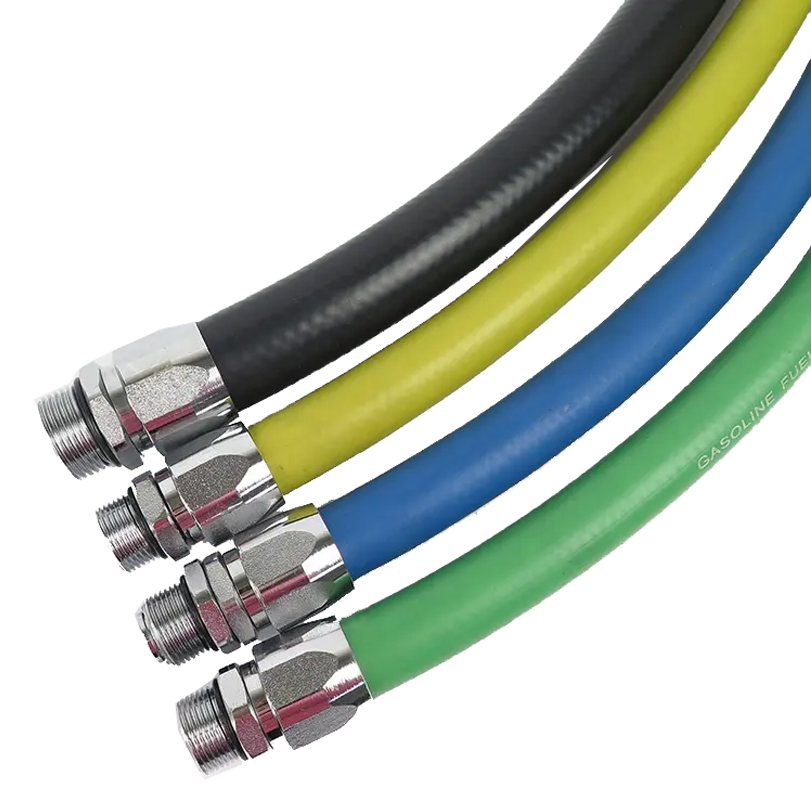
Hydraulic hose performance is fundamentally governed by its ability to withstand internal pressure without failure. Force analysis involves calculating hoop stress in the hose wall based on internal pressure and hose diameter, ensuring the reinforcement layers provide sufficient tensile strength. Burst pressure is a critical safety factor, typically specified as four times the working pressure. Environmental resistance is paramount; hoses must maintain flexibility and integrity across a wide temperature range (-40°C to +100°C is common, but specialized hoses exist for extreme temperatures). Chemical compatibility is also vital; the inner tube material must resist degradation from the hydraulic fluid in use. Hose bend radius is a critical engineering parameter, with exceeding the minimum bend radius causing kinking and restricting fluid flow, potentially leading to damage. Compliance requirements vary by region but generally adhere to standards like SAE J517 (hose specifications) and ISO 6899 (high-pressure hydraulic hoses). Fatigue resistance is assessed through cyclic pressure testing to simulate real-world operating conditions. Hose end fittings are equally important, requiring secure attachment to prevent leakage and ensuring compatibility with the hydraulic system. Proper fitting selection and installation (crimping) are essential for achieving rated performance.
Technical Specifications
| Working Pressure (PSI) | Burst Pressure (PSI) | Temperature Range (°C) | Inner Tube Material |
|---|---|---|---|
| 1000 | 4000 | -40 to +100 | Nitrile Rubber (NBR) |
| 2000 | 8000 | -40 to +120 | Nitrile Rubber (NBR) |
| 3000 | 12000 | -40 to +150 | Nitrile Rubber (NBR) |
| 1500 | 6000 | -40 to +100 | Ethylene Propylene Diene Monomer (EPDM) |
| 2500 | 10000 | -40 to +120 | Ethylene Propylene Diene Monomer (EPDM) |
| 4000 | 16000 | -40 to +150 | Ethylene Propylene Diene Monomer (EPDM) |
Failure Mode & Maintenance
Common failure modes in hydraulic hoses include fatigue cracking (caused by repeated bending and pressure cycles), abrasion (from external contact with surfaces), pinhole leaks (resulting from corrosion or manufacturing defects), and burst failures (due to exceeding pressure limits or material degradation). Failure analysis often reveals root causes related to improper installation (excessive bending, twisting), fluid contamination, incompatible fluids, or exceeding temperature specifications. Delamination of reinforcement layers can occur due to improper bonding during manufacturing or prolonged exposure to harsh conditions. Oxidation of the rubber material can lead to cracking and loss of flexibility. Maintenance practices are crucial for extending hose lifespan. Regular visual inspections should identify cracks, abrasions, or leaks. Hoses should be replaced if any signs of damage are detected. Fluid cleanliness is paramount; using filtration systems prevents abrasive particles from damaging the inner tube. Avoid sharp bends and twisting during installation and operation. Proper storage is also important; hoses should be stored in a cool, dry place away from direct sunlight and ozone sources. Crimping procedures must adhere to manufacturer’s specifications to ensure secure fitting attachment and prevent premature failure. Regular torque checks on fittings are recommended.
Industry FAQ
Q: What is the primary difference between a wire-braided and a spiral-wound hydraulic hose, and when should each be used?
A: Wire-braided hoses are constructed with multiple layers of wire braid, offering excellent pressure resistance in a more compact form. They are suitable for moderate to high-pressure applications with less demanding bend requirements. Spiral-wound hoses feature a single layer of high-tensile steel wire spirally wrapped around the inner tube. This construction provides superior flexibility and resistance to kinking, making them ideal for applications with tight bend radii and high-pressure demands, such as construction equipment and agricultural machinery.
Q: How does fluid temperature affect hydraulic hose performance and lifespan?
A: Elevated temperatures accelerate the degradation of rubber materials, reducing their flexibility and tensile strength. This can lead to cracking, hardening, and eventual failure. Conversely, low temperatures can reduce flexibility, increasing the risk of cracking during bending. Selecting a hose with a temperature rating appropriate for the operating conditions is crucial. Using specialized high-temperature or low-temperature hoses may be necessary in extreme environments.
Q: What are the consequences of using an incompatible hydraulic fluid with a specific hose type?
A: Incompatible fluids can cause the inner tube material to swell, soften, or degrade, leading to leaks and potential failure. For example, using petroleum-based fluids in a hose designed for water-glycol fluids can cause severe damage. Always verify fluid compatibility with the hose manufacturer's specifications before use.
Q: What is the importance of proper hose crimping, and what are the potential problems associated with incorrect crimping?
A: Proper hose crimping ensures a secure, leak-proof connection between the hose and the fitting. Incorrect crimping – either under-crimping or over-crimping – can lead to fitting slippage, leakage, or premature hose failure. Under-crimping creates a loose connection, while over-crimping can damage the hose reinforcement layers. Using calibrated crimping tools and following manufacturer’s specifications are essential.
Q: What are the typical methods for inspecting hydraulic hoses for potential failures?
A: Visual inspection is the primary method, looking for cracks, abrasions, bulges, kinks, leaks around fittings, and signs of material degradation. Feel for softness or hardening of the hose material. Check fittings for corrosion or damage. Consider using infrared thermography to detect heat build-up, which can indicate a blockage or internal damage. Regularly scheduled inspections and documentation are critical for proactive maintenance.
Conclusion
Flexible hydraulic hoses are indispensable components in countless industrial applications, demanding careful material selection, precise manufacturing control, and diligent maintenance to ensure reliable performance and safety. Understanding the interplay between material science, engineering principles, and industry standards is crucial for mitigating failure risks and maximizing hose lifespan. Selecting the appropriate hose type, compatible fluid, and proper fittings, coupled with regular inspections and proactive maintenance, are essential for minimizing downtime and optimizing system efficiency.
The future of hydraulic hose technology focuses on developing more durable, lightweight, and environmentally friendly materials, as well as incorporating smart sensing capabilities for real-time monitoring of hose condition. Advancements in hose construction, such as the use of composite reinforcement materials and self-sealing technologies, will further enhance performance and reliability. Continued adherence to evolving industry standards and best practices will remain paramount in ensuring the safe and efficient operation of hydraulic systems.