
Apr . 01, 2024 17:55 Back to list
flexible hydraulic hose Performance Analysis
Introduction
Flexible hydraulic hose serves as a critical component in fluid power systems, facilitating the transmission of hydraulic fluid to actuators and other components. Positioned within the hydraulic system between rigid piping and the point of application, it compensates for misalignment, vibration, and movement, mitigating stress on the overall system. Unlike rigid metal tubing, its flexibility allows for dynamic applications and eases installation in confined spaces. Core performance characteristics include pressure rating, temperature resistance, fluid compatibility, and resistance to abrasion and kinking. The global market demands hoses with enhanced performance characteristics, driven by increasing pressures in modern hydraulic systems and the need for extended service life in demanding operating environments. A primary industry pain point is premature hose failure due to improper specification, installation, or maintenance, leading to costly downtime and potential safety hazards.
Material Science & Manufacturing
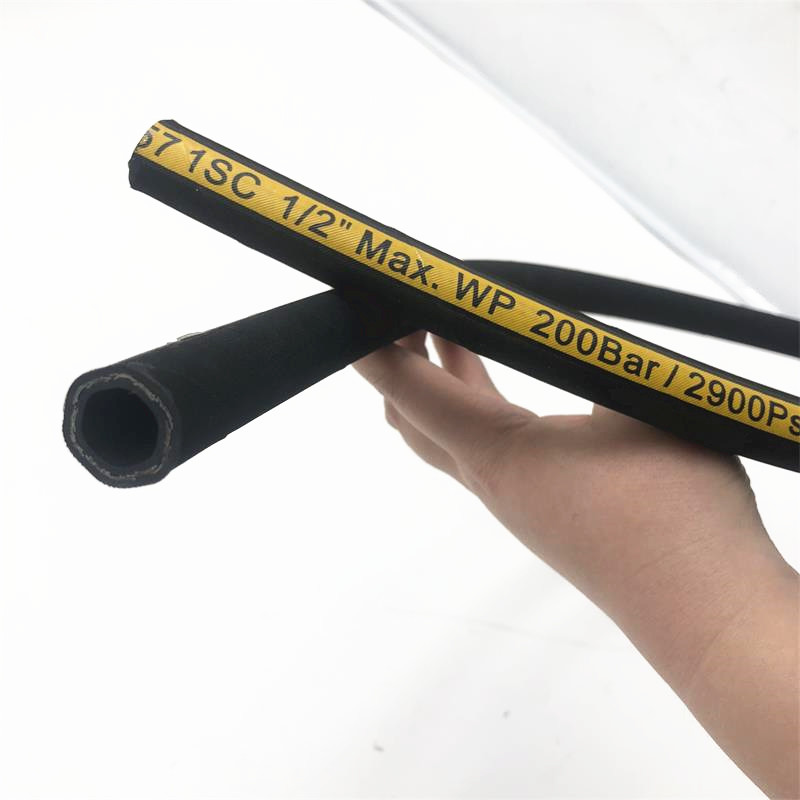
Flexible hydraulic hose construction typically involves several layers, each contributing to its overall performance. The inner tube, directly exposed to the hydraulic fluid, is commonly composed of synthetic rubbers like nitrile (NBR), ethylene propylene diene monomer (EPDM), or fluorocarbon (FKM, Viton®) selected based on fluid compatibility and temperature requirements. NBR offers good resistance to petroleum-based fluids, while EPDM excels in phosphate ester hydraulic fluids and high-temperature applications. FKM provides superior resistance to a broad range of aggressive fluids and high temperatures. Reinforcement layers provide the necessary strength to withstand high pressures. These layers commonly consist of multiple braids of high-tensile steel wire, often in a helical arrangement. The number and construction of these braids directly influence the hose’s pressure rating. An outer cover, typically constructed from synthetic rubber like chlorinated polyether (CPE) or polyurethane, provides abrasion, ozone, and weather resistance. Manufacturing processes vary depending on hose type. Braided hoses are manufactured by extruding the inner tube, applying reinforcement braids through a winding process, and then extruding the outer cover. Thermoplastic hoses are produced through co-extrusion, layering the inner tube, reinforcement (often textile or spiral wire), and outer cover simultaneously. Critical parameters during manufacturing include consistent rubber compound mixing, precise braid angle control, and uniform extrusion thickness to ensure structural integrity and prevent defects. Post-production testing includes burst pressure testing, impulse testing, and leak testing to verify performance and compliance with industry standards.
Performance & Engineering
The performance of a flexible hydraulic hose is dictated by several engineering principles. Pressure rating is determined by the tensile strength of the reinforcement layers and the burst strength of the inner tube. Hose pressure ratings are typically expressed in PSI or bar, with safety factors applied to account for surge pressures and dynamic loading. Fatigue resistance, or the ability to withstand repeated pressure cycles, is crucial in applications with pulsating flows. Impulse testing simulates these cycles to assess hose durability. Bend radius is a critical parameter, as exceeding the minimum bend radius can lead to kinking and reduced flow. The hose’s flexibility is engineered by optimizing the reinforcement layer construction and the materials used in the inner tube and cover. Environmental resistance is vital; exposure to extreme temperatures, UV radiation, ozone, and corrosive chemicals can degrade hose materials over time. Material selection and the inclusion of UV stabilizers and antioxidants are key to mitigating these effects. Hose assemblies must also comply with relevant safety regulations and standards, such as those set by SAE International (SAE J517, J518) and the European Standards Committee (EN 853, EN 857), which define performance requirements and testing procedures. Force analysis during installation and operation must account for axial tension, bending moments, and torsional stresses to prevent premature failure.
Technical Specifications
| Parameter | Standard SAE J517 - 100 R1 AT | Standard SAE J517 - 100 R2 AT | DIN EN 853 1SN |
|---|---|---|---|
| Maximum Working Pressure (PSI) | 1000 | 2000 | 200 |
| Reinforcement Type | Single High-Tensile Steel Wire Braid | Double High-Tensile Steel Wire Braid | Single Steel Wire Spiral |
| Inner Tube Material | NBR (Nitrile Rubber) | NBR (Nitrile Rubber) | NBR (Nitrile Rubber) |
| Outer Cover Material | CPE (Chlorinated Polyether) | CPE (Chlorinated Polyether) | CPE (Chlorinated Polyether) |
| Temperature Range (°F) | -40 to +212 | -40 to +212 | -40 to +212 |
| Minimum Bend Radius (inches) | 6 | 8 | 4 |
Failure Mode & Maintenance
Flexible hydraulic hose failures commonly arise from several mechanisms. Fatigue cracking, induced by repeated pressure cycling and flexing, is a prevalent failure mode, often initiated at braid crossover points or defects in the inner tube. Abrasion, caused by external contact with other components or abrasive materials, can compromise the outer cover, exposing the reinforcement layers to corrosion. Kinking, resulting from excessive bending or improper routing, restricts flow and can damage the inner tube. Chemical degradation occurs when the hose material is exposed to incompatible fluids, leading to swelling, softening, or cracking. Oxidation, accelerated by high temperatures and exposure to oxygen, can embrittle the rubber compounds. Internal erosion, caused by particulate contamination in the hydraulic fluid, can gradually wear away the inner tube. Proper maintenance is crucial to prevent these failures. Regular visual inspections should be conducted to identify signs of abrasion, cracking, or leaks. Hoses should be replaced if any damage is detected. Fluid cleanliness should be maintained through proper filtration. Hoses should be routed correctly to avoid kinking and excessive bending. The correct hose assembly should be selected based on pressure rating, temperature requirements, and fluid compatibility. Avoid twisting the hose during installation, as this can introduce internal stress. Periodic replacement of hoses based on a predetermined schedule, considering operating conditions and duty cycle, is a proactive maintenance strategy.
Industry FAQ
Q: What is the impact of surge pressure on hydraulic hose life?
A: Surge pressure, or sudden increases in hydraulic pressure, significantly reduces hose life. These pressure spikes exceed the hose's normal working pressure, creating dynamic stress that accelerates fatigue failure. Pressure snubbers and accumulators can mitigate surge pressure by absorbing energy and smoothing out pressure fluctuations. Selection of a hose with a higher pressure rating and a more robust reinforcement structure can also improve resilience to surge pressure.
Q: How does fluid compatibility affect hose selection?
A: Fluid compatibility is paramount. Using a hose incompatible with the hydraulic fluid can lead to swelling, softening, or degradation of the inner tube. This compromises the hose's structural integrity and can result in leaks or failure. The hose manufacturer's compatibility charts should be consulted to ensure the hose material (NBR, EPDM, FKM, etc.) is suitable for the specific hydraulic fluid used.
Q: What are the best practices for hose routing to prevent kinking?
A: Proper hose routing is critical. Maintain a bend radius at least four times the hose inner diameter. Avoid sharp bends and ensure the hose is not subjected to excessive tension or compression. Use hose guards or supports to prevent abrasion and protect the hose from external damage. Consider the movement of connected components and allow sufficient slack to accommodate dynamic motion.
Q: What is the difference between a braided hose and a spiral-cut hose?
A: Braided hoses utilize multiple layers of interwoven steel wire, providing flexibility and strength. Spiral-cut hoses feature a single wire wound in a spiral pattern, offering higher pressure ratings and greater flexibility, particularly in larger diameters. Spiral hoses are generally less resistant to torsional stress than braided hoses.
Q: How often should hydraulic hoses be inspected and replaced?
A: Inspection frequency depends on operating conditions and duty cycle. Routine visual inspections should be performed monthly, looking for signs of abrasion, cracking, leaks, or kinking. A more thorough inspection, including pressure testing, should be conducted annually. Hoses should be replaced proactively based on manufacturer recommendations or when any signs of damage are detected. Following a preventative maintenance schedule based on operating hours or cycles is recommended.
Conclusion
Flexible hydraulic hose remains a foundational component in modern fluid power systems. Selecting the appropriate hose for a given application necessitates a thorough understanding of material science, manufacturing processes, performance characteristics, and potential failure modes. The choice must balance pressure rating, temperature resistance, fluid compatibility, and environmental factors. Implementing a robust maintenance program, including regular inspections, fluid analysis, and proactive replacement, is crucial for maximizing hose life, minimizing downtime, and ensuring operational safety.
Future developments in hydraulic hose technology are focused on enhancing durability, reducing weight, and improving environmental sustainability. The use of advanced materials, such as thermoplastic composites, and innovative manufacturing techniques, like automated braiding, are poised to deliver higher-performance hoses with extended service lives. Furthermore, the integration of sensor technology into hose assemblies will enable real-time monitoring of hose condition and predictive maintenance, further optimizing system reliability and reducing operational costs.