
Apr . 01, 2024 17:55 Back to list
flexible hydraulic hose manufacturers Performance Analysis
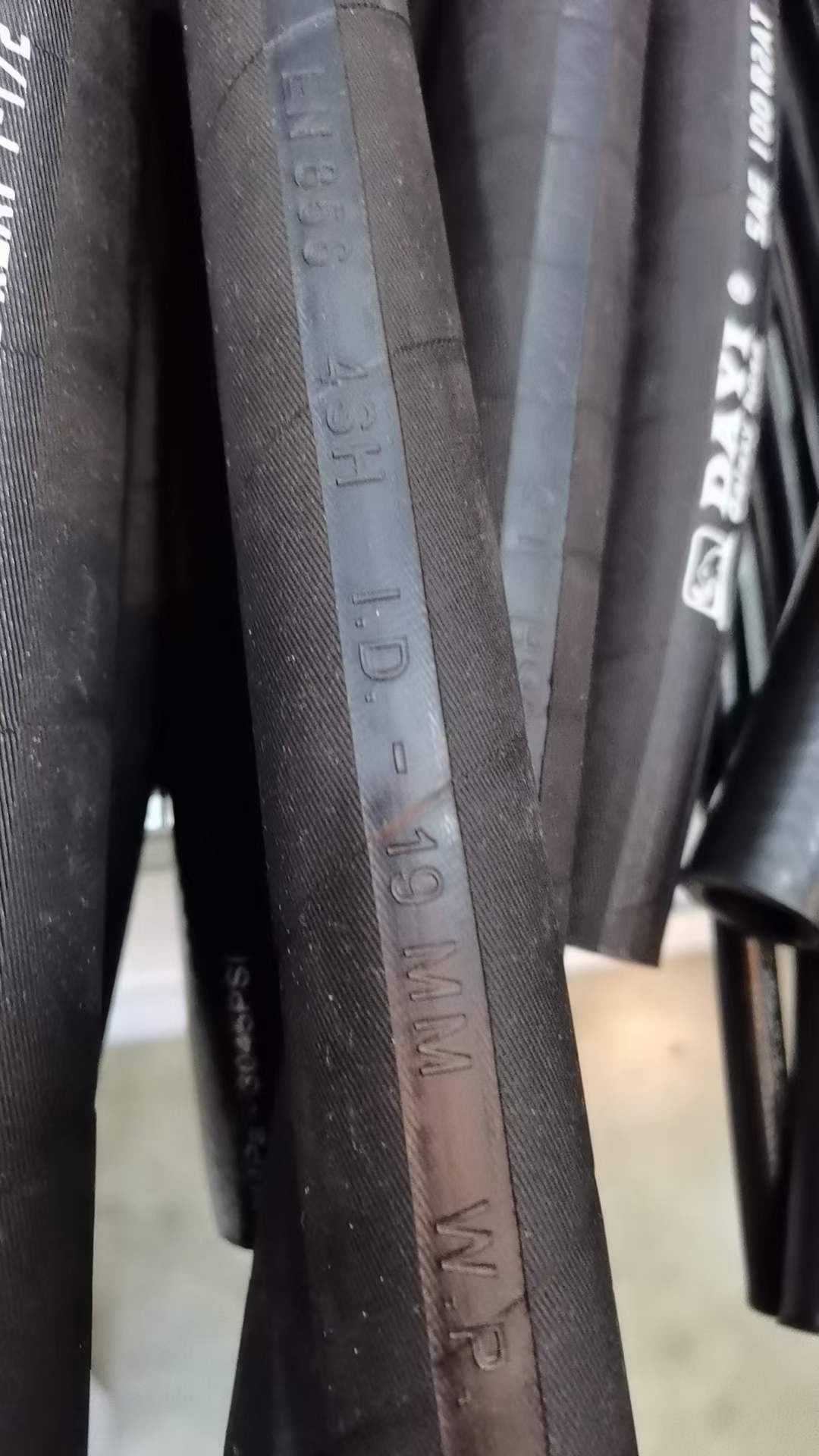
Introduction
Flexible hydraulic hoses are critical components in hydraulic systems, facilitating the transmission of fluid power while accommodating movement, vibration, and misalignment. They are indispensable across a wide spectrum of industries, including construction, agriculture, manufacturing, mining, and material handling. Unlike rigid piping, flexible hoses offer adaptability and ease of installation, reducing system complexity and maintenance downtime. This guide provides a detailed technical overview of flexible hydraulic hose manufacturing, material science, performance characteristics, failure modes, and relevant industry standards. A core pain point within the industry lies in consistently achieving reliable long-term performance in demanding applications, specifically addressing issues related to hose burst pressure, impulse pressure resistance, and compatibility with increasingly complex hydraulic fluids. Further challenges include maintaining dimensional stability under fluctuating temperatures and preventing premature failure due to abrasion or environmental degradation. Effective hose selection and maintenance are paramount for ensuring system safety and operational efficiency.
Material Science & Manufacturing
The construction of a flexible hydraulic hose typically involves four primary layers: the inner tube, reinforcement layers, and the outer cover. The inner tube, which directly contacts the hydraulic fluid, is commonly composed of synthetic rubbers such as nitrile (NBR), chloroprene (CR), ethylene propylene diene monomer (EPDM), or fluorocarbon (FKM – Viton). NBR provides good resistance to petroleum-based fluids but has limited temperature range. CR offers improved ozone and weather resistance. EPDM excels in high-temperature applications and compatibility with phosphate ester fluids. FKM exhibits superior chemical resistance and temperature stability, but at a higher cost. The reinforcement layer(s) provide the necessary pressure containment and burst strength. These layers are typically constructed from multiple plies of high-tensile steel wire, spiral-wound steel wire, or synthetic fiber braids (e.g., aramid or polyester). Steel wire offers superior strength but lacks flexibility. Synthetic fiber braids provide increased flexibility and resistance to corrosion but have lower pressure ratings. The outer cover, providing abrasion and weather resistance, is generally made from CR, polyurethane, or a blend of materials. Manufacturing processes vary depending on hose type and complexity. Spiral hose construction involves continuously winding pre-tensioned wire around a mandrel, followed by vulcanization. Braided hose construction involves interlacing yarns or wires over a mandrel, then applying the inner tube and outer cover, followed by vulcanization. Key parameter controls during manufacturing include maintaining precise rubber compound formulations, ensuring consistent wire tension during winding/braiding, and accurately controlling vulcanization time and temperature. Proper adhesion between layers is critical for preventing delamination and ensuring hose integrity. Pre-stretching of reinforcement layers is employed to mitigate shrinkage and maintain dimensional stability.
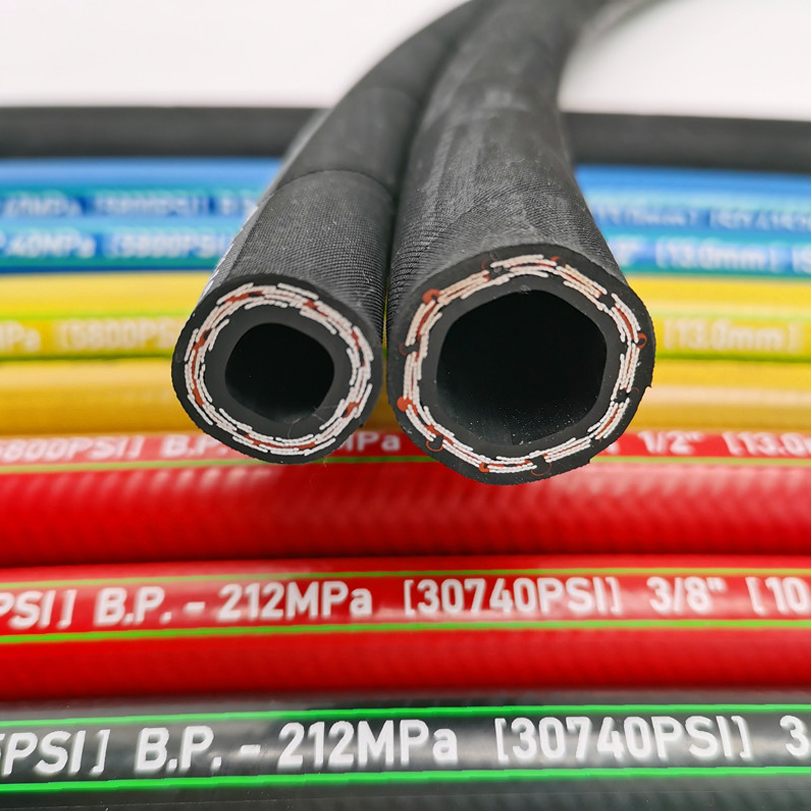
Performance & Engineering
Hydraulic hose performance is dictated by several critical engineering parameters. Burst pressure, defined as the pressure at which the hose fails catastrophically, is a fundamental specification. Working pressure is significantly lower, typically a fraction of the burst pressure (often 1/4 or 1/3), and represents the maximum allowable continuous operating pressure. Impulse pressure resistance, vital in applications with pressure pulsations, is determined by fatigue testing. Hose flex impulse life is quantified by the number of cycles to failure under a specified pressure waveform. Environmental resistance encompasses several factors, including temperature range, ozone exposure, UV radiation, and fluid compatibility. The hose must maintain its physical properties and performance characteristics across its specified operating temperature range. Fluid compatibility is crucial to prevent swelling, softening, or degradation of the inner tube material. Force analysis involves determining the bending radius, axial misalignment, and torsional stress experienced by the hose during operation. Exceeding the minimum bend radius can cause kinking and flow restriction. Axial misalignment and torsion introduce stresses that can accelerate fatigue failure. Compliance requirements vary by region and application. For example, SAE J517 specifies performance standards for hydraulic hoses in North America, while EN 856 defines standards in Europe. Finite element analysis (FEA) is frequently employed to optimize hose design and predict stress distributions under various loading conditions. Proper end fitting attachment is critical to prevent blow-off or leakage.
Technical Specifications
| Parameter | Unit | SAE 100R2AT | SAE 100R6AT |
|---|---|---|---|
| Working Pressure | MPa | 20.7 | 21.0 |
| Burst Pressure | MPa | 82.7 | 84.0 |
| Temperature Range | °C | -40 to +100 | -40 to +100 |
| Inner Tube | Material | NBR | Synthetic Rubber |
| Reinforcement | Type | Two Steel Wire Braids | Four Steel Wire Braids |
| Cover | Material | Synthetic Rubber | Synthetic Rubber |
Failure Mode & Maintenance
Flexible hydraulic hoses are susceptible to several failure modes. Fatigue cracking, induced by repeated pressure pulsations and flexing, is a common cause of failure. Delamination, the separation of layers within the hose construction, weakens the hose and can lead to catastrophic rupture. Abrasion, caused by contact with surrounding surfaces, degrades the outer cover and exposes the reinforcement layers to corrosion. Oxidation, resulting from exposure to air and heat, causes rubber compounds to harden and lose flexibility. Chemical degradation, stemming from incompatibility with the hydraulic fluid or external contaminants, weakens the inner tube. Improper installation, such as excessive bending or incorrect end fitting attachment, significantly reduces hose life. Maintenance procedures include regular visual inspections for signs of wear, cracking, or swelling. Hose pressure testing should be performed periodically to verify its integrity. Fluid analysis can identify contaminants that may be causing degradation. Proper routing and support are essential to prevent abrasion and excessive bending. Damaged hoses should be replaced immediately. When replacing hoses, ensure compatibility with the hydraulic fluid and operating conditions. Avoid using abrasive cleaning agents, as these can damage the outer cover. Storage conditions also matter; hoses should be stored in a cool, dry, and dark environment to prevent premature aging.
Industry FAQ
Q: What is the difference between a braided hose and a spiral hose, and when should each be used?
A: Braided hoses utilize multiple layers of wire braid for reinforcement, offering excellent pressure resistance and flexibility. Spiral hoses employ a continuously wound wire around a mandrel, resulting in higher pressure ratings but generally less flexibility than braided hoses. Braided hoses are suitable for applications with moderate pressure and frequent flexing, while spiral hoses are preferred for high-pressure, high-temperature, or impulse applications where flexibility is less critical.
Q: How does temperature affect the performance of a hydraulic hose?
A: Temperature variations significantly impact hose performance. High temperatures can cause rubber compounds to soften and lose strength, reducing burst pressure and increasing susceptibility to permeation. Low temperatures can cause rubber to harden and become brittle, increasing the risk of cracking. Exceeding the specified temperature range can lead to premature failure.
Q: What is the impact of fluid compatibility on hose selection?
A: Using an incompatible fluid can cause the inner tube to swell, soften, or degrade, leading to leaks and hose failure. It’s crucial to select a hose with an inner tube material that is specifically compatible with the hydraulic fluid being used. For example, phosphate ester fluids require EPDM inner tubes, while petroleum-based fluids are generally compatible with NBR.
Q: What are the common causes of hose blow-off, and how can it be prevented?
A: Hose blow-off typically occurs due to exceeding the working pressure, improper end fitting attachment, or damage to the hose or fittings. Prevention strategies include ensuring the hose is rated for the system pressure, using properly crimped and matched end fittings, regularly inspecting for damage, and following proper installation procedures.
Q: What is the recommended service life for a hydraulic hose?
A: The service life of a hydraulic hose varies depending on operating conditions, fluid compatibility, and maintenance practices. A general guideline is to replace hoses every 5-7 years, regardless of visual condition. However, more frequent inspection and replacement may be necessary in harsh environments or critical applications. Keeping detailed records of hose installation dates can facilitate proactive replacement schedules.
Conclusion
The selection and maintenance of flexible hydraulic hoses are critical for ensuring the reliable and safe operation of hydraulic systems. Understanding the material science, manufacturing processes, and performance characteristics of these components is paramount for engineers and procurement professionals. Addressing the core pain points of burst pressure, impulse resistance, and fluid compatibility requires careful consideration of application-specific requirements and adherence to industry standards.
Continued advancements in rubber compound technology, reinforcement materials, and manufacturing techniques are driving improvements in hose performance and durability. Proactive maintenance programs, incorporating regular inspections, fluid analysis, and timely replacement, are essential for maximizing hose life and preventing catastrophic failures. Future trends are likely to focus on developing hoses with enhanced chemical resistance, increased temperature stability, and improved resistance to abrasion and environmental degradation.