
Apr . 01, 2024 17:55 Back to list
flexible high pressure rubber hydraulic hose supplier Performance Analysis

Introduction
Flexible high pressure rubber hydraulic hose serves as a critical fluid conveyance component across diverse industrial sectors, including construction, agriculture, manufacturing, and oil & gas. Its primary function is to transmit hydraulic power, typically in the form of pressurized oil or water, to operate hydraulic machinery. Distinguished by its flexibility, enabling routing in confined spaces, and its ability to withstand substantial pressures, this hose occupies a vital position in power transmission systems. Core performance characteristics include burst pressure, working pressure, temperature range, and fluid compatibility. The selection of appropriate hose construction – considering reinforcement materials, tube composition, and cover properties – is paramount for ensuring system reliability and preventing catastrophic failure. This guide details the materials, manufacturing processes, performance parameters, potential failure modes, and relevant industry standards associated with these essential components.
Material Science & Manufacturing
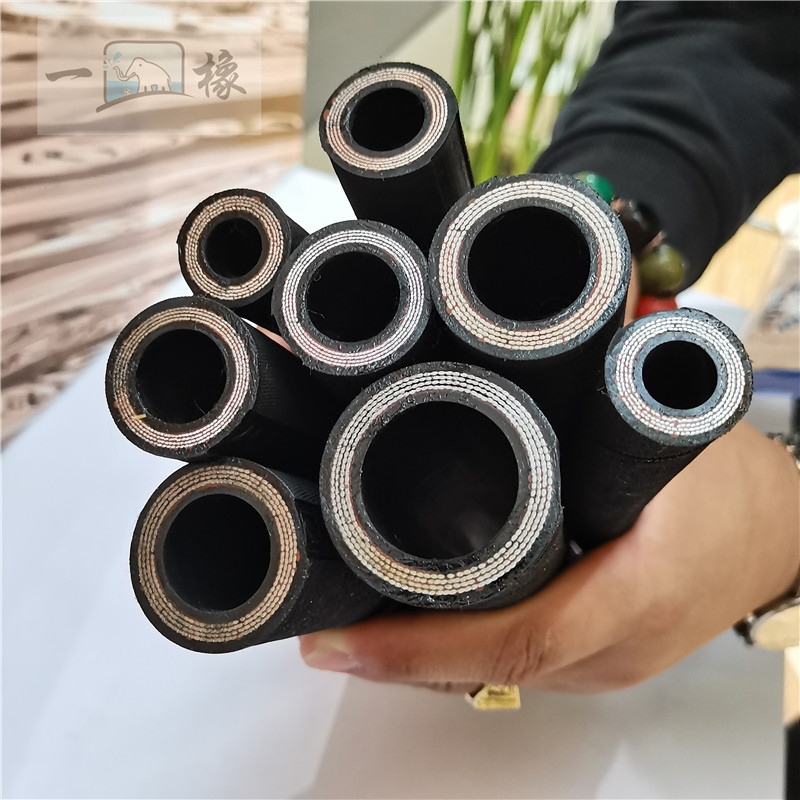
The construction of a flexible high pressure rubber hydraulic hose typically involves four primary layers: the inner tube, reinforcement layers, and the outer cover. The inner tube, which comes into direct contact with the fluid, is commonly composed of synthetic rubbers such as nitrile (NBR), ethylene propylene diene monomer (EPDM), or fluorocarbon (FKM) depending on the fluid being conveyed and the operating temperature. NBR offers excellent resistance to petroleum-based fluids, while EPDM provides superior resistance to heat and weathering. FKM is selected for aggressive chemicals and extremely high temperatures. Reinforcement is crucial for pressure containment and typically utilizes multiple layers of high-tensile strength braided fibers. Common materials include steel wire (single or multi-spiral), aramid fiber (Kevlar), and polyester fiber. Steel wire provides the highest pressure capacity but reduces flexibility; aramid offers a balance of strength and flexibility, while polyester is cost-effective for lower-pressure applications. The outer cover, providing environmental protection and abrasion resistance, often utilizes synthetic rubbers like chloroprene (CR) or polyurethane (PU).
Manufacturing processes involve several key steps. The inner tube is extruded through a die to achieve the desired inner diameter and wall thickness. Reinforcement layers are then applied through braiding or spiraling machines, carefully controlling the pick count and tension to achieve specified strength characteristics. Multiple reinforcement layers are common. Following reinforcement, the hose assembly is cured using vulcanization, a process involving heat and pressure to crosslink the rubber polymers, enhancing its strength, elasticity, and chemical resistance. Post-curing, hoses are subjected to rigorous quality control testing, including hydrostatic testing to verify burst pressure and impulse testing to assess fatigue life. Parameter control during extrusion (temperature, speed, die geometry) and braiding (tension, pick count) is vital. Vulcanization time and temperature are precisely regulated to ensure optimal rubber properties. Improper curing leads to reduced strength, decreased flexibility, and potential premature failure.
Performance & Engineering
The performance of a flexible high pressure rubber hydraulic hose is governed by several critical engineering parameters. Burst pressure, defined as the pressure at which the hose fails catastrophically, is a primary safety metric. Working pressure, typically specified as a fraction of the burst pressure (e.g., 50% safety factor), represents the maximum continuous operating pressure. Impulse pressure, denoting the hose's ability to withstand pressure fluctuations, is particularly important in applications with pulsating flows, such as hydraulic hammers. Temperature range dictates the hose's operational limits; exceeding these limits can lead to degradation of the rubber materials and reduced performance. Fluid compatibility is essential, as certain fluids can cause swelling, cracking, or leaching of the rubber, compromising the hose’s integrity.
Force analysis, particularly considering internal pressure and bending stresses, informs hose design. The thin-walled pressure vessel theory is applicable, where hoop stress (tangential stress) and longitudinal stress are calculated based on pressure and hose dimensions. Bending stresses are exacerbated at tight bend radii, necessitating appropriate bend radius limitations to prevent kinking and fatigue cracking. Environmental resistance is also a key consideration. Exposure to UV radiation, ozone, and extreme temperatures can degrade the outer cover, reducing its protective capabilities. Compliance requirements, such as those mandated by SAE (Society of Automotive Engineers) standards and EN (European Norm) standards, dictate minimum performance criteria for hydraulic hoses used in specific applications.
Technical Specifications
| Parameter | Unit | Typical Value (NBR Inner Tube, Steel Wire Reinforcement, CR Cover) | Typical Value (EPDM Inner Tube, Aramid Reinforcement, PU Cover) |
|---|---|---|---|
| Working Pressure | MPa | 20 | 15 |
| Burst Pressure | MPa | 80 | 60 |
| Inner Diameter | mm | 19 | 12 |
| Outer Diameter | mm | 28 | 20 |
| Temperature Range | °C | -40 to +100 | -50 to +120 |
| Minimum Bend Radius | mm | 200 | 150 |
Failure Mode & Maintenance
Flexible high pressure rubber hydraulic hoses are susceptible to several failure modes. Fatigue cracking, arising from repeated flexing and pressure cycling, is a common issue, particularly at the hose ends near the fittings. Delamination, the separation of reinforcement layers, can occur due to insufficient adhesion or exposure to aggressive fluids. Rubber degradation, caused by heat, ozone, UV radiation, or chemical attack, leads to loss of elasticity and cracking. Abrasion, resulting from external contact with abrasive surfaces, weakens the outer cover. Kinking, caused by exceeding the minimum bend radius, restricts flow and creates localized stress concentrations. Fitting failure, including corrosion or loosening, can also lead to leaks and system malfunctions.
Preventive maintenance is crucial for maximizing hose lifespan. Regular visual inspections should be conducted to identify signs of cracking, abrasion, or swelling. Hose connections should be checked for leaks and tightness. Proper hose routing, avoiding sharp bends and contact with hot surfaces, is essential. Fluid cleanliness is critical; contaminants can accelerate hose degradation. Hose replacement should be performed at recommended intervals, or when signs of damage are detected. When replacing hoses, ensure compatibility with the hydraulic fluid and operating conditions. Proper installation procedures, including correct fitting torque, should be followed to prevent premature failure. Store hoses in a cool, dry, and dark environment, away from ozone sources and direct sunlight.
Industry FAQ
Q: What is the impact of impulse pressure on hose selection?
A: Impulse pressure, or pressure pulsations, creates cyclic stresses in the hose wall. High impulse pressures necessitate hoses with reinforced construction – typically multi-spiral steel wire – and materials with high fatigue resistance. Ignoring impulse pressure can lead to premature fatigue cracking and failure, even if the working pressure is within the hose's rating.
Q: How does fluid compatibility affect hose lifespan?
A: Incompatible fluids can cause swelling, softening, or cracking of the inner tube, leading to leaks and reduced pressure capacity. Choosing a hose with an inner tube material specifically designed for the intended fluid is paramount. For example, using a nitrile hose with phosphate ester fluids will result in rapid degradation.
Q: What is the significance of the safety factor in hydraulic hose applications?
A: The safety factor, typically 4:1 or 5:1, is the ratio of burst pressure to working pressure. It accounts for uncertainties in operating conditions, fluid temperature, and hose manufacturing tolerances. A higher safety factor provides a greater margin of safety and reduces the risk of catastrophic failure.
Q: What are the common causes of hose kinking and how can it be prevented?
A: Kinking occurs when the hose is bent beyond its minimum bend radius, collapsing the inner tube and restricting flow. Proper hose routing, ensuring adequate bend radii, and avoiding tight spaces are crucial for prevention. Using hoses with tighter bend radii specifications for confined spaces is also recommended.
Q: How important is proper fitting installation and maintenance?
A: Incorrect fitting installation (over-tightening or under-tightening) can lead to leaks or damage to the hose end. Regular inspection of fittings for corrosion and proper torque are critical. Using compatible fittings and following manufacturer's recommendations are essential for ensuring a secure and reliable connection.
Conclusion
The selection, installation, and maintenance of flexible high pressure rubber hydraulic hoses demand a comprehensive understanding of material science, manufacturing processes, and engineering principles. Failure to account for critical parameters such as burst pressure, working pressure, temperature range, fluid compatibility, and impulse pressure can result in premature failure, system downtime, and potential safety hazards. Prioritizing proper hose selection based on application-specific requirements and adhering to recommended maintenance practices are essential for maximizing hose lifespan and ensuring the reliable operation of hydraulic systems.
As hydraulic systems become more sophisticated and operate in increasingly demanding environments, advancements in hose technology, such as the development of composite reinforcement materials and specialized rubber compounds, will continue to drive improvements in performance and durability. Ongoing adherence to industry standards and best practices remains paramount for maintaining safety and reliability in hydraulic fluid conveyance.