
Apr . 01, 2024 17:55 Back to list
flexible high pressure rubber hydraulic hose factories Performance Analysis

Introduction
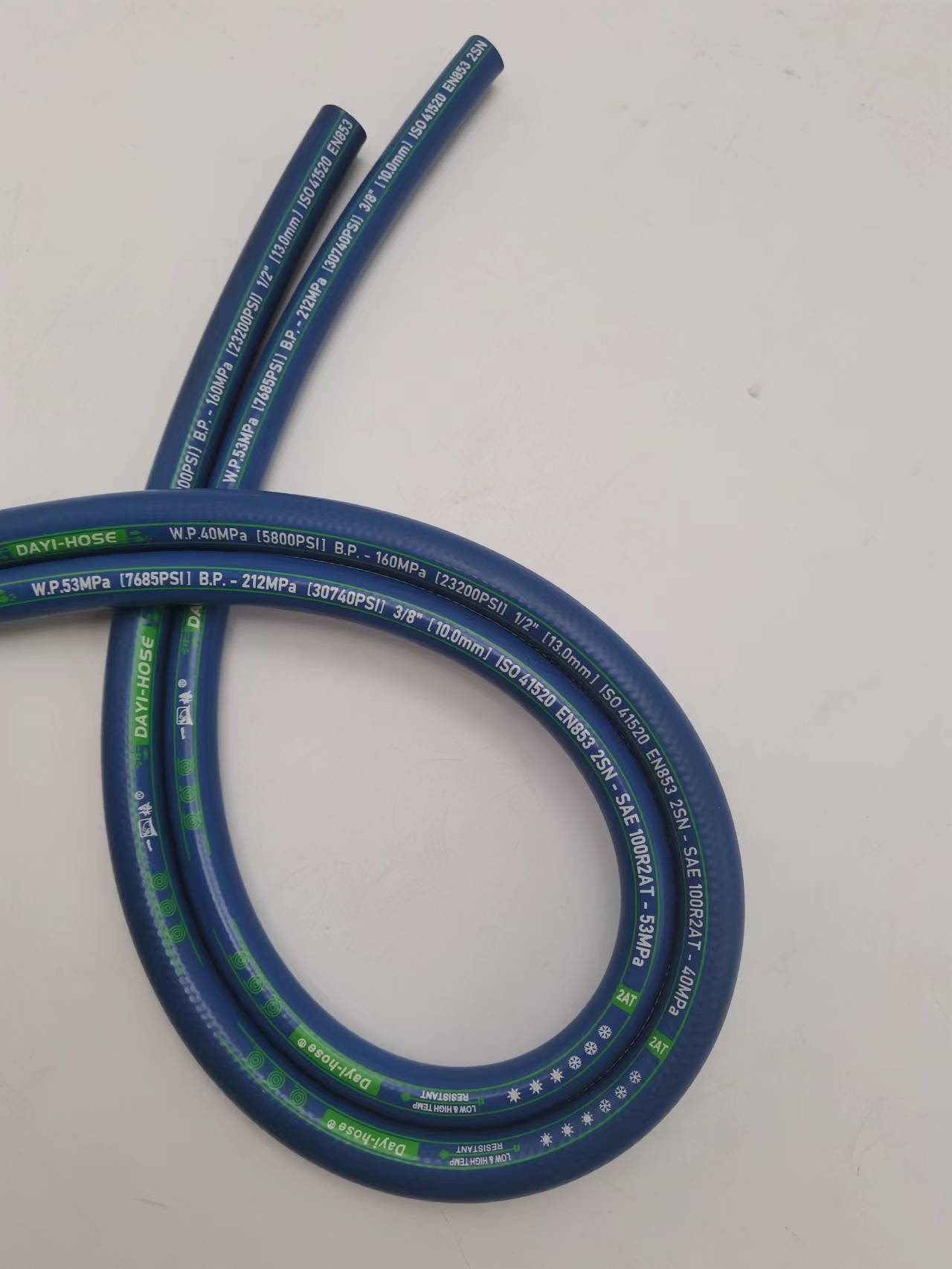
Flexible high-pressure rubber hydraulic hoses are critical components in fluid power systems, transmitting hydraulic fluid to actuators and other components. Their function is to deliver pressurized fluid safely and efficiently while withstanding extreme operating conditions. Within the industrial chain, these hoses represent a specialized segment of the broader rubber products manufacturing sector, bridging the gap between raw material suppliers (rubber, steel wire, adhesives) and end-users in industries such as construction, agriculture, mining, and manufacturing. Core performance characteristics include burst pressure, working pressure, temperature resistance, fluid compatibility, and resistance to abrasion and fatigue. The growing demand for more efficient and reliable hydraulic systems, particularly in mobile machinery, drives ongoing innovation in hose design and materials. A key industry pain point revolves around maintaining consistent quality, ensuring accurate pressure ratings, and mitigating premature failure due to improper installation or fluid contamination.
Material Science & Manufacturing
The construction of a flexible high-pressure rubber hydraulic hose typically involves four key layers: the inner tube, reinforcement layers, outer cover, and coupling. The inner tube is commonly made from a synthetic rubber compound, such as nitrile (NBR), ethylene propylene diene monomer (EPDM), or chloroprene (CR), selected for its compatibility with the hydraulic fluid being conveyed and its resistance to degradation. NBR offers excellent resistance to petroleum-based fluids, while EPDM excels in applications involving phosphate ester fluids and high-temperature environments. CR provides good resistance to ozone, weathering, and abrasion. Reinforcement layers typically consist of multiple plies of high-tensile steel wire, spirally or braided, to provide the necessary strength to withstand high pressures. The wire is often surface-treated to enhance adhesion to the rubber layers. The outer cover is usually made of a synthetic rubber compound, such as polyurethane or a blend of rubbers, offering abrasion resistance, oil resistance, and protection against environmental factors. Manufacturing processes include extrusion for the inner tube and outer cover, calendaring for rubber sheets used in reinforcement, and braiding/spiraling for the steel wire layers. Critical parameters during extrusion include temperature control to ensure consistent rubber viscosity and dimensional accuracy. Precise control of wire tension during braiding is vital for maintaining consistent pressure ratings. Adhesion between layers is often promoted through the use of adhesives and surface treatments. Post-manufacturing testing includes pressure testing, impulse testing, and dimensional inspections.
Performance & Engineering
The performance of a hydraulic hose is governed by several engineering principles. Force analysis focuses on hoop stress within the hose wall, calculated using the Barlow's formula (P = 2S t/D, where P is pressure, S is tensile strength, t is wall thickness, and D is diameter). This formula highlights the importance of maintaining adequate wall thickness and utilizing materials with high tensile strength to prevent bursting. Environmental resistance is crucial, and hoses must withstand exposure to temperature extremes, UV radiation, ozone, and corrosive fluids. The temperature range dictates the selection of rubber compounds and the need for specialized additives. Compliance requirements vary by region and application. For example, SAE J517 specifies performance requirements for hydraulic hoses used in mobile machinery in North America. Fatigue resistance is assessed through impulse testing, simulating the pulsating pressures experienced in real-world applications. Proper hose assembly, including the correct crimping of fittings, is critical to ensuring long-term reliability. Improper crimping can lead to fitting blow-off or premature hose failure. The bend radius is also a critical parameter; exceeding the minimum bend radius can induce stress concentrations and lead to fatigue cracking. Hydraulic fluid compatibility is paramount, as incompatible fluids can cause swelling, softening, or degradation of the rubber materials, compromising hose integrity.
Technical Specifications
| Parameter | Unit | Typical Value (SAE 100R2AT) | Typical Value (SAE 100R1AT) |
|---|---|---|---|
| Working Pressure | MPa | 20.7 | 17.2 |
| Burst Pressure | MPa | 82.7 | 69.0 |
| Temperature Range | °C | -40 to +100 | -40 to +70 |
| Inner Tube | Material | Synthetic Rubber (NBR) | Synthetic Rubber (NBR) |
| Reinforcement | Material | Multiple Steel Wire Braids | Single Steel Wire Braid |
| Outer Cover | Material | Synthetic Rubber (Polyurethane) | Synthetic Rubber (CRM) |
Failure Mode & Maintenance
Common failure modes in high-pressure rubber hydraulic hoses include burst failures due to exceeding pressure limits, fatigue cracking caused by repeated pressure cycling and vibration, abrasion damage from external contact, and degradation of the rubber material due to exposure to incompatible fluids, ozone, or UV radiation. Pinholes can develop in the inner tube due to corrosion or material defects. Fitting blow-off is often a result of improper crimping or corrosion at the fitting interface. Delamination of the rubber layers can occur due to inadequate adhesion or thermal cycling. Failure analysis often involves visual inspection, microscopic examination of fracture surfaces, and chemical analysis of the rubber materials. Preventative maintenance is crucial for extending hose life. This includes regular visual inspections for signs of damage (cracks, abrasions, leaks), proper routing and support to prevent kinking and abrasion, and ensuring compatibility of the hydraulic fluid with the hose materials. Hoses should be replaced at recommended intervals or if any signs of damage are detected. Proper storage of hoses in a cool, dry, and dark environment can also prevent degradation. Avoid sharp bends and excessive tension during installation. Regular fluid analysis can identify contamination that could accelerate hose degradation.
Industry FAQ
Q: What is the impact of hydraulic fluid type on hose selection?
A: Hydraulic fluid compatibility is paramount. Using an incompatible fluid can cause the rubber components to swell, soften, or degrade, leading to premature failure. For example, petroleum-based fluids are generally compatible with NBR, while phosphate ester fluids require EPDM. Always consult the hose manufacturer's compatibility chart to ensure the selected hose is suitable for the intended fluid.
Q: How does temperature affect hose performance and lifespan?
A: Temperature extremes can significantly impact hose performance. High temperatures can accelerate rubber degradation, reduce pressure ratings, and increase the risk of thermal expansion. Low temperatures can reduce flexibility and increase the risk of cracking. The operating temperature range specified by the manufacturer must be adhered to.
Q: What is the importance of proper hose crimping?
A: Proper crimping ensures a secure and leak-proof connection between the hose and the fitting. Incorrect crimping can lead to fitting blow-off, resulting in a dangerous release of pressurized fluid. Crimping should be performed using calibrated equipment and following the manufacturer's specifications.
Q: How can I prevent abrasion damage to hydraulic hoses?
A: Abrasion damage can be prevented by ensuring proper hose routing, providing adequate support to prevent contact with abrasive surfaces, and using abrasion-resistant outer cover materials. Hose guards and sleeves can be used to provide additional protection in high-wear areas.
Q: What is the role of impulse testing in hose evaluation?
A: Impulse testing simulates the pulsating pressures experienced in many hydraulic systems. It assesses the hose's resistance to fatigue failure caused by repeated pressure cycles. A hose that passes impulse testing is more likely to withstand the stresses of real-world operation.
Conclusion
Flexible high-pressure rubber hydraulic hoses are engineered critical components requiring careful material selection, precise manufacturing control, and diligent maintenance. Understanding the interplay between material properties, pressure ratings, temperature limitations, and fluid compatibility is essential for ensuring reliable performance and preventing catastrophic failures. The industry trend towards higher operating pressures and more demanding applications necessitates ongoing innovation in hose design and materials, with a focus on enhanced durability, extended lifespan, and improved safety.
Ultimately, the longevity and performance of these hoses are inextricably linked to adherence to established industry standards and best practices. Proper installation, regular inspection, and timely replacement are vital for maximizing uptime and minimizing the risk of costly downtime and potential hazards. Continued research and development in advanced rubber compounds and manufacturing processes will be crucial in meeting the evolving needs of the hydraulic power industry.