
Apr . 01, 2024 17:55 Back to list
flexible high pressure hydraulic hose suppliers Performance Analysis
Introduction
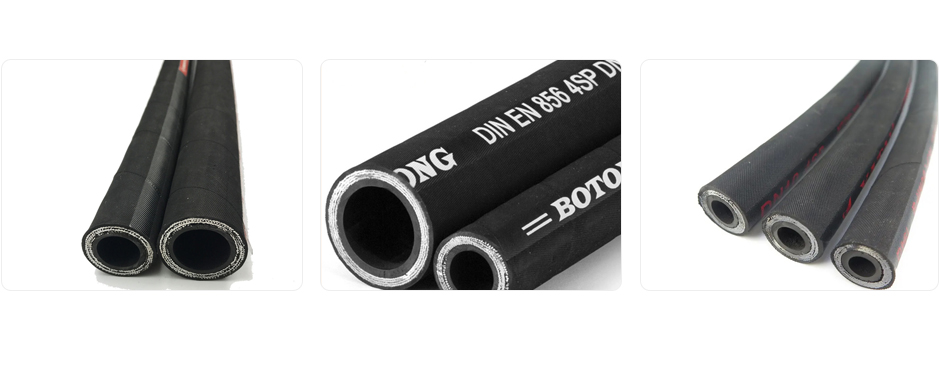
Flexible high-pressure hydraulic hose serves as a critical component in fluid power systems across diverse industries, including construction, agriculture, mining, and manufacturing. These hoses transmit pressurized hydraulic fluid to actuators and other components, enabling the operation of heavy machinery and equipment. Their technical position lies within the power transmission chain, directly impacting system efficiency, reliability, and safety. Core performance characteristics are defined by working pressure, burst pressure, temperature range, fluid compatibility, and bend radius. Current industry challenges revolve around extending service life in demanding applications, minimizing weight, and complying with increasingly stringent environmental and safety regulations. The selection of the appropriate hose construction – encompassing inner tube, reinforcement layers, and outer cover – is paramount to achieving optimal performance and preventing premature failure. This guide provides an in-depth technical overview of these hoses, encompassing material science, manufacturing processes, performance parameters, failure modes, and industry standards.
Material Science & Manufacturing
The construction of flexible high-pressure hydraulic hose relies on a carefully selected combination of materials. The inner tube, responsible for fluid containment, is typically composed of synthetic rubbers such as nitrile (NBR), ethylene propylene diene monomer (EPDM), or fluorocarbon (FKM/Viton), chosen for their compatibility with the hydraulic fluid and resistance to degradation. NBR is common for petroleum-based fluids, EPDM excels with phosphate ester fluids, and FKM offers superior resistance to aggressive chemicals and high temperatures. Reinforcement layers provide the hose's strength and pressure-holding capability. These layers traditionally consist of multiple plies of high-tensile steel wire, often spirally wound. Synthetic textile braiding (e.g., polyester, aramid) can also be employed, offering increased flexibility but generally lower pressure ratings. The outer cover protects the reinforcement from corrosion, abrasion, and environmental factors. Materials commonly used for the cover include chloroprene (CR), polyurethane (PU), and specialized rubber compounds resistant to ozone, UV radiation, and oil.
Manufacturing processes vary depending on hose type and performance requirements. The inner tube is typically extruded through a die to achieve the desired bore size and wall thickness. Reinforcement layers are then applied using winding or braiding machines, with precise tension control crucial for uniform pressure distribution. The outer cover is extruded over the reinforcement, followed by curing (vulcanization) to crosslink the rubber compounds and enhance their mechanical properties. Critical parameters during manufacturing include extrusion temperature, curing time and temperature, wire tension, and dimensional accuracy. Non-destructive testing (NDT) methods, such as ultrasonic testing and eddy current testing, are employed to detect defects in the reinforcement layers and ensure structural integrity. Post-production procedures include pressure testing to verify burst pressure and leak testing to confirm fluid containment.
Performance & Engineering
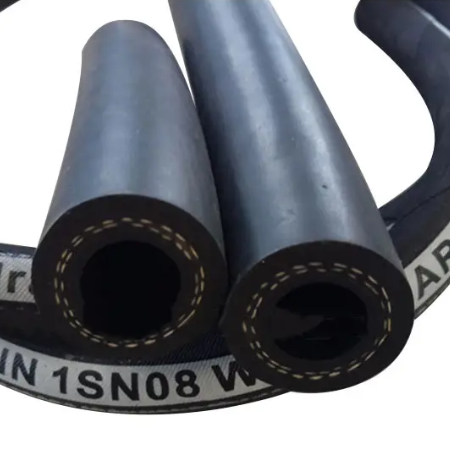
The performance of flexible high-pressure hydraulic hose is governed by fundamental principles of fluid mechanics and material science. Hose selection requires a thorough understanding of the system's operating pressure, flow rate, fluid type, and temperature range. Working pressure, typically expressed in psi or bar, represents the maximum sustained pressure the hose can safely handle during continuous operation. Burst pressure, significantly higher than working pressure, indicates the pressure at which the hose is expected to fail catastrophically. A common safety factor of 4:1 is often applied, meaning burst pressure is four times the working pressure.
Bend radius is a critical parameter influencing hose life. Excessive bending or kinking can cause localized stress concentrations, leading to fatigue failure. Manufacturers specify minimum bend radii to prevent this damage. Environmental resistance is also paramount. Exposure to extreme temperatures, ozone, UV radiation, and corrosive fluids can degrade the hose materials, reducing their performance and lifespan. Compliance requirements, such as those stipulated by SAE International (SAE J517, SAE J518) and EN standards, dictate the minimum performance criteria and testing procedures for hydraulic hoses. Force analysis considerations include axial tension, hoop stress, and shear stress within the hose structure under pressure. Finite element analysis (FEA) is frequently employed to optimize hose designs and predict stress distributions.
Technical Specifications
| Parameter | Unit | Typical Value (Hydraulic Hose – General Purpose) | Typical Value (Hydraulic Hose – High Pressure) |
|---|---|---|---|
| Working Pressure | psi | 2000 | 5000 |
| Burst Pressure | psi | 8000 | 20000 |
| Temperature Range | °F | -40 to +212 | -40 to +250 |
| Inner Tube Material | - | NBR | FKM (Viton) |
| Reinforcement | - | Two Steel Wire Braids | Four or Six Steel Wire Braids |
| Outer Cover Material | - | CR | Polyurethane |
Failure Mode & Maintenance
Flexible high-pressure hydraulic hoses are susceptible to various failure modes. Fatigue cracking, often initiated by repeated bending or pressure cycling, is a common cause of failure, particularly in areas of high stress concentration. Delamination, or separation of the reinforcement layers, can occur due to insufficient bonding or corrosion. Degradation of the rubber compounds due to exposure to heat, ozone, UV radiation, or incompatible fluids can lead to reduced flexibility and eventual cracking. Oxidation can also compromise the rubber's integrity. Pinholes or cracks in the inner tube can result in fluid leakage, potentially leading to system failure and environmental contamination. External damage, such as abrasion or impact, can compromise the outer cover and expose the reinforcement to corrosion.
Preventative maintenance is crucial for extending hose life and ensuring safe operation. Regular visual inspections should be conducted to identify signs of wear, damage, or leakage. Hoses should be replaced if any cracks, bulges, or abrasions are observed. Proper hose routing and support are essential to minimize bending stress and prevent abrasion. Fluid compatibility should be carefully verified to avoid degradation of the hose materials. Hose assemblies should be terminated with appropriate fittings, properly torqued to prevent leaks. Periodic pressure testing can help identify potential weaknesses before they lead to catastrophic failure. When replacing hoses, always consult the manufacturer's specifications and use hoses rated for the system's operating conditions.
Industry FAQ
Q: What is the primary difference between braided and spiral-wound hydraulic hoses?
A: Braided hoses utilize multiple layers of woven steel wire, providing high strength and good flexibility. Spiral-wound hoses feature a single strand of high-tensile steel wire spirally wrapped around the inner tube, offering higher pressure ratings and greater kink resistance, but generally less flexibility than braided hoses.
Q: How does fluid compatibility affect hose selection?
A: Incorrect fluid compatibility can lead to swelling, softening, or degradation of the inner tube material, resulting in leakage or failure. The hose material must be chemically resistant to the hydraulic fluid being used. Refer to compatibility charts provided by hose manufacturers.
Q: What is the impact of improper hose routing on performance?
A: Improper routing, such as sharp bends or contact with hot surfaces, can induce excessive stress and premature failure. Hoses should be routed to avoid sharp bends, abrasion, and exposure to extreme temperatures.
Q: What are the key considerations for selecting hose fittings?
A: Fittings must be compatible with the hose type, rated for the system's operating pressure, and properly crimped or attached to ensure a leak-free seal. Using mismatched fittings can compromise hose integrity.
Q: How often should hydraulic hoses be inspected and replaced?
A: Inspection frequency depends on the severity of the application and operating conditions. A general guideline is to inspect hoses monthly and replace them every 3-5 years, or sooner if any signs of damage or degradation are observed. Detailed records should be maintained.
Conclusion
Flexible high-pressure hydraulic hoses are integral components in countless industrial applications, demanding a comprehensive understanding of their material properties, manufacturing processes, and performance characteristics. Selecting the correct hose for a specific application requires careful consideration of factors such as working pressure, fluid compatibility, temperature range, and environmental conditions. By adhering to industry standards, implementing preventative maintenance procedures, and recognizing potential failure modes, operators can maximize hose lifespan, minimize downtime, and ensure safe and reliable system operation.
Future trends in hydraulic hose technology include the development of lighter-weight materials, such as thermoplastic composites, and the integration of smart sensors for real-time condition monitoring. These advancements aim to further enhance hose performance, durability, and safety. Continued research and development will be critical to addressing the evolving challenges of fluid power systems and optimizing the efficiency and reliability of hydraulic machinery.