
Apr . 01, 2024 17:55 Back to list
flexible high pressure hydraulic hose manufacturer Performance Analysis
Introduction
Flexible high-pressure hydraulic hoses are critical components in fluid power systems, transmitting hydraulic fluid to actuators and other devices. Positioned between the hydraulic pump and the control valves or cylinders, these hoses enable the transmission of force, facilitating the operation of heavy machinery across diverse industries including construction, agriculture, manufacturing, and mining. Their performance is paramount to system reliability and safety. Core performance characteristics include pressure capacity (rated working pressure and burst pressure), temperature range, fluid compatibility, and resistance to abrasion and kinking. The industry faces increasing demands for lighter weight hoses with enhanced durability, improved chemical resistance, and compliance with stringent environmental regulations concerning material composition and end-of-life disposal.
Material Science & Manufacturing
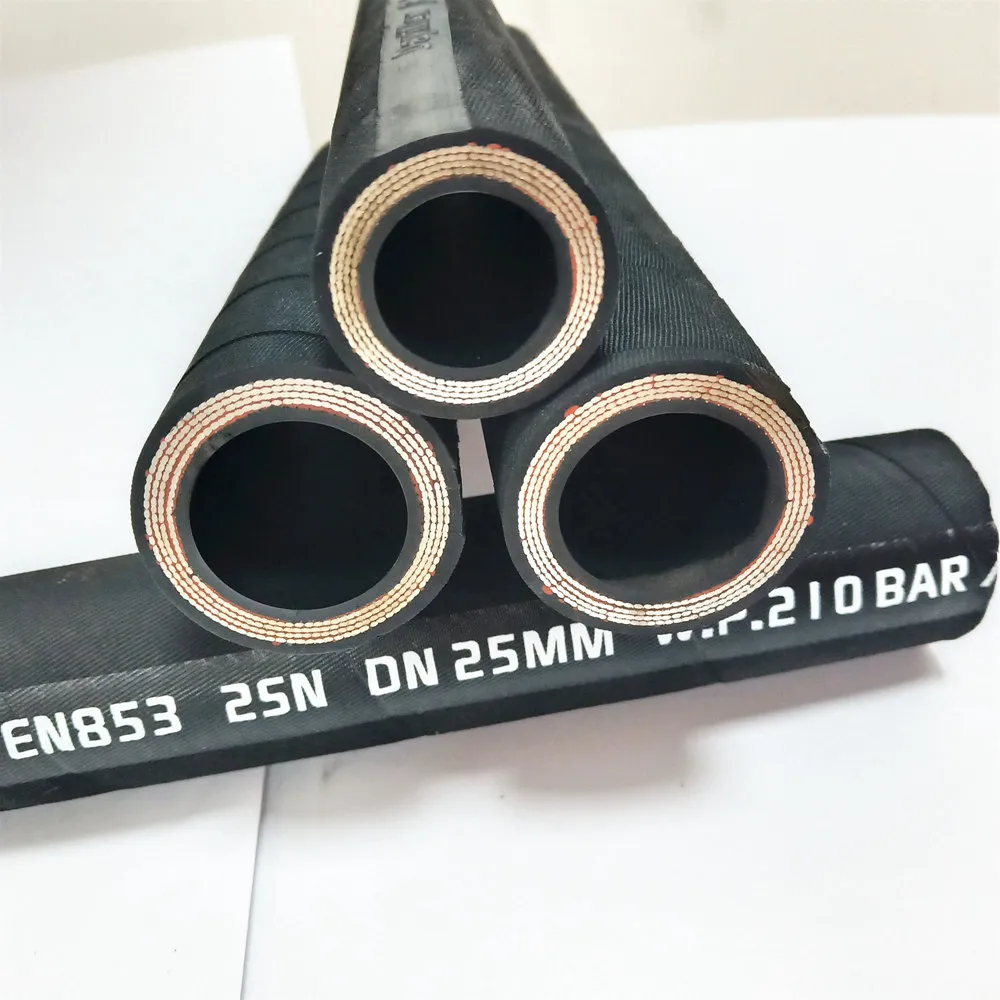
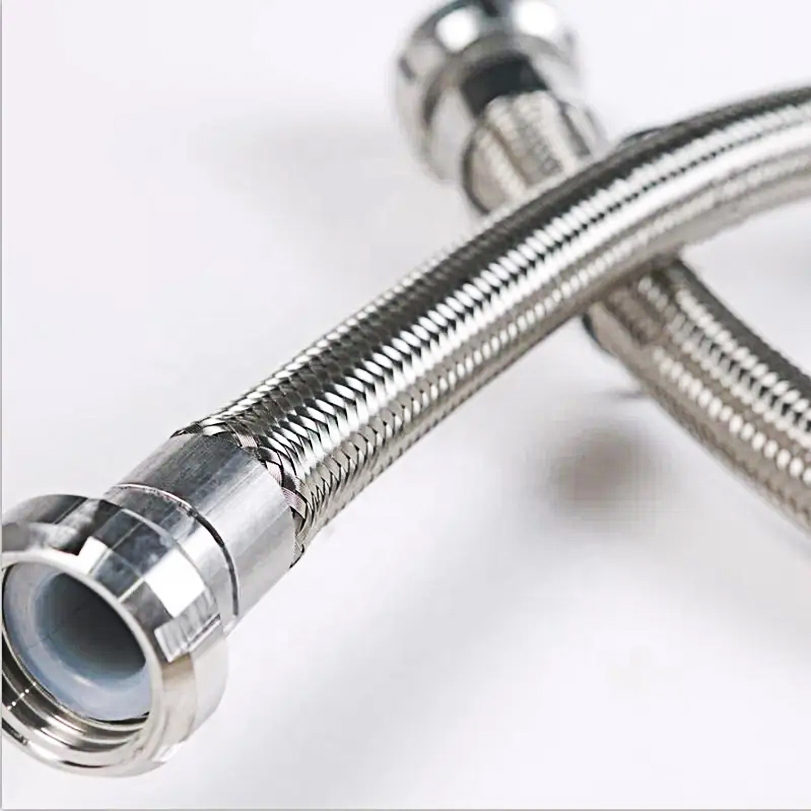
The construction of a flexible high-pressure hydraulic hose typically involves four key layers: the inner tube, reinforcement layers, outer cover, and often, an adhesive bonding layer between these components. The inner tube is commonly composed of synthetic rubbers such as nitrile (NBR) for oil-based fluids, or fluorocarbon (FKM/Viton) for compatibility with aggressive chemicals and high temperatures. NBR exhibits good abrasion resistance and cost-effectiveness but limited chemical resistance. FKM provides superior chemical and temperature resistance but is more expensive. Reinforcement layers provide the strength to withstand high pressures. These layers traditionally consist of multiple braids of high-tensile steel wire. The number and angle of the braids dictate the hose's pressure rating and flexibility. Spiral-wound reinforcement, utilizing steel wire helically wrapped around the inner tube, offers higher pressure ratings and increased flexibility for specific applications. The outer cover, usually made of synthetic rubber like chloroprene (CR) or polyurethane (PU), protects the reinforcement layers from abrasion, weathering, and oil degradation. CR offers good all-around protection, while PU exhibits superior abrasion and oil resistance. Manufacturing processes include extrusion for the inner tube and outer cover, calendering for reinforcement layers, and braiding or winding of reinforcement materials. Critical process parameters include extrusion temperature, braiding tension, curing time and temperature, and adhesion strength between layers. Quality control focuses on dimensional accuracy, material composition verification, pressure testing, and impulse testing to ensure consistent performance and safety.
Performance & Engineering
The performance of a hydraulic hose is fundamentally governed by stress-strain relationships and fluid dynamics. Hose burst pressure is a critical safety parameter, determined through hydrostatic testing according to industry standards. Working pressure is typically specified as a percentage (e.g., 50%) of the burst pressure, providing a safety factor. Fatigue life is a crucial consideration, especially in applications with cyclic pressure loading. Repeated flexing and pressure pulsations induce fatigue in the reinforcement layers, leading to potential failure. Impulse testing simulates these cyclic loads to assess fatigue resistance. Environmental resistance encompasses the hose’s ability to withstand temperature extremes, UV radiation, ozone exposure, and contact with corrosive substances. Temperature affects the rubber’s elasticity and strength; extreme temperatures can lead to hardening, cracking, or softening. The hose's flexibility, or bend radius, impacts its ability to route within confined spaces. Excessive bending can induce stress concentrations and reduce hose life. Finite Element Analysis (FEA) is increasingly used in the design process to model stress distributions, predict failure modes, and optimize hose geometry. Compliance requirements vary by region and application. For example, in the automotive industry, hoses must meet FMVSS 106 standards for hydraulic systems. In offshore applications, hoses must comply with DNV or ABS standards regarding material selection and performance.
Technical Specifications
| Parameter | Unit | Standard Specification | Typical Value |
|---|---|---|---|
| Working Pressure | MPa | SAE J517, EN 853, DIN EN 853 | 20 - 42 |
| Burst Pressure | MPa | SAE J517, EN 853, DIN EN 853 | 60 - 126 |
| Temperature Range | °C | SAE J517, EN 853, DIN EN 853 | -40 to +100 |
| Inner Tube Material | - | SAE J517 | NBR, FKM, EPDM |
| Reinforcement Type | - | SAE J517, EN 853 | Spiral Wire, Braided Wire |
| Outer Cover Material | - | SAE J517 | CR, PU |
Failure Mode & Maintenance
Hydraulic hose failures commonly manifest as burst, leakage, or reduced flow. Burst failures are often caused by exceeding the working pressure, fatigue cracking due to cyclic loading, or damage to the reinforcement layers. Leakage can occur at fittings due to improper installation, corrosion, or degradation of the sealing elements. Reduced flow results from internal degradation of the inner tube, blockage from debris, or kinking. Specific failure modes include: Fatigue Cracking: Initiated by repeated flexing and pressure cycles, leading to crack propagation in the reinforcement wires. Abrasion Wear: Gradual erosion of the outer cover due to contact with abrasive surfaces. Ozone Cracking: Surface cracks caused by exposure to ozone, particularly in EPDM rubber. Chemical Degradation: Swelling, softening, or cracking of the rubber due to incompatible fluids. Kinking: Restriction of flow due to sharp bending, creating localized stress concentrations. Preventive maintenance is critical. Regular visual inspections should check for cuts, abrasions, bulges, leaks, and kinking. Hoses should be replaced if any damage is observed. Fittings should be checked for corrosion and tightness. Proper hose routing is essential to avoid excessive bending and abrasion. Fluid contamination should be minimized through filtration. Hoses should be stored in a cool, dry place away from direct sunlight and ozone sources. When replacing hoses, always use compatible fittings and follow the manufacturer's recommended torque specifications.
Industry FAQ
Q: What is the impact of hose layline markings on traceability and quality control?
A: Layline markings, permanently embossed on the hose cover, provide crucial traceability information including manufacturer identification, production date, pressure rating, and hose size. This information is essential for quality control, warranty claims, and investigating potential failures. Properly maintained layline markings allow for complete product history tracking and enable identification of potential batch issues.
Q: How do different reinforcement materials (steel wire braid vs. spiral) affect hose performance in high-impulse applications?
A: Spiral-wound reinforcement generally exhibits superior performance in high-impulse applications compared to braided reinforcement. The continuous winding provides greater flexibility and resistance to fatigue cracking induced by pressure pulsations. Braided hoses can handle high static pressures but are more susceptible to failure under repetitive impulse loads.
Q: What are the key considerations when selecting a hose for use with biodegradable hydraulic fluids?
A: Biodegradable hydraulic fluids often have different chemical compositions than mineral oils, requiring careful hose material selection. Compatibility testing is essential to ensure the inner tube material (typically FKM or EPDM) is resistant to swelling, degradation, and leaching. Avoid using NBR with most biodegradable fluids. Consider the fluid's operating temperature range and select a hose with appropriate temperature resistance.
Q: What is the role of proper fitting selection and installation in preventing hose failures?
A: Incorrect fitting selection or improper installation is a significant contributor to hose failures. Fittings must be compatible with the hose material and rated for the system's operating pressure and temperature. Crimping or swaging must be performed correctly to ensure a secure and leak-proof connection. Over-crimping can damage the hose, while under-crimping can lead to leakage. Following the fitting manufacturer's instructions and using calibrated crimping equipment is critical.
Q: How does hose bend radius affect its service life and what are best practices for minimizing stress?
A: Exceeding the minimum bend radius induces excessive stress in the hose reinforcement, accelerating fatigue and reducing service life. Best practices include using smooth bends, avoiding sharp angles, and providing adequate clearance for hose movement. Using hose guards or supports can help prevent kinking and abrasion, further extending hose life.
Conclusion
Flexible high-pressure hydraulic hoses are complex engineered products, demanding careful consideration of material science, manufacturing processes, and operational parameters. Selecting the appropriate hose for a specific application requires a thorough understanding of pressure requirements, fluid compatibility, temperature extremes, and environmental factors. Optimizing hose performance and ensuring long-term reliability necessitates adherence to industry standards, proper installation practices, and a proactive preventative maintenance program.
Looking forward, advancements in materials science, such as thermoplastic hose constructions and novel rubber compounds, will continue to drive innovation in the hydraulic hose industry, offering improved performance characteristics and reduced weight. Focus on sustainable materials and environmentally responsible manufacturing practices will also become increasingly important, aligning with global efforts to minimize environmental impact and promote circular economy principles. Ongoing research into predictive maintenance techniques, utilizing sensor technology and data analytics, will further enhance hose life and reduce downtime.