
Apr . 01, 2024 17:55 Back to list
en857 2sc Performance Analysis
Introduction
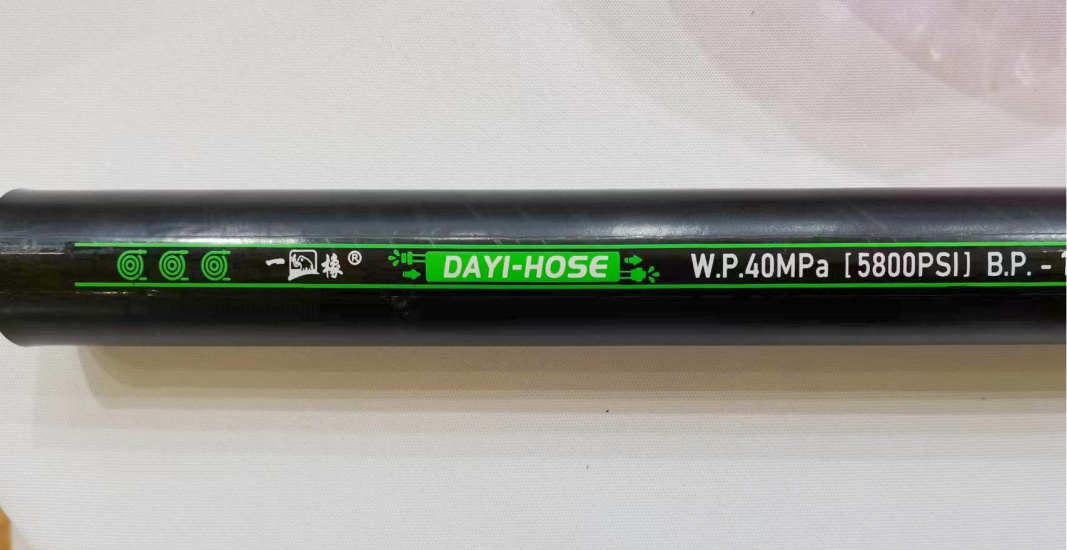
EN857 2SC is a high-performance, synthetic rubber hose specifically engineered for demanding fluid transfer applications, primarily within the automotive, construction, and industrial sectors. Positioned within the fluid conveyance system as a critical component, it replaces traditional rubber hoses in scenarios requiring enhanced temperature resistance, oil and fuel compatibility, and pressure handling. Its core performance characteristics revolve around maintaining fluid integrity, ensuring operational safety, and prolonging service life under rigorous operating conditions. Unlike standard rubber hoses susceptible to degradation from hydrocarbons and elevated temperatures, EN857 2SC utilizes a specialized synthetic elastomer blend offering superior resistance. The ‘2SC’ designation refers to a specific construction with two reinforcing layers and a smooth, chloroprene outer cover, contributing to its robust performance and dimensional stability. The principal industry pain points addressed by EN857 2SC are premature hose failure leading to downtime, fluid leakage causing environmental hazards and safety risks, and the need for frequent replacement resulting in increased maintenance costs. This guide provides a comprehensive technical overview of the material science, manufacturing processes, performance parameters, potential failure modes, and maintenance considerations related to EN857 2SC hoses.
Material Science & Manufacturing
EN857 2SC construction begins with a specifically formulated synthetic rubber compound typically based on a Chloroprene (CR) elastomer, often blended with Nitrile Butadiene Rubber (NBR) to enhance oil resistance. The CR component provides excellent resistance to ozone, weathering, and heat, while NBR contributes superior compatibility with petroleum-based fluids. The raw materials undergo rigorous quality control checks for Mooney viscosity, tensile strength, and elongation at break. Reinforcement layers, critical to pressure handling, are typically comprised of high-tensile steel wire, spirally wound and embedded within the rubber matrix. These wires are surface treated with brass or zinc coatings to promote adhesion and inhibit corrosion. The outer cover consists of a chloroprene rubber compound, chosen for its abrasion resistance and resistance to environmental factors.
Manufacturing commences with the extrusion of the inner tube and outer cover, utilizing a continuous extrusion process. Precise temperature control during extrusion (typically between 120-160°C) is crucial to ensure uniform material dispersion and dimensional accuracy. The steel wire reinforcement is simultaneously applied during a braiding or spiral winding process. Two reinforcing layers, as specified by the “2” in 2SC, provide increased burst pressure capability. The hose assembly is then vulcanized – a chemical process involving heating under pressure (typically 140-180°C for 30-60 minutes) to crosslink the polymer chains, imparting elasticity, strength, and resistance to degradation. Post-vulcanization, the hose undergoes rigorous testing, including pressure testing to burst, leak testing, and dimensional inspection. Key parameter control includes consistent rubber compound mixing ratios, precise wire tension during winding, and accurate temperature and pressure profiles during vulcanization. Any deviation in these parameters can compromise the hose’s performance and lifespan.
Performance & Engineering
EN857 2SC hoses are designed to withstand high pressures and temperatures encountered in hydraulic systems and fluid transfer lines. Force analysis during operation considers internal fluid pressure, external loads (bending, twisting), and dynamic stresses from pulsating flow. The two reinforcing layers are engineered to manage hoop stress generated by internal pressure, preventing hose rupture. Bending radius is a critical engineering parameter; exceeding the minimum recommended bending radius induces stress concentrations leading to premature fatigue failure. Environmental resistance is paramount, particularly in automotive applications exposed to road salts, fuels, and temperature extremes. The CR/NBR blend provides excellent resistance to these factors.
Compliance requirements vary based on application and geographical region. Automotive applications require adherence to SAE J2044 standards for fuel hoses. Industrial applications often necessitate compliance with ISO 6807 for hydraulic hoses and EN 857 for general-purpose fluid transfer. Electrical conductivity is also a consideration in some applications; the metallic reinforcement provides a conductive path, preventing static electricity buildup. Functional implementation often involves connecting the hose to fittings using crimping or swaging techniques. Proper fitting selection and crimping procedures are crucial to ensure a secure and leak-proof connection. Incorrect crimping can lead to fitting slippage or hose failure. The hose's performance is also affected by the fluid it carries; compatibility charts should be consulted to ensure the fluid does not chemically react with the rubber compound, causing swelling or degradation.
Technical Specifications
| Parameter | Unit | Specification (Typical) | Test Standard |
|---|---|---|---|
| Working Pressure | MPa | 20 | ISO 6807 |
| Burst Pressure | MPa | 60 | ISO 6807 |
| Temperature Range | °C | -40 to +120 | SAE J2044 |
| Inner Tube Material | - | CR/NBR Blend | ASTM D2000 |
| Reinforcement | - | High-Tensile Steel Wire (2 Layers) | ASTM A228 |
| Outer Cover Material | - | Chloroprene Rubber | ASTM D2000 |
Failure Mode & Maintenance
EN857 2SC hoses, despite their robust construction, are susceptible to several failure modes. Fatigue cracking, particularly at the hose ends near fittings, is common due to cyclic bending and pressure fluctuations. Delamination of the rubber layers from the steel reinforcement can occur due to inadequate adhesion during vulcanization or exposure to incompatible fluids. Degradation of the rubber compound, evidenced by hardening, cracking, and swelling, can result from prolonged exposure to ozone, UV radiation, and extreme temperatures. Oxidation of the steel wire reinforcement can lead to corrosion and loss of strength.
Preventative maintenance is crucial for extending hose lifespan. Regular visual inspections should be conducted to identify signs of cracking, swelling, or abrasion. Hoses should be replaced if any damage is detected. Avoid exceeding the recommended working pressure and temperature limits. Implement proper hose routing to minimize bending stress. Store hoses in a cool, dry, and dark environment to prevent degradation. When handling fluids, verify compatibility with the hose material. For cleaning, use a mild detergent and water; avoid harsh chemicals. If corrosion is detected on fittings, replace both the fitting and the hose section. Periodic pressure testing can identify weaknesses before catastrophic failure occurs. Detailed records of hose installation dates and service history are essential for effective maintenance planning.
Industry FAQ
Q: What is the primary advantage of EN857 2SC over standard rubber hoses in fuel applications?
A: The primary advantage lies in its superior resistance to modern fuel blends, including those containing ethanol. Standard rubber hoses can swell and degrade when exposed to ethanol, leading to fuel leakage and system failure. EN857 2SC’s CR/NBR blend maintains its integrity in these environments, ensuring long-term reliability.
Q: What is the impact of exceeding the minimum bending radius on hose lifespan?
A: Exceeding the minimum bending radius induces localized stress concentrations within the hose wall, accelerating fatigue failure. Repeated bending beyond this limit will dramatically reduce the hose's service life, potentially leading to premature cracking and leakage.
Q: How does the steel wire reinforcement contribute to burst pressure resistance?
A: The spirally wound steel wire layers act as a structural support, resisting hoop stress generated by internal fluid pressure. The two reinforcing layers in the 2SC designation provide a significantly higher burst pressure capability compared to hoses with fewer or no reinforcement layers.
Q: What is the recommended procedure for connecting EN857 2SC hoses to fittings?
A: Proper crimping or swaging is essential. The fitting must be correctly sized for the hose diameter and material. Using a calibrated crimping tool and following the manufacturer’s specifications for crimp height and diameter are crucial to ensure a secure, leak-proof connection. Incorrect crimping can lead to fitting slippage or hose failure.
Q: Can EN857 2SC be used with brake fluid?
A: While EN857 2SC exhibits good general chemical resistance, it's not universally compatible with all brake fluid types. Glycol-ether based brake fluids (DOT 5) can cause significant swelling and degradation of the CR/NBR rubber. Compatibility charts should always be consulted to confirm suitability before using EN857 2SC in a brake system. DOT 3 and DOT 4 brake fluids are generally compatible but long term exposure should still be verified.
Conclusion
EN857 2SC represents a significant advancement in fluid conveyance technology, offering superior performance and durability compared to traditional rubber hoses. Its robust construction, utilizing a specialized synthetic rubber blend and dual steel wire reinforcement, provides exceptional resistance to pressure, temperature, and aggressive fluids. Careful consideration of material compatibility, proper installation techniques, and a proactive maintenance program are critical to maximizing its lifespan and ensuring reliable operation. The precise control of manufacturing parameters, from rubber compounding to vulcanization, directly impacts the hose's performance characteristics and overall reliability.
Looking forward, continued innovation in elastomer technology and reinforcement materials will further enhance the capabilities of EN857 2SC hoses. Research into bio-based rubber compounds and lighter-weight reinforcement materials could lead to more sustainable and cost-effective solutions. Adoption of advanced non-destructive testing methods, such as ultrasonic inspection, will enable more accurate assessment of hose integrity and predictive maintenance scheduling. Ultimately, the successful implementation of EN857 2SC hinges on a thorough understanding of its technical properties and a commitment to best practices throughout its lifecycle.