
Apr . 01, 2024 17:55 Back to list
en856 4sh Hydraulic Hose Performance Analysis
Introduction
EN856 4SH is a specification for high-pressure hydraulic hoses, specifically designed for use with hydraulic fluids in demanding industrial applications. Positioned within the fluid power transmission segment, these hoses facilitate the safe and efficient transfer of hydraulic energy. Their core performance characteristics revolve around pressure capacity, burst strength, temperature resistance, and resistance to fluid degradation. They are typically employed in construction machinery, agricultural equipment, mining operations, and manufacturing facilities, representing a critical component in the operation of these systems. A key pain point in the industry is maintaining hose integrity under cyclical pressure, extreme temperatures, and exposure to aggressive hydraulic fluids, frequently leading to unplanned downtime and safety concerns. EN856 4SH hoses aim to mitigate these risks through robust construction and adherence to stringent testing protocols.
Material Science & Manufacturing
EN856 4SH hoses are constructed from several key materials. The inner tube is typically composed of a synthetic rubber compound – often a nitrile rubber (NBR) or a fluoroelastomer (FKM) – selected for its compatibility with hydraulic fluids and resistance to oil swelling. NBR offers good abrasion resistance and cost-effectiveness, while FKM provides superior resistance to high temperatures and aggressive fluids like phosphate ester fluids. Reinforcement layers are crucial for pressure resistance and typically consist of multiple spirals of high-tensile steel wire. The wire’s composition and tensile strength are meticulously controlled. The outer cover is commonly a synthetic rubber, such as chloroprene (CR), offering protection against abrasion, weathering, and ozone degradation.
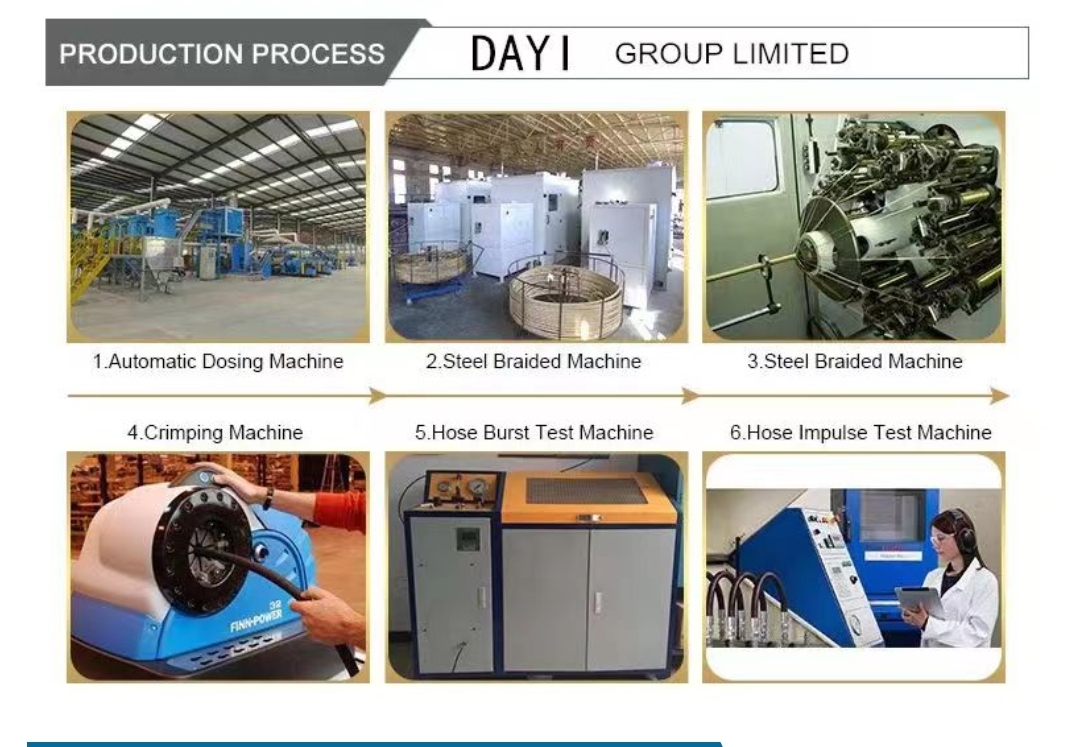
Manufacturing involves a multi-stage process. First, the inner tube is extruded to precise dimensions. Then, the steel wire reinforcement is spirally wound onto the inner tube using specialized machinery. Precise tension control during winding is paramount to ensure consistent pressure ratings. Following reinforcement, the outer cover is extruded over the assembly. Critical parameters during extrusion include temperature, screw speed, and die pressure to achieve uniform thickness and surface finish. Finally, the hose undergoes rigorous testing, including burst pressure testing, impulse testing, and leakage testing, as per EN856 standards. Curing processes for the rubber compounds involve controlled temperature and time profiles to optimize cross-linking and achieve desired mechanical properties. Post-curing inspections ensure dimensional accuracy and surface defect identification.

Performance & Engineering
The performance of EN856 4SH hoses is dictated by several engineering considerations. Force analysis focuses on the stress distribution within the hose layers under pressure. The steel wire reinforcement bears the primary tensile load, while the rubber compounds provide sealing and support. Fatigue analysis is critical, considering cyclical pressure variations that occur in hydraulic systems. Impulse testing simulates these cyclical loads to assess the hose’s endurance. Environmental resistance is another key factor. Exposure to extreme temperatures (both high and low) can affect the rubber’s flexibility and sealing capabilities. Ozone and UV degradation can compromise the outer cover’s integrity.
Compliance requirements under EN856 are substantial. Hoses must meet minimum burst pressure ratings, typically four times the working pressure. Leakage rates are strictly controlled. Dimensional tolerances are defined to ensure compatibility with hose fittings. Furthermore, fluid compatibility testing is essential to verify that the hose materials do not react adversely with the intended hydraulic fluid. Engineering design incorporates safety factors to account for variations in manufacturing and operating conditions. The hose end termination process (crimping or swaging) is equally important; incorrect termination can lead to premature failure.
Technical Specifications
| Parameter | Unit | EN856 4SH Specification | Typical Value Range |
|---|---|---|---|
| Working Pressure | MPa | ≥ 31.5 | 31.5 - 40 |
| Burst Pressure | MPa | ≥ 126 | 126 - 160 |
| Temperature Range | °C | -40 to +100 | -40 to +120 (depending on fluid) |
| Inner Tube Material | - | NBR or FKM | NBR, FKM, EPDM |
| Reinforcement | - | Spiral Steel Wire | 2 or 4 spiral layers |
| Outer Cover Material | - | CR | CR, NBR |
Failure Mode & Maintenance
Common failure modes for EN856 4SH hoses include burst failure due to exceeding pressure limits, fatigue cracking from cyclical loading, pinhole leaks in the inner tube due to fluid degradation, and cover degradation from weathering and abrasion. Fatigue cracking often initiates at areas of high stress concentration, such as near fittings or at bends. Burst failures are often caused by wire breaks within the reinforcement layers. Chemical attack from incompatible hydraulic fluids can cause swelling and softening of the rubber components, leading to leakage.
Preventative maintenance is crucial. Regular visual inspections should be conducted to check for signs of abrasion, cracking, or swelling. Hose routing should minimize bending and twisting. Proper fitting selection and installation are essential to avoid stress concentration. Hydraulic fluid should be regularly analyzed for contamination and degradation. If a hose shows any signs of damage, it should be replaced immediately. Storage of hoses should be in a cool, dry, and dark location to prevent degradation. Avoid contact with ozone sources and direct sunlight. When replacing a hose, always use a hose that meets or exceeds the original specifications and ensure that the fittings are compatible.
Industry FAQ
Q: What is the primary difference between EN856 4SH and other EN856 hose specifications?
A: The "4SH" designation indicates a higher performance level than basic EN856 hoses. Specifically, 4SH hoses offer a higher working pressure, greater burst strength, and improved temperature resistance, making them suitable for more demanding applications. They generally have a more robust steel wire reinforcement construction.
Q: How does hydraulic fluid type affect the selection of an EN856 4SH hose?
A: The inner tube material must be compatible with the hydraulic fluid being used. NBR is suitable for most mineral oils, while FKM is required for phosphate ester fluids and some synthetic lubricants. Using an incompatible fluid can cause swelling, softening, and ultimately, hose failure.
Q: What is the importance of proper hose end termination?
A: Incorrect termination can significantly reduce the hose’s burst pressure and lead to premature failure. The fitting must be correctly sized and crimped (or swaged) to create a secure, leak-proof connection. Using the wrong die during crimping is a common cause of failure.
Q: What is the acceptable bend radius for EN856 4SH hoses?
A: Exceeding the minimum bend radius can induce stress concentration and lead to fatigue cracking. The manufacturer’s specifications should be consulted for the recommended bend radius, which is typically several times the hose’s outer diameter.
Q: How can I visually identify a hose that is nearing the end of its service life?
A: Signs of wear include cracking in the cover, swelling or softening of the rubber, abrasion damage, and visible corrosion of the steel wire reinforcement (if exposed). Any of these indicators warrant immediate hose replacement.
Conclusion
EN856 4SH hydraulic hoses represent a critical component in numerous industrial applications, providing a robust and reliable means of transmitting hydraulic power. Their performance is intrinsically linked to meticulous material selection, precise manufacturing processes, and adherence to rigorous industry standards. Understanding the material science, potential failure modes, and proper maintenance practices is paramount for maximizing hose lifespan and ensuring operational safety.
Future trends in hydraulic hose technology are focusing on the development of lighter-weight materials, improved fluid compatibility, and enhanced diagnostic capabilities. Smart hoses, incorporating sensors to monitor pressure, temperature, and fluid condition, are emerging as a means of predictive maintenance and improved system reliability. Continued research into advanced rubber compounds and reinforcement materials will further enhance the performance and durability of EN856 4SH hoses.